Column
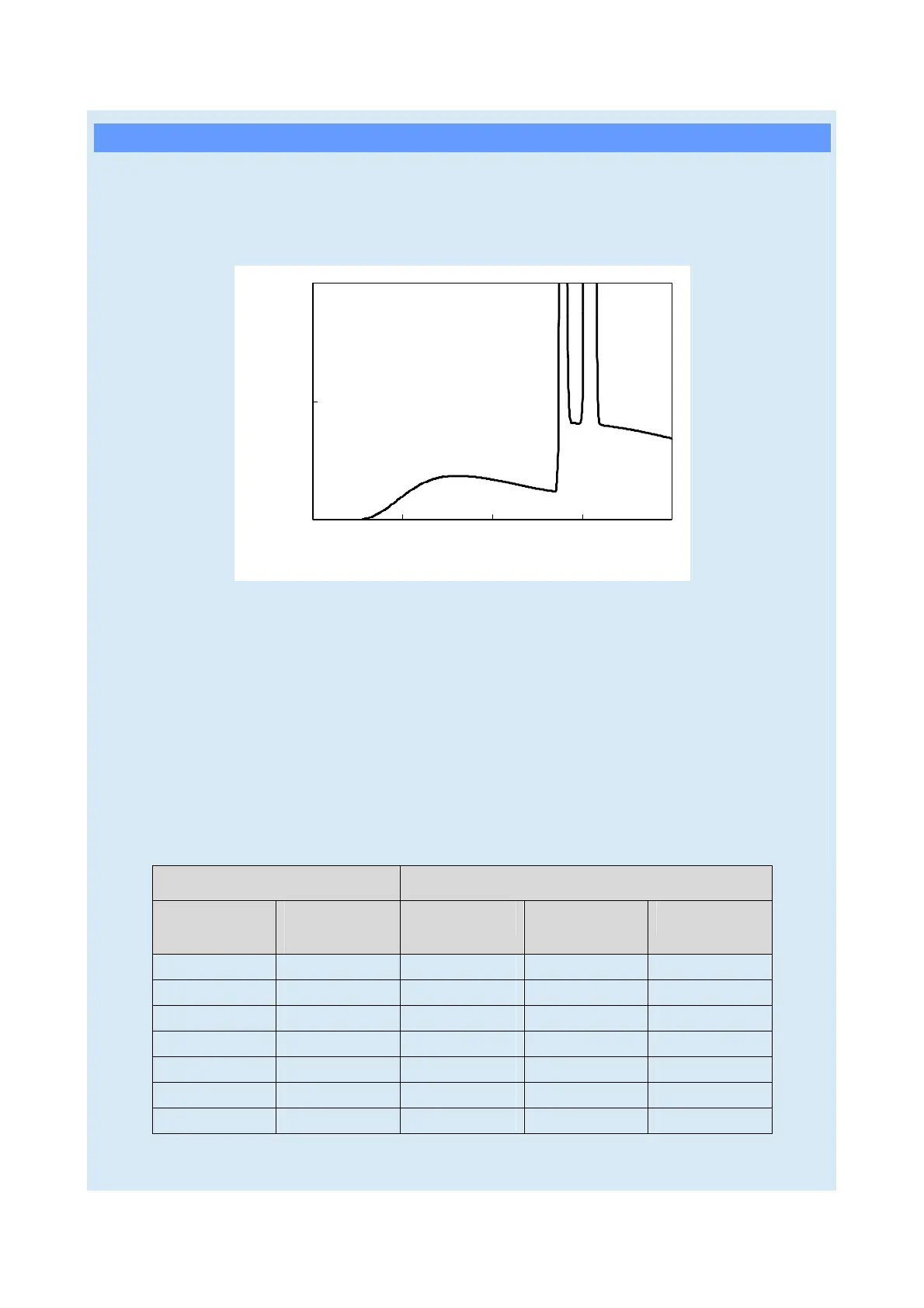
Characteristic x-rays
X-rays are generated by accelerating electrons to very high speeds in a vacuum and directing them against the
anode (target). The x-ray spectra generated by electrons colliding against the target can be divided into two
categories: a continuous spectrum indicating continuous x-rays (white x-rays) and a discrete spectrum for
characteristic x-rays
0
2000
4000
0 0.5 1 1.5 2
波長(Å)
強度
特性X線
連続X線
αβ
X-ray spectrum of Cu target
The wavelengths of characteristic x-rays depend on the type of target used. Typical x-ray diffractometry uses Kα
x-rays generated by several types of metal targets, as shown in the following table. Kα x-rays contain Kα
1
x-rays
and Kα
2
x-rays whose wavelengths are quite close. Although this does not pose serious problems for ordinary
measurement of powder samples for phase identification (ID) analysis, optimal results can be achieved by using
only Kα
1
x-rays in certain cases when making measurements for crystal structure analysis with powder samples or
when performing precise measurements of thin film samples. In recent years, it has become possible to use just Kα
1
x-rays by employing an incident optical system comprised of a multilayer mirror and a Ge or Si monochromator
crystal.
Table Wavelengths of characteristic x-rays
Target Wavelength (Å)
Element
Atomic
number
Kα
2
Kα
1
Kβ
Cr 24 2.294 2.290 2.085
Fe 26 1.940 1.936 1.757
Co 27 1.793 1.789 1.621
Cu 29 1.544 1.541 1.392
Mo 42 0.7135 0.7093 0.6323
Ag 47 0.5638 0.5594 0.4970
W 74 0.2138 0.2090 0.1844
Intensity
Wavelength (Å)
Continuous
x-rays
Characteristic
x-rays



 To Next Page