2-3
Installation
Environmental
Considerations
To ensure maximum transmitter life, avoid excessive heat and
vibration. Typical problem areas:
• high-vibration lines with integrally mounted transmitters
• warm-climate installations in direct sunlight
• outdoor installations in cold climates.
Remote-mounted transmitters may be installed in the control room to
protect the electronics from the harsh environment and provides easy
access for configuration or service.
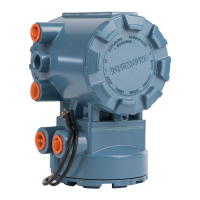
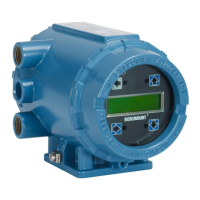
Both remotely and integrally mounted Model 8712C/U/H transmitters
require external power and there must be access to a suitable power
source. See Transmitter Input Power on page 2-7.
INSTALLATION
PROCEDURES
Model 8712C/U/H installation includes both detailed mechanical and
electrical installation procedures. Before undertaking the installation
instructions outlined below, review the application and related
considerations and requirements. When you understand the system
requirements, proceed with installation.
Mount the Transmitter
At a remote site the transmitter may be mounted on a pipe up to two
inches in diameter or against a flat surface. Mounting hardware is
included with remote-mounted transmitters.
Pipe Mounting
To mount the transmitter on a pipe:
1. Attach the mounting plate to the pipe using the
mounting hardware.
2. Attach the Model 8712C/U/H to the mounting plate using the
mounting screws.
Surface Mounting
To surface mount the transmitter:
1. Attach the Model 8712C/U/H to the mounting location using the
mounting screws.
Identify Options and
Configurations
The standard application of the Model 8712C/U/H includes a 4–20 mA
output and control of the flowtube coils. Other applications may require
one or more of the following configurations or options:
• Multidrop Communications
• PZR (Positive Zero Return)
• Ultrasonic Control
• Auxiliary Output
• Pulse Output
Additional options may apply. Be sure to identify those options and
configurations that apply to your situation, and keep a list of them
nearby for consideration during the installation and configuration
procedures.
See Safety Messages on page 2-1 for complete warning information.



 To Next Page