Argus Radar - SERIAL INTERFACE SPECIFICATIONS
988-10187-004 2.39
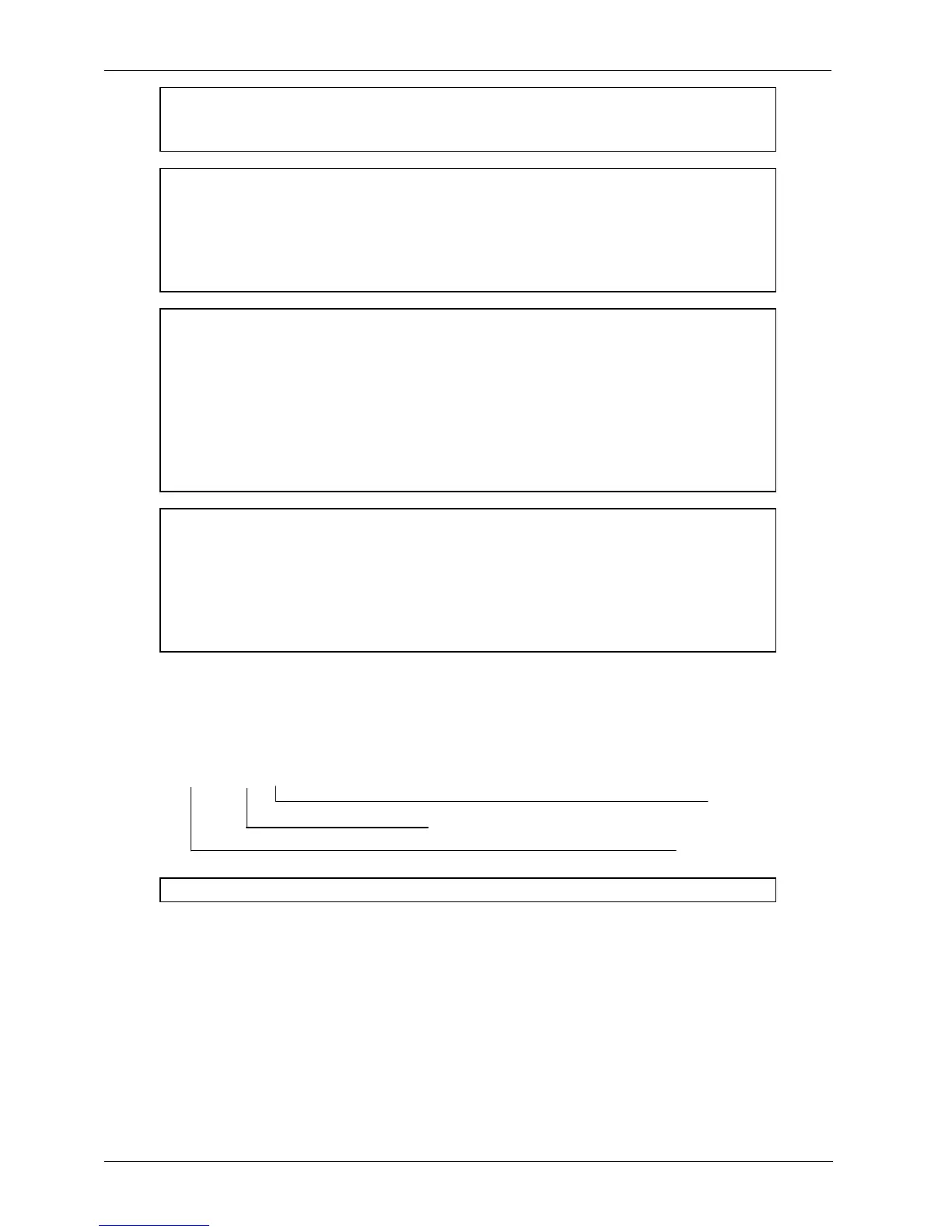
NOTE 2
Used for proprietary alerts, defined by the manufacturer. For standardized
alerts this should be a null field.
NOTE 3
The alert identifier is unique within a single alert source. The alert identifier is
a variable length integer field of maximum a 7-digit integer. It identifies the
type of the alert, e.g. a “lost target” alert. Number range 10000-9999999 is
reserved for proprietary alerts. Alert Identifier examples: “001”, “2456789”,
“245”.
NOTE 4
The alert instance identifies the current instance of an alert to distinguish
alerts of the same type (Alert identifier) and from the same source (e.g.
dangerous target). Alert instance is maximum a 6-digit integer from 1 to
999999. The number of alert instance can be freely defined by the
manufacturer, as long as it is unique for one type of alert (alert identifier). It
is not permitted to modify the alert instance within a life cycle of a distributed
alert (from ‘active-unacknowledged’ state until ‘normal’ state is reached). It
can also be a null field, when there is only one alert of that type.
NOTE 5
Refused Alert Command: Indicates refused “Alert command” of a
corresponding ACN sentence. This should not be a null field.
acknowledge: A
request / repeat information: Q
responsibility transfer: O
silence: S
EVE – General event message
This sentence is used to transmit events (e.g. actions by the crew on the bridge) with a time
stamp.
$--EVE,hhmmss.ss,c--c,c--c*hh<CR><LF>
Event description
Tag code used for identification of source of event (see Note)
Event time (see Note)
NOTE This may be a null field.


 To Next Page