161
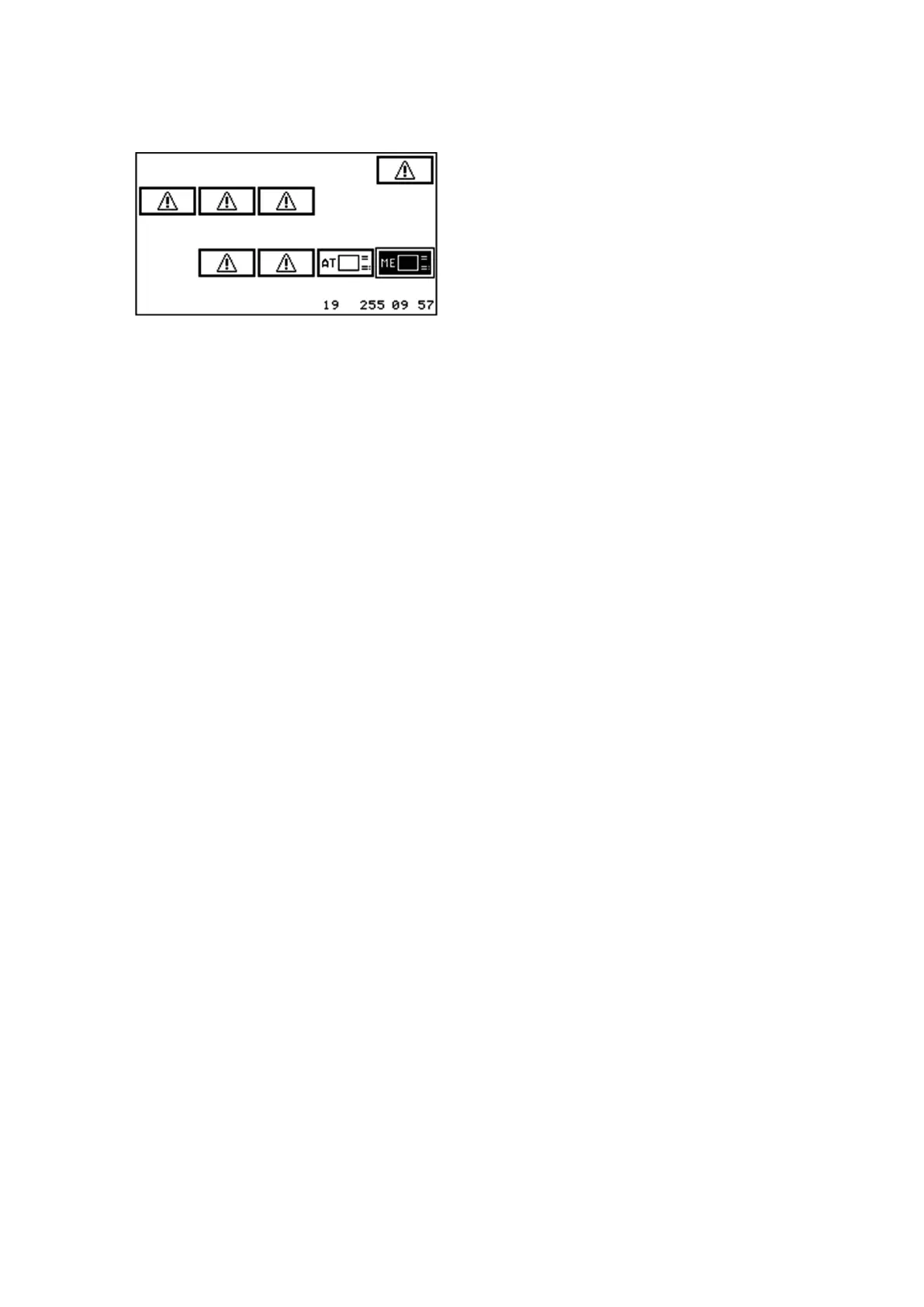
ID glob.adr. dev.type reliab. cong.
0 - unknown 0% 0
1 - unknown 0% 0
2 - unknown 0% 0
3 - unknown 0% 0
4 - unknown 0% 1 error
5 - unknown 0% 1 error
6 - unknown 0% 1 error
7 - unknown 0% 1 error
8 - unknown 0% 0
9 - unknown 0% 0
10 - unknown 0% 0
11 - unknown 0% 0
12 - unknown 0% 0
13 - unknown 0% 0
14 - unknown 0% 0
15 - unknown 0% 0
16 - unknown 0% 1 error
17 - unknown 0% 1 error
18 255 AdvancedTerminal 100% 1
19 255 AdvancedTerminal me 1
ERROR IN THE BUS CONFIGURATION DETECTED.
© STULZ GmbH – all rights reserved EN/06.2019/G57
C7000 INSTRUCTIONS fOR a/C UNITS
IO bus belonging to the bus participant 19
The bus error has an adjustable alarm delay. Once this delay has expired the bus error is triggered. This delay
is separately adjustable for each bus participant.
Address conflict
The second failure concerning the bus is a conflict in the address. A conflict in the address occurs when two or
more bus participants have the same bus address.
That means that the two bus participants which have the same address send simultaneously data to the bus.
This on the other hand would destroy the data on the bus.
Communications via the bus would be limited.
But this does not happen because bus participants stop the data transfer immediately as soon as they detect
that another participant with the same address is sending a data package.
That means that they stop sending and hence do not participate in the communication on the bus anymore.
An address conflict is triggered immediately as soon as a unit has performed a deactivation.
In our example two C7000ATs have the bus address 19.
As soon as the communication on the bus starts, one of them detects that the address 19 has been assigned
twice and performs a deactivation. The result is that only one bus participant with the same address is active
after a short time.


 To Next Page