How does an RF Slave Synchronise with a Master?
When you set up an UltraSync ONE to run as an RF Slave, it will 'announce' itself on
the network, so that it can be detected by a master (see Run UltraSync ONE as an
RF Slave on page 52).
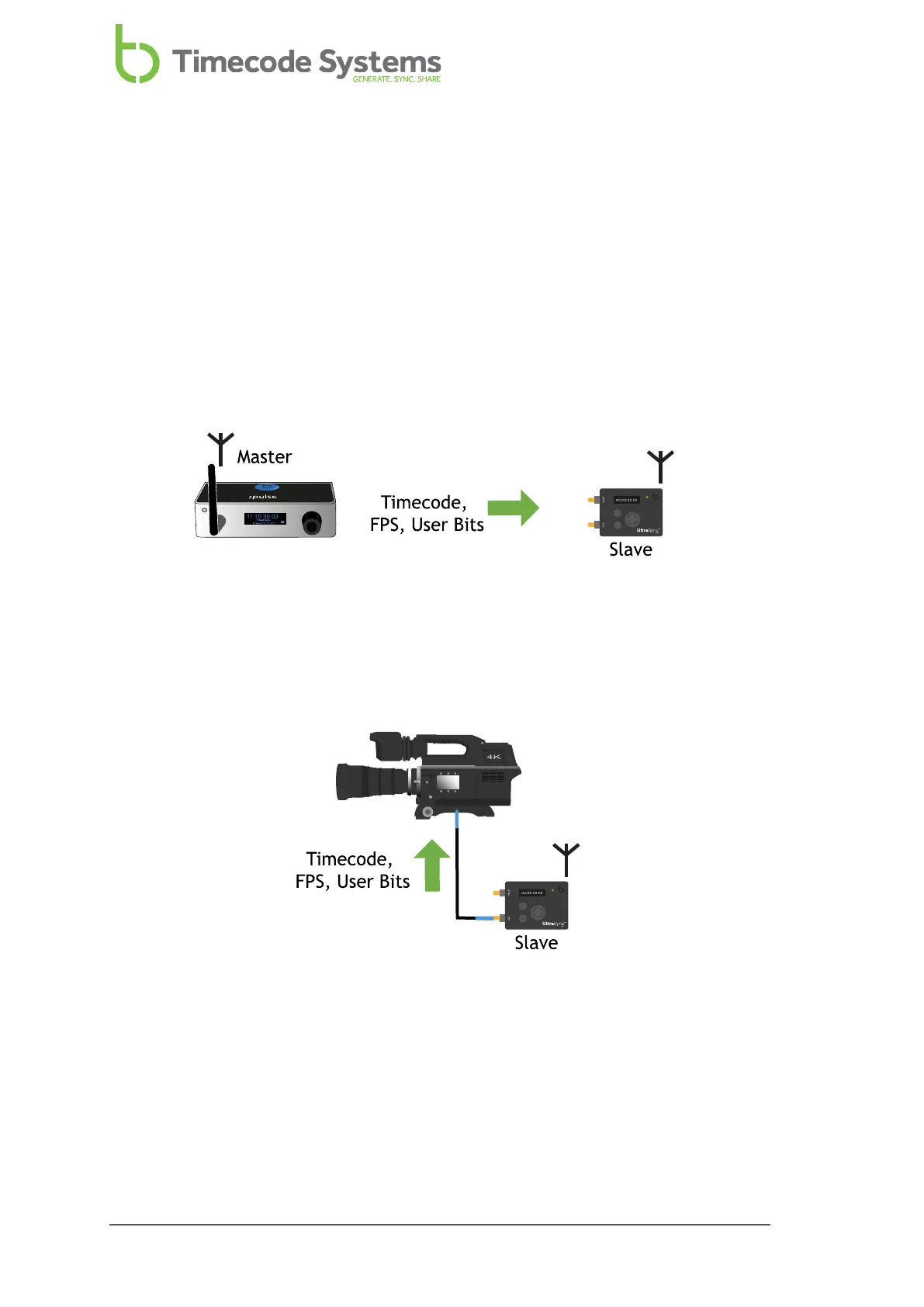
If a master is in range of your RF slave, it will detect the slave and will send its
timecode, FPS, and user bits data to it. Your slave will synchronise with the master
(it may keep its own user bits setting, depending on whether you chose local or
external user bits. The slave will stay synchronised with the master until it is
powered down or you change its mode or RF channel.
When your slave is synchronised with a master, it can output timecode to an
external device. The timecode, FPS, and user bits can be output via the LTC or
SYNC port, depending on how you have connected your external device. Your
UltraSync ONE can also provide word clock or genlock signals via its SYNC port.
If the master moves out of range, the UltraSync ONE will use its own internal
timecode, frames-per-second, and user bits settings until it can receive timecode
from a master. This is called 'free running'.
54 UltraSync ONE User Guide


 To Next Page