Need help?
Do you have a question about the Avid Technology Pro Tools MTRX Studio and is the answer not in the manual?
Introduces the MTRX Studio as a versatile multi-channel audio interface for Pro Tools HDX and HD Native systems.
Lists key features including Analog I/O, Digital I/O, and Synchronization capabilities of the MTRX Studio.
Explains the MTRX Studio's powerful router matrix and its control via DADman software over Ethernet.
Provides essential introductory information for using Pro Tools MTRX Studio and DADman software.
Details hardware and software compatibility requirements, and lists qualified components tested by Avid.
Explains documentation conventions for menu choices, keyboard commands, and mouse commands.
Lists online resources including the Avid website, support, downloads, and video tutorials for users.
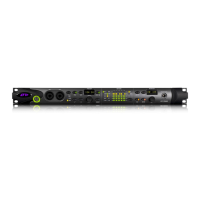
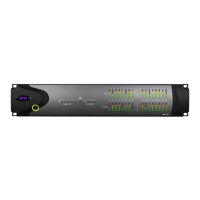
Details the various buttons, indicators, and encoders on the MTRX Studio's front panel.
Guides on selecting input source, adjusting gain, phase invert, and phantom power for inputs 1 and 2.
Explains how to adjust monitoring settings using the front panel encoder and buttons for Control Room and Cues.
Identifies and describes all connectors and ports on the MTRX Studio's back panel.
Details the Ethernet RJ45 connector pinout for Gigabit Ethernet and Dante IP Audio.
Describes the 25-pin D-sub connectors used for analog line inputs and outputs.
Explains the function and use of the Reconfig button for accessing recovery modes.
Guides on entering and utilizing Recovery mode for software issues and firmware updates.
Provides instructions for resetting the unit to its factory default settings.
Guides on setting up network configuration for DADman and MTRX Studio units.
Explains how to use DHCP for automatic IP address allocation for MTRX Studio.
Details the process of saving and loading DADman configuration files (.dms).
Details access to Device List, Monitor Profile, MIDI, and EUCON settings within DADman.
Provides an overview of the DADman window layout and its primary sections.
Describes the controls for analog inputs within the MTRX Studio AD section in DADman.
Describes the controls for analog outputs within the MTRX Studio DA section in DADman.
Explains the DADman matrix for connecting and routing inputs and outputs.
Covers subsections for Synchronization, Dante, and DigiLink configuration within DADman.
Information on creating, importing, and managing Monitor Profile files (.dmprof).
Overview of the window used for creating and editing monitor profiles for MTRX Studio.
Procedures for opening, saving, and closing monitor profile settings.
How to import groups and group formats from existing monitor profile files into the current profile.
Creating and editing monitor/cue configurations and input/output assignments.
Assigning input sources and setting talkback mode for talkback functionality.
Creating and configuring monitor groups, designating them as Cue or Master.
Adding multiple output sets with specified channel widths to a monitor group.
Adding multiple sources to a monitor group and setting source selection mode.
Adding and selecting fold down matrices for use within monitor groups.
Assigning output sets for external metering systems.
Selecting preset or creating custom fold down matrices for monitor groups.
Explains categories and usage of custom and preset group formats for speaker setup.
Setting up custom speaker and source formats for DADman, enabling flexible speaker mapping.
Assigning MOM units and making control assignments for monitoring functions.
Assigning front panel controls and footswitch to manage monitor settings, outputs, and sources.
Describes editing and viewing EQ for speaker channels in the control room.
Explains SPQ processing resources for EQ based on configuration and sample rate.
Overview of the EQ view, channel delay controls, and EQ configuration.
Details EQ controls like Add/Remove EQ, Frequency, Gain, Q, and EQ types.
Explains how to set up bass management for speaker output sets within DADman.
Creating bass management presets with low/high pass filter settings for speaker sets.
Using macOS Audio MIDI Setup to route MIDI for Pro Tools PRE control of MTRX Studio.
Setting up DADman software for Pro Tools PRE control of MTRX Studio units.
Steps to configure Pro Tools software for enabling PRE control of MTRX Studio.
Controlling MTRX Studio mic preamp settings from Pro Tools or compatible control surfaces.
Details microphone, instrument, and analog line input specifications.
Specifications for analog line and monitor outputs, including dynamic range and output levels.
Specifications for analog headphone outputs, including impedance and output levels.
Details for digital I/O formats, supported sample rates, and synchronization methods.
Details power consumption, input voltage range, and mains fuse information.
Provides chassis standard, dimensions, and weight specifications for the unit.
Details operating temperature, humidity, and EMC compliance standards.
Basic explanation of networks, their components, and how devices communicate.
Common physical media for network connections, focusing on UTP cables like CAT5e and CAT6.
Explains the functions of network devices like switches and routers.
Explanation of IP addresses, subnet masks, and default gateways.
Details the system delay for digital and analog I/O paths, including conversion latency.
 General
| Type | Audio Interface |
|---|---|
| Channels | 64 |
| Sample Rate | 192 kHz |
| Bit Depth | 32-bit |
| A/D Resolution | 24-bit |
| Monitoring | Yes |
| Connectivity | Ethernet, DigiLink |
| Thunderbolt | No |
| Ethernet | Yes |
| Compatibility | Pro Tools |
| Software | Pro Tools |
| Rack Spaces | 1U |
| Form Factor | Rackmount |
| DSP Mixing | Yes |
| DSP Processing | Yes |
| Monitor Control | Yes |
| HDMI Video Output | No |
| Word Clock I/O | Yes |
| GPIO | Yes |
| Ethernet Control | Yes |
| Dante Network Channels | 64 |
| DigiLink Ports | 2 |
| Word Clock | Yes |
| Power Supply | Internal |
| Digital Inputs | 16 (AES/EBU) |
| Digital Outputs | 16 (AES/EBU) |


 To Next Page