Balance System SD (with v4.X software) 129
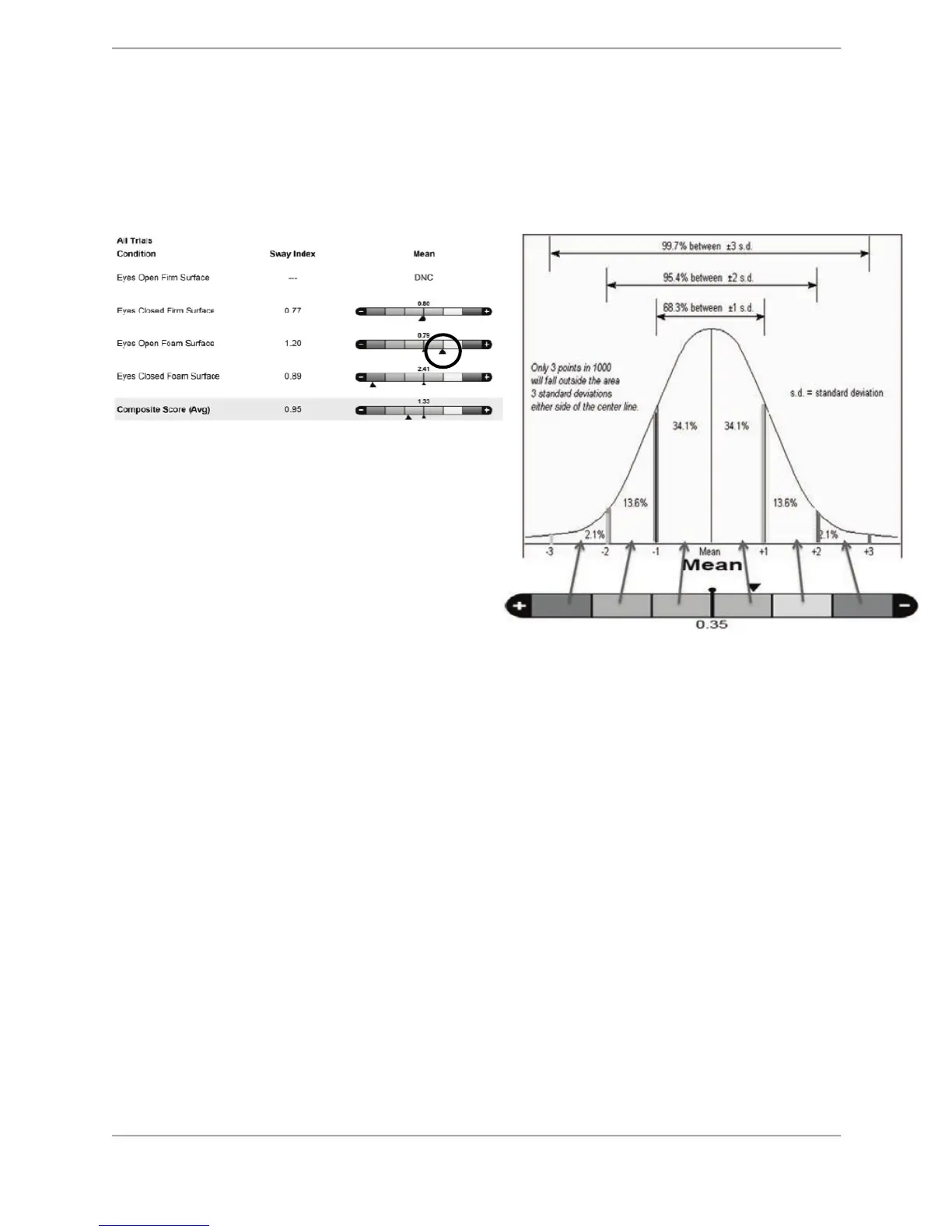
Figure B.2. Standard Deviation Chart for CTSIB Test Results.
Sway Index is an objective quantification of what commonly is done with a time-based pass/fail
for completing the CTSIB stage in 30 seconds without falling, or assigning a value of 1 to 4 to
characterize the sway; 1= minimal sway, 4 = a fall. The score is indicated as on the graph
relative to the mean. Each color segment represents one standard deviation from the mean. The
circled example is within one standard deviation.
!
To interpret or apply the test results, consider the
condition under which the sway was the greatest.
Normal balance includes the ability to hold still in
various situations depending on the activity or
circumstance demands. The COG sway scores
indicate how well the patient accomplished this.
Lower scores reflect little movement that are
considered better than higher scores that reflect
more movement.
!
Firm Surface: Eyes open vs. Eyes closed:
Normal individuals standing on a firm surface have similar amounts of sway with eyes open or
closed. On a firm surface, when significantly more sway is present with the eyes closed than the
patient having difficulty using somatosensory inputs (this is the input up from the feet). An
ankle strategy should be used for primary balance control on a firm surface.
Unstable (Foam) surface: Eyes open vs Eyes closed:
With eyes open on an unstable surface, normal individuals have significantly more sway than
when standing on a firm surface. And, even more sway on the unstable surface with their eyes
closed. However; they do not become overly unstable or fall. Patients that do become unstable
or fall when standing on foam with eyes open may have difficultly using visual information for
balance control and/or may have lower extremity musculoskeletal problems. A hip strategy
should be used on unstable surfaces.
!!
Note: These tests are targeting sensory integration deficits. Standing on an unstable surface
presents biomechanical and musculoskeletal challenges. Patient with ankle or foot problems,
joint weakness, or pain will have high scores. As such in these patients, it cannot be assumed
that sensory abnormalities are the underlying cause as they cannot be distinguished from
motor (musculoskeletal) issues. Ideally, the patient should be screened for motor problems prior
Figure B.1. Sample Stored Test Results for a CTSIB Test.


 To Next Page