BCS-8xx series installation manual
LEDs associated to each channel are pre-
sent on the front panel (1 to 8). These
LEDs indicate the status of the channel as
follows:
Green: Discharge regime/OCV/EIS
with discharge regime
Orange: Charge regime/EIS with a
charge regime
LED Off: Channel stopped
Flashing Red: channel error
The channel error (blinking red led) may be due
to:
- A cell voltage higher than 10V
- A cell voltage lower than 0 V
- A internal heat sink temperature higher
than 70°C
- Potential or current control problem (e.g.
a disconnected cell)
- When the Open In stops the measure-
ment (optional)
1.2.3.2 BCS-810 rear panel detailed description
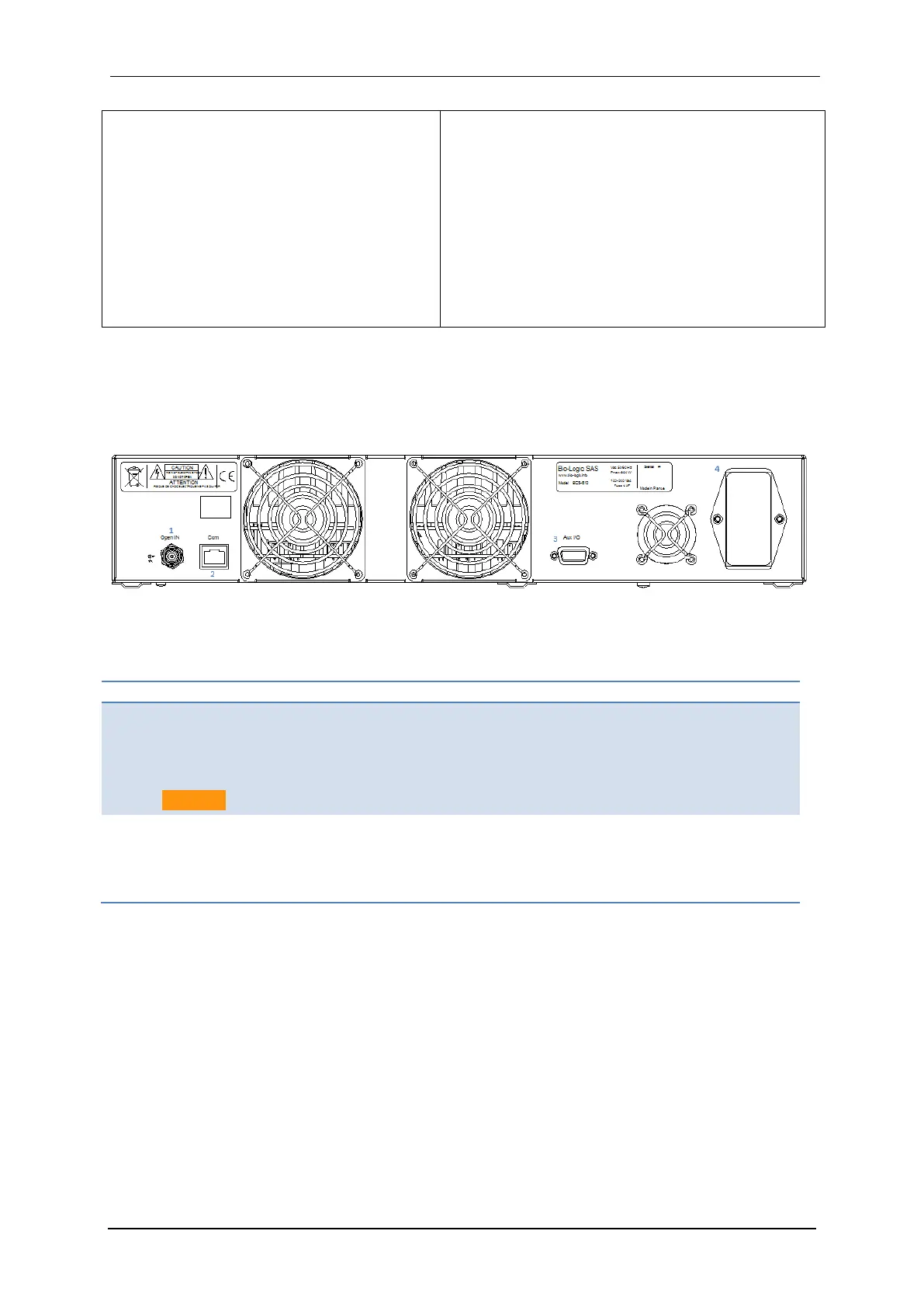
Figure 9 below corresponds to a scheme of the rear panel of the BCS-810. Detailed descrip-
tion is given in table 6.
Fig. 9: BCS-810 rear panel detailed description.
Table 6: Detailed BCS-810 rear panel description
Open IN:
Open relays of all the channels
when contact closed or logical
zero input (TTL level)
Caution: 5.75VAC max!
Com:
Communication input, should be con-
nected to the BCS-COM (refer to the
appropriate module letter)
Aux I/O:
DB9 connector with Analog and
digital Input & output
Power Line:
Power entry module (IEC320 C13 +
fuses+switch on/off) for power control
part.
1.2.3.3 Auxiliary inputs/outputs (DB9) on rear panel of BCS-810 and BCS-805.
A subD-9 pine connector is provided on the rear panel of each BCS-810 and BCS-805 mod-
ule. Fig. 10 shows the structure of the SubD-9pins connector and the different pins that can
be used as auxiliary inputs/outputs.
Analog Out is used to control external device (20 mA max).
Analog In1 is used for auxiliary signal (voltage) recording. Activate Record Aux1 in
the cell characteristics window of BT-Lab to record these variables in the data file.
Analog input 2 (Analog In2) is not available.
Trigger In and Trigger Out are programmed in the experiment protocol. Trigger In
can be used to start or stop the experiment of electrochemistry, in that case another
instrument sends a trigger to the instrument. Trigger Out can be sent at the beginning



 To Next Page