FARO
®
Laser Scanner Manual
12
Chapter 2: Introduction
Scanner. These angles are encoded simultaneously with the distance
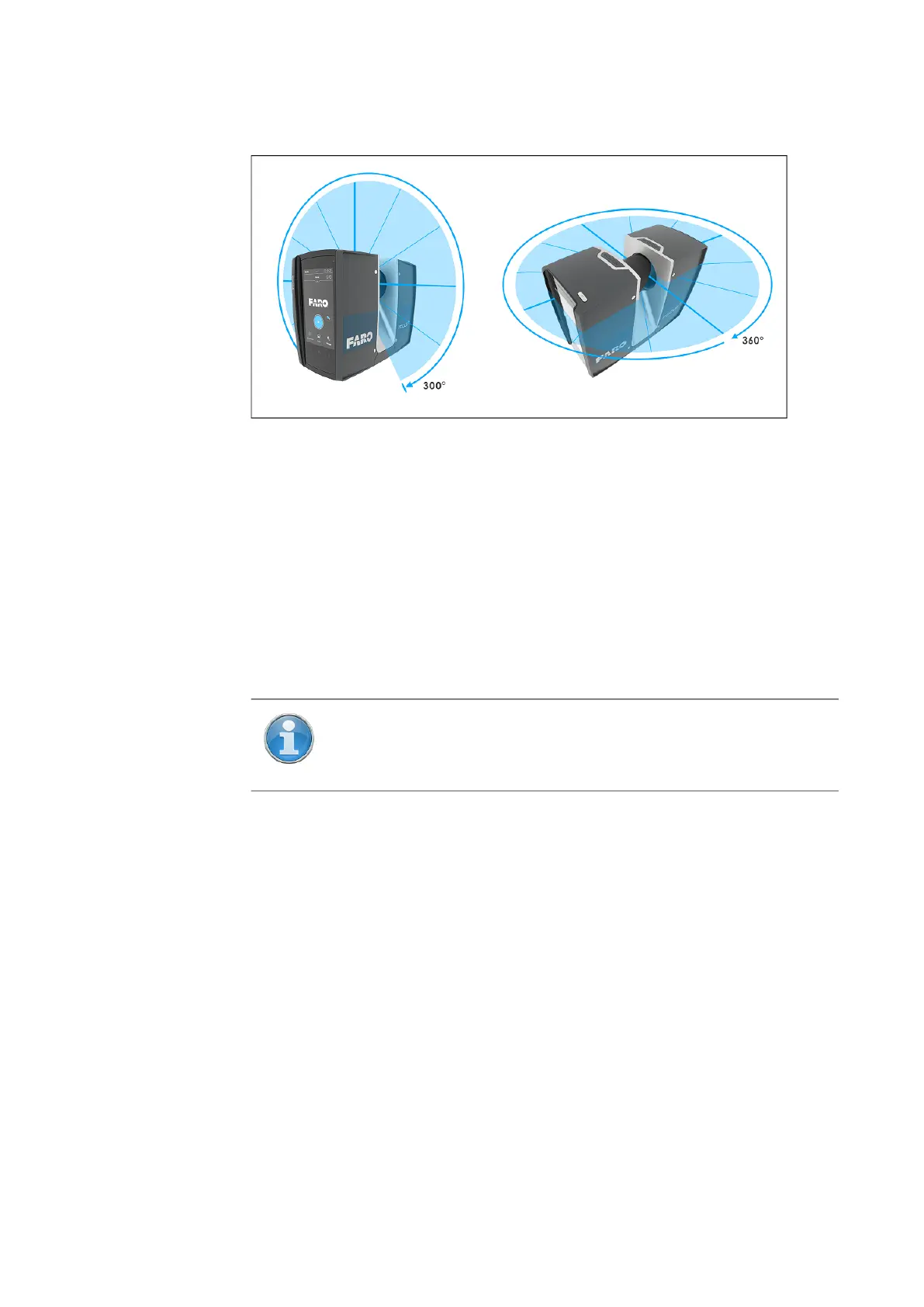
measurement. The scanner covers a 360° x 300° field of view.
Figure 2-3: Vertical and Horizontal Rotation
Additionally, the FARO Laser Scanner determines the reflectivity of the
captured surfaces by measuring the intensity of the received laser beam. In
general, bright surfaces reflect a greater portion of the emitted light than dark
surfaces. This reflectivity is used to assign a corresponding value to each
single point.
The single point measurements are repeated up to 976,000 times per second.
The result is a point cloud, a three-dimensional dataset of the scanner's
environment (hereinafter referred to as the laser scan or simply scan).
Depending on the selected resolution (points acquired per rotation) each point
cloud consists of millions of scan points.
The laser scans are recorded on a removable SD card, enabling easy and
secure transfer to SCENE, FARO’s point cloud manipulation software.
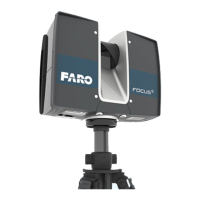
This manual provides an introduction to the FARO Laser Scanner. Read the
safety information in chapter Safety Precautions on page 16 and the step-by-
step guide in chapter Getting Started on page 28 before first use.
You can also find various training and tutorial videos on the Internet at
tutorial.faroeurope.com
The scanner also has an onscreen help that can be accessed during operation
by pressing the help button on the screen. For more information, see Online
Help and Notifications on page 114.
A list of the potential fields of application of the FARO Laser Scanner can be
found on the FARO web page www.faro.com.
Differences between
the scanners
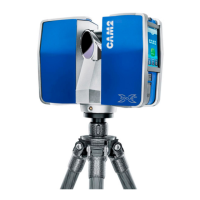
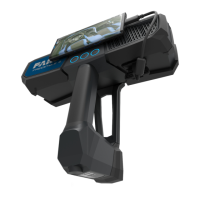
The features that this manual describes are not available on all FARO
scanners. The table below summarizes the differences between the four
models. Refer to the
technical specifications for a complete description of the
differences in range, accuracy, speed, etc.
NOTE: The maximal single point measurement rate of the Focus
M
70 is 488,000 times per second.



 To Next Page