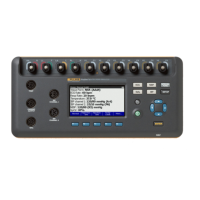
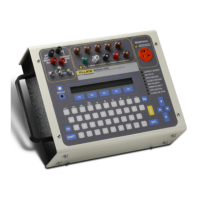
ProSim™ 8
Users Manual
A-8
Resistance
The opposition to electric current that is characteristic of a medium, substance, or
circuit element.
SA Node
The dominant pacemaker site in the heart, responsible for setting the heart rate.
Positioned in the right atrium near the inlet of the superior vena cava.
SaO
2
Abbreviation for saturated oxygen, SaO2 is the ratio of the concentration of
oxyhemoglobin (cHbO2) to the concentration of the two principle types of blood
hemoglobin: saturated hemoglobin (HbO2) plus reduced hemoglobin (Hb).
Serial Port
An asynchronous COMmunication port/address to which a peripheral—such as a
printer or a mouse—is connected to a computer or other device. SEE RS-232.
Sinus Arrhythmia
Beats that are normal, but triggered at an irregular rate, from 60 BPM to 100
BPM.
Sinus arrhythmia occurs when the SA node paces the heart irregularly. Typically,
the heartbeat increases with each intake of breath and decreases with each
exhalation (a condition most commonly found in young children and the elderly).
SpO
2
The type of saturated oxygen measured with a pulse oximeter.
Supraventricular Tachycardia
Normal rhythm at a faster-than-normal rate of 200 BPM. Supraventricular
tachycardia is a combination of a junctional tachycardia (that is, an atrial
tachycardia occurring in the AV or junctional node) and an atrial tachycardia.
Therefore, supraventricular tachycardia encompasses multifocal, ectopic, atrial
pacemakers in and around the AV node above the bundle of His.
Swan-Ganz
A soft, balloon-tipped catheter used for measuring blood pressure and cardiac
output. The catheter is guided by blood flow into the pulmonary artery. A monitor
near the tip of the catheter detects PAP, PCWP, and thermodilution.
Swan-Ganz Procedure
After insertion of a Swanz-Ganz catheter into a vein (usually the basilic vein of
the forearm), the catheter is gently guided by the flow of the blood into the
pulmonary artery. A monitor attached to the distal lumen port supplies a reading
of pulmonary-artery pressure (PAP). Pulmonary-capillary-wedge pressure
(PCWP) is determined by inflating the balloon, which becomes wedged; when
this wedge blocks blood flow, it provides a reading of the pressure in the left side
of the heart.
Thermodilution
The measuring of temperature change, enabled by the injection of a cold or
room-temperature solution (such as saline) into the right atrium by means of a
Swan-Ganz procedure.


 To Next Page