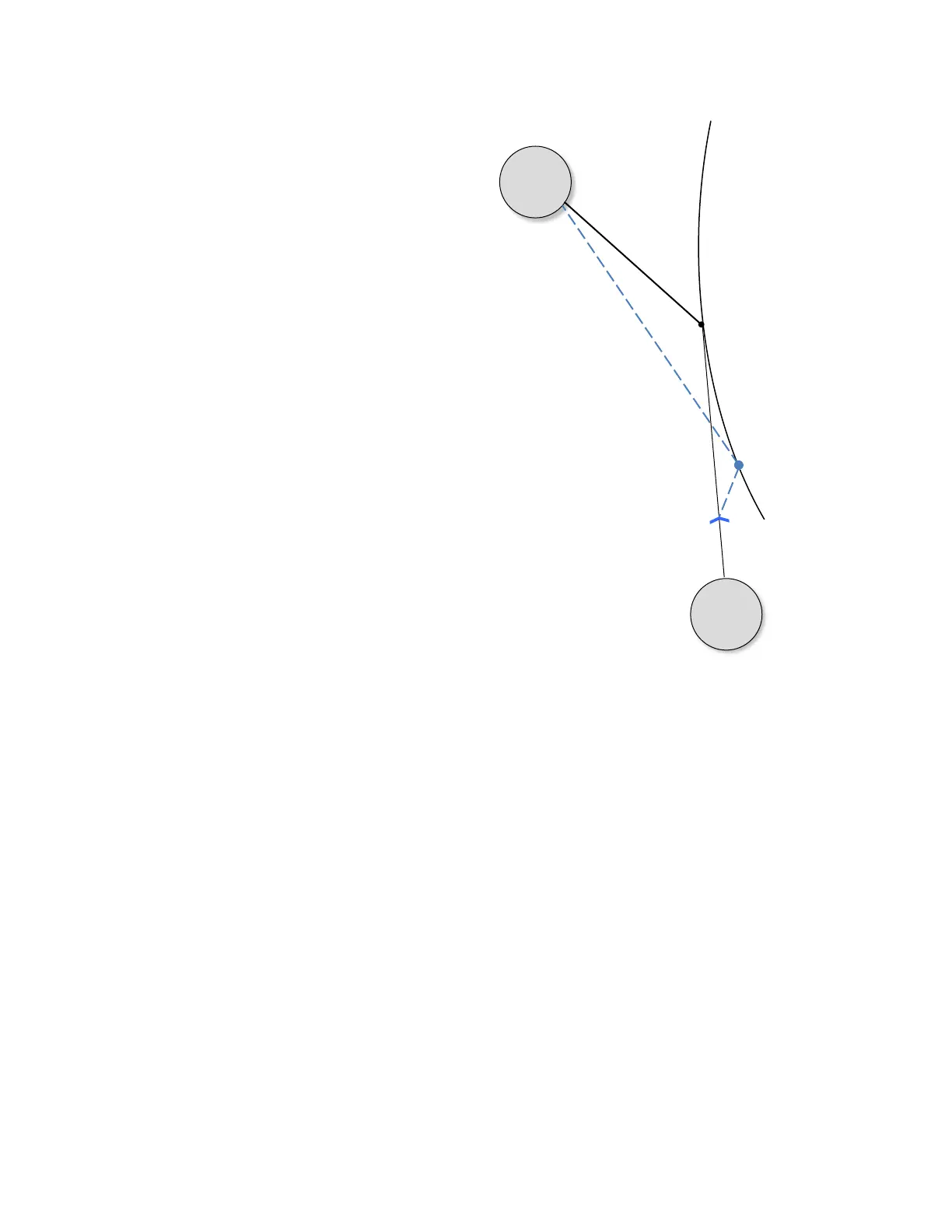
When approaching a turnpoint cylinder (C-Wp) at near
tangent, to be sure that you do not just-miss the cylinder
intercept, you should adjust your flight path so that it is just
slightly on the turnpoint side of the bearing pointer to the C-
Wp. Failure to observe this could result in flying just outside
the optimum intercept and missing the turnpoint. One way
to avoid this is turn slightly towards the turnpoint center when
you are very close to the C-Wp. Use the user-field Dist Opt WP
to monitor your distance to the intercept.
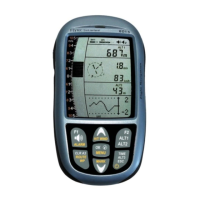
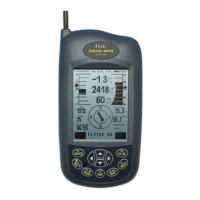
If the 6030 is on the Map page and Auto Zoom has been enabled, the 6030
will automatically go to maximum zoom (0.1km scale) when flying within a
preset user-defined distance (e.g. 100m). If full Auto Zoom was enabled, the
display will automatically transition to the Map page from the Main page. This way
it will be immediately obvious that you are close to the cylinder and you will be able
to clearly see your position relative to the cylinder and avoid just-missing the optimized
intercept. Once you fly into the cylinder and the turnpoint reached sound is given the
display will go back to the Main page. There are three modes of Auto-zoom: off, map only,
and full. Full auto-zoom will work as described above. If Map only is selected the 6030 will
only zoom to maximum if the 6030 is on the Map page, that is, it will not automatically
switch from the Main page to the Map page. The Auto-zoom mode and the threshold can be
set in Menu>Pilot settings>Auto Zoom C-Route. The threshold can be set between 30 and
180 meters.
5.4.3 The Start
To achieve an optimal competition start, the pilot endeavors to cross the start cylinder
boundary just a moment after the task start time has passed. To aid in determining that
moment, the 6030 has a countdown timer that is shown in the Information Field when the
Competition Route (that has a start time) is active. The countdown timer will display
hh:mm:ss to the start time and will alternate with the start waypoint name, The
countdown timer will display decreasing negative numbers as the first start time
approaches. At the actual start time (countdown timer = 00:00:00), the 6030 will give an acoustic alert consisting
of three, prolonged, high-pitched, two-tone beeps to serve as a definitive alert that it is possible to start the task
(i.e., exit or enter the start cylinder). When the start time has passed, the timer will start to count up to show how
much time has passed since the task start. There is also a user-field Start Race that functions the same as the
countdown timer except it only shows mm:ss. When Start Race becomes positive the user-field will visually
invert (white numbers on a black background) to serve as a definitive visual alert that it is possible to start the
task (i.e., exit or enter the start cylinder).
The moment the criteria for a valid start are achieved the 6030 gives an unmistakable “turnpoint reached” sound
(2-seconds of ascending beeps) and the 6030 will automatically switch to the next turnpoint. The criteria for a
valid start are: the start time of an active Competition Route has passed and the pilot either enters an entry
cylinder or is within an exit cylinder. Because the GPS receiver in the 6030 confirms its position every second, it
will take less than 1 second to alert the pilot of a valid start or of crossing a turnpoint cylinder. At that moment
the 6030 will record at least one tracklog point within the cylinder, regardless of the tracklog recording interval
you have set in the Recording settings menu.
Quite often the pilot may be waiting for the race to start some distance from the start cylinder. The user-field
CylArrival displays the countdown to the ideal moment to commence gliding to the start cylinder from the pilot’s
present position. The characteristics of the CylArrival are similar to the Start Race user-field, described above
in this section - decreasing negative numbers during countdown to zero, then the display field visually inverts
and counts up. When you are climbing, CylArrival is derived by adding the gliding time to the start cylinder flying
at best-glide speed, to the Start Race value. For example, If you are thermaling 2 miles from the start cylinder
and your best-glide speed is 30 mph, CylArrival will show 0:00 four minutes prior to the race start (Start Race
would show -4:00). When you are gliding, CylArrival is derived by adding the time it will take to cover the
distance to the start cylinder flying at your current speed, to the Start Race value. This user-field is helpful to
determine whether to proceed to the start circle or wait for the next start time. Ideally the pilot heads to the start
cylinder when CylArrival becomes 0 (assuming you have the desired altitude) and fluctuates near zero during
the glide. Note: wind is not considered in CylArrival.



 To Next Page