Section 3 - Pre-Installation Checks
PRE-INSTALLATION
28 Installation and Maintenance
3.4 CYLINDER - INSTALLATION AREA
location.
Examine the product dimensions “Overall width, depth
and height” shown in Table 5, Table 6 and Table 7 for your
selected product.
Think through the clearances needed to move the product
dimensions may be required for manoeuvring the product but
3.4.1 Product Location Considerations
Examine the product “Weight Full” Table 5, Table 6, Table 7
and Table 8 for your selected product.
least more than this weight.
review the guidance below and do a check on the water
Guidance: Existing properties with a 15 mm supply will be
satisfactory provided the local mains pressure is good, but
properties where simultaneous demand is required to more
than one bathroom or a bathroom and one or more en-suites,
the communication and service pipe into the dwelling should
be a minimum of 22 mm (usually in the form of a 25 mm
MDPE supply).
The optimum performance is achieved if the inlet pressure is
3 bar dynamic.
However, the HP290 DHW Cylinder will function with lower
inlet pressures, but this will reduce the performance. There
available into the property. Normally the HP290 cylinder
provides well in excess of 40 litres/min in most conditions.
Flow rates for ALL mains pressure systems are subject to
district pressures and system dynamic loss. Particularly on
larger properties with more than one bathroom, the pipe sizes
should be calculated in accordance with BS EN 806-3:2006
and BS 8558:2011.
Make sure that the selected location allows the following:
1. The discharge pipework for the safety valves must
have a minimum fall of 1 : 200 from the unit to a safe
discharge point.
2.
in a location where the contents could freeze. In new
systems, pipes should be insulated to comply with
building regs. The maximum permissible heat loss is
indicated in the table below.
i. Primary circulation pipes for domestic hot water circuits
should be insulated through their length, subject only to
practical constraints imposed by the need to penetrate
joists and other structural elements.
ii. All pipes connected to hot water storage vessels, should
be insulated for at least 1 metre from their points of
connection to the cylinder (or they should be insulated up
to the point where they become concealed).
iii. In replacement systems, whenever a boiler or hot
water storage vessel is replaced in an existing system,
any pipes that are exposed as part of the work or
are otherwise accessible should be insulated as
recommended for new systems, or to some lesser
standard where practical constraints dictate.
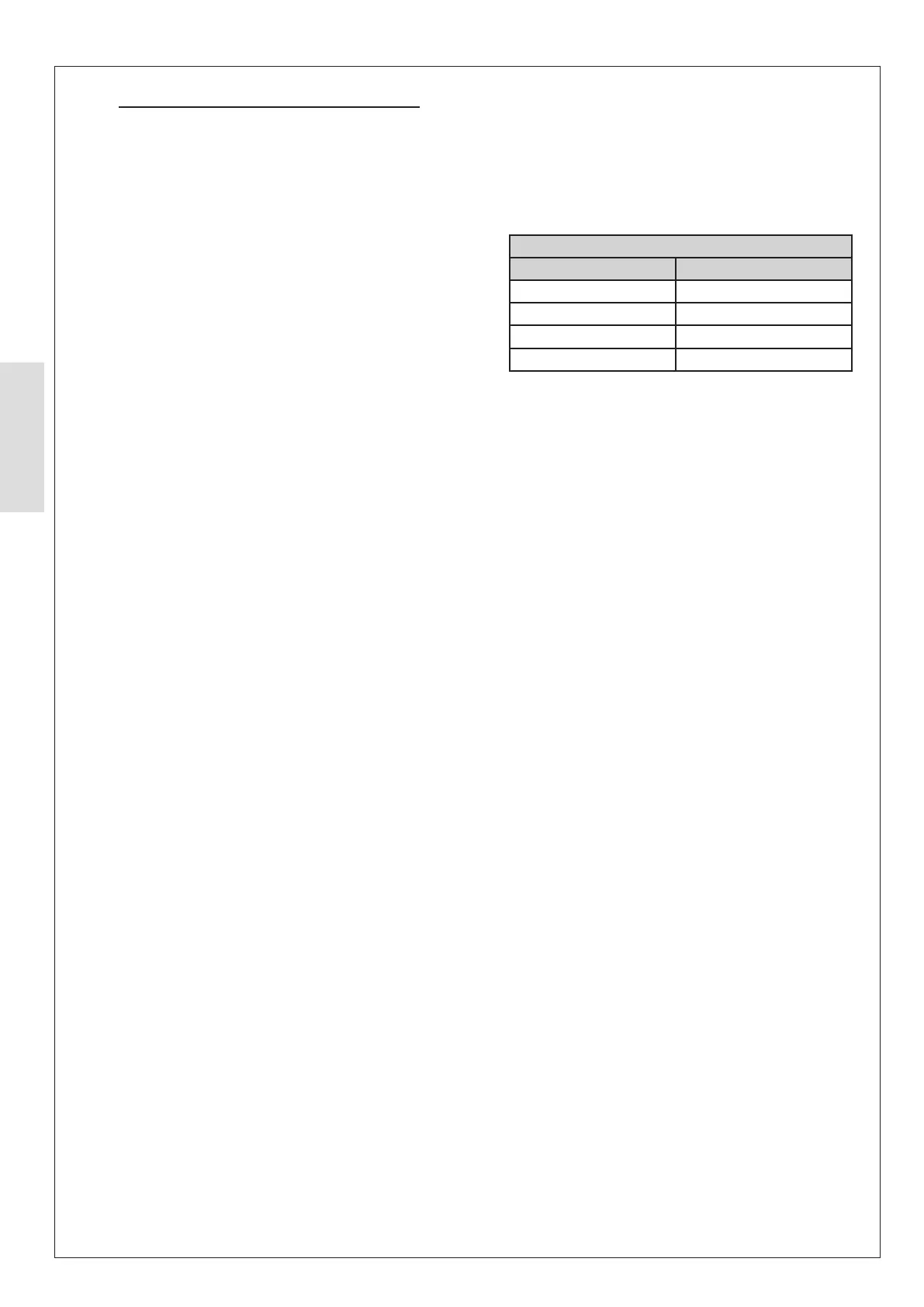
Insulation of pipework
Pipe outside diameter Maximum heat loss
15mm 7.89 W/m
22mm 9.12 W/m
28mm 10.07 W/m
35mm 11.08 W/m
ⓘ FURTHER GUIDANCE ON CONVERTING HEAT
LOSS LIMITS TO INSULATION THICKNESS FOR
SPECIFIC THERMAL CONDUCTIVITIES IS AVAILABLE
IN TIMSA “HVAC GUIDANCE FOR ACHIEVING
COMPLIANCE WITH PART L OF THE BUILDING
REGULATIONS”.
ⓘ OUR CYLINDERS HAVE BEEN DESIGNED WITH
28 MM PIPEWORK IN MIND. THIS IS BASED UPON
THE EXPECTATION THAT HIGHER FLOW RATES ARE
REQUIRED ON HEAT PUMP SYSTEMS.



 To Next Page