Page 18
©2013 Technical Marine Service, Inc. LC-100 V2.97
The too large bubbler presents a different set of
concerns. The LevelCom 100 admits measured
charges of air into the sense line system and
each charge of air will displace the fluid in the
bubbler pipe by a certain amount. If the bubbler
pipe diameter is too large, it is possible that the
measured charges of air will not displace the
fluid in the bubbler pipe far enough to detect a
good reading. In this case the LevelCom 100
will not be able to detect when bubbles are
being blown from the end of the tank, and this
can result in significant reading errors.
Maximum diameter for a bubbler pipe should
not exceed 1.5 inches.
In tanks where there is agitation, mechanical
properties along with the diameter of the
bubbler pipe need to be considered. Agitation
and significant sloshing of the liquid will require
more mechanical strength in both the pipe and
mounting system. This is an especially
important factor to consider, when the pipe is
mounted to a flange at the top of the tank and
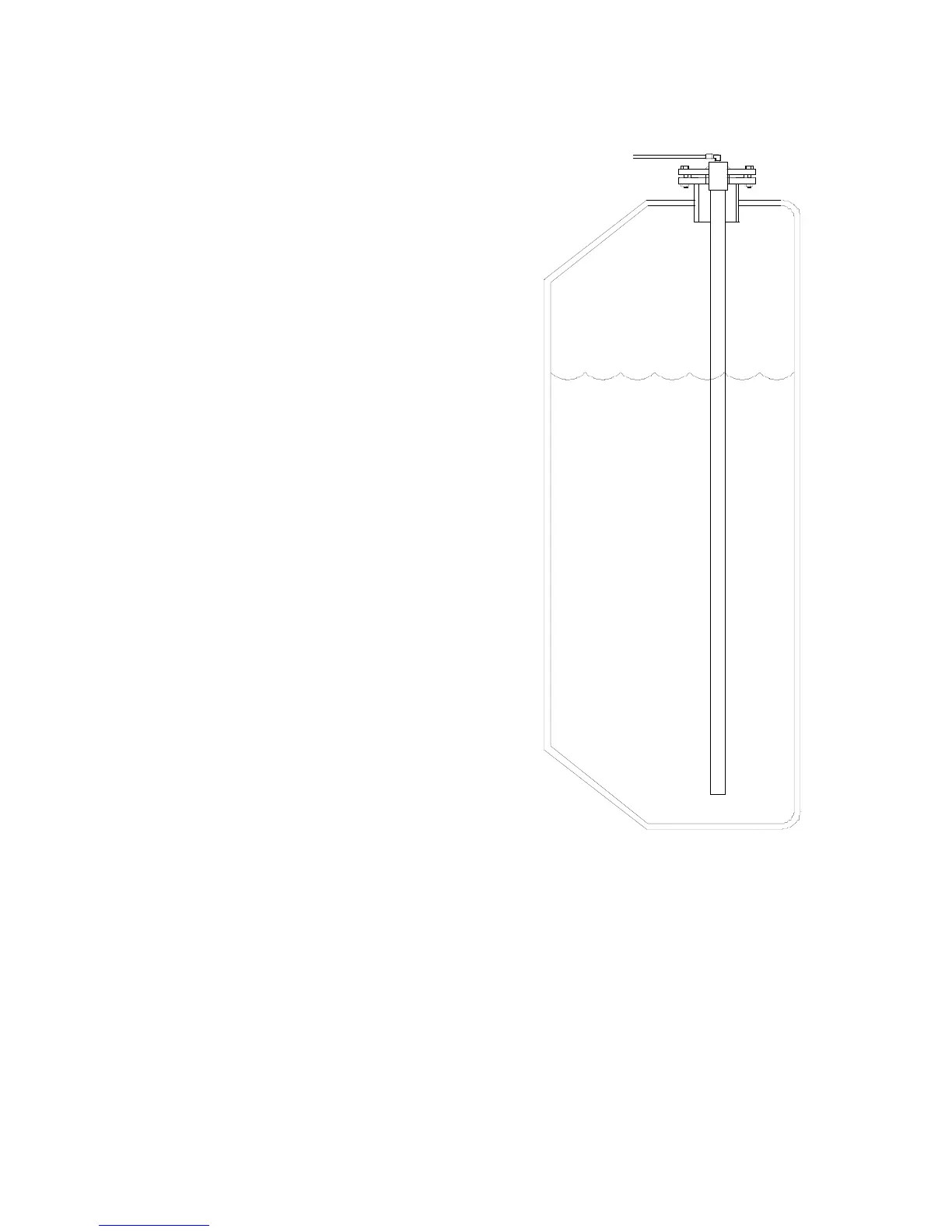
has no other support. Figure 5 shows a typical
flange mount installation. Note that the pipe is
only supported at the top.
Materials
It is important that the bubbler pipe be made of
materials compatible with the liquid to be
measured. Deterioration of the bubbler pipe will
result in measurement errors and eventually
failure of the sensing system.
For example if the LevelCom 100 is gauging a
ship’s ballast tank and will be exposed to salt
water, steel pipe will eventually corrode from constant exposure to salt water and should not
be used. In tanks containing acids or corrosives plastic pipe may be a better option.
It is always important to consider the strength of the materials used for the bubbler pipe.
When using plastic pipe, for instance, it would be better to use thick wall pipe (Schedule 40
or 80 for example) rather than thin wall pipe for mechanical strength.
Figure 5 Flange Mounting Example
TUBING TO
LevelCom



 To Next Page