MM098-002 – LOGOS ONE – Operator Manual
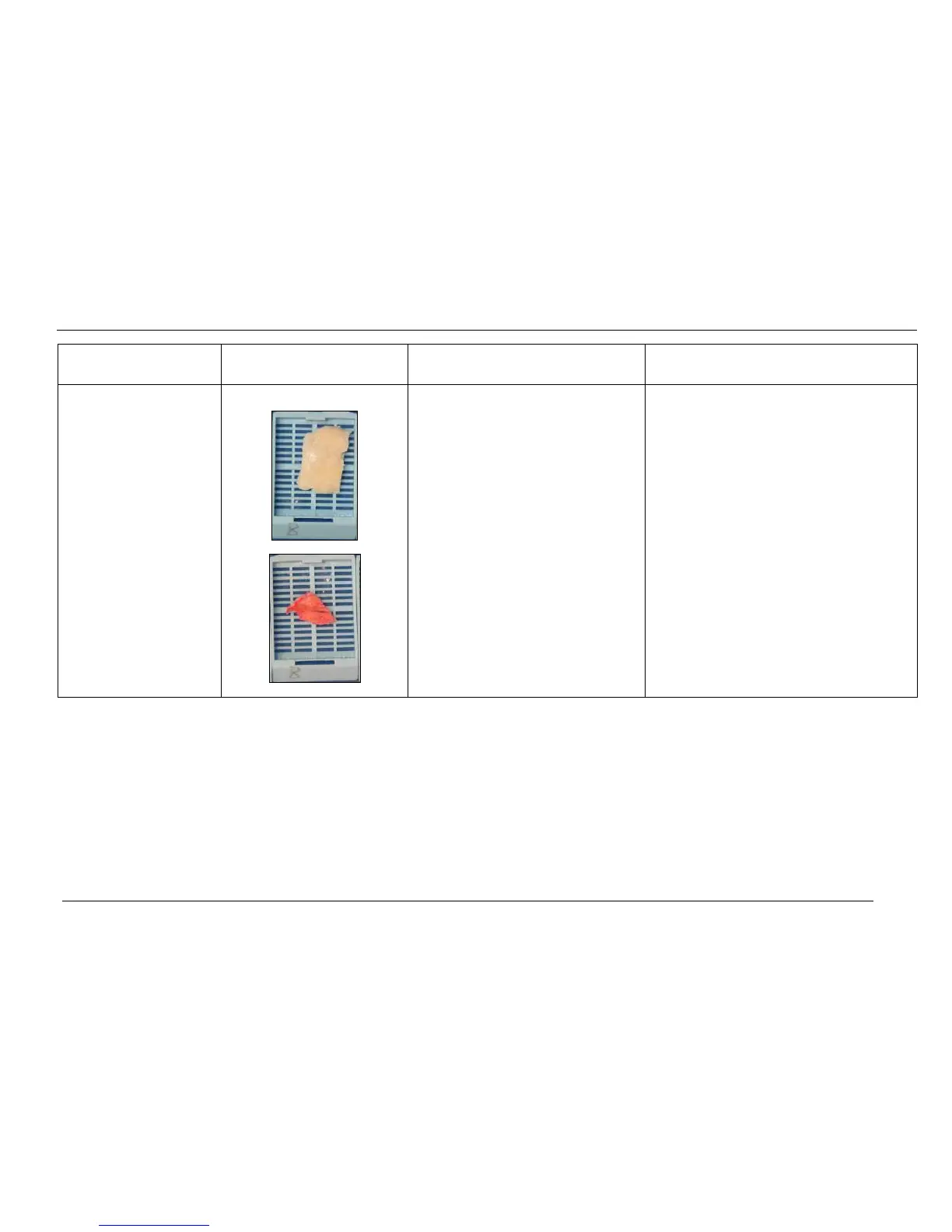
Fatty tissue collapses
in block and
microscopic section.
Macro: fatty tissue block
structure size looks much
smaller than the original piece
placed in the cassette
(appears collapsed).
Micro: the fatty section does
not that honeycomb
appearance of fatty cells and
instead the fat cells are
collapsed into themselves
(squashed together).
1. Tissue size is too large for adequate
fixation to occur and stabilize the tissue
to withstand subsequent exposure to
reagents, such as JFC.
2. Present in larger fatty tissue blocks
where there is an absence of
connective tissue parenchyma to hold
fat cells in place: connective tissue
provides a framework to support fatty
cells in place.
More likely to be seen in larger fatty tissue
blocks and not in smaller fatty biopsies such
as breast core biopsies.
1. Ensure that tissue fixation for the larger tissue
blocks has been performed conventionally for
at least overnight prior to processing: don’t
assume tissue is well fixed when dealing with
larger size samples.
AND
If using JFC as the only processing agent,
then change to a program that utilizes JFC
followed by Isopropanol, where Isopropanol
helps stabilize fatty cell structure.
2. Use of Isopropanol as the last reagent step
before WAX infiltration will reduce the risk of
fatty cell collapse, so a preset protocol for
fatty tissue should employ Isopropanol or
ProWave as the last reagent step prior to
WAX infiltration


 To Next Page