B)
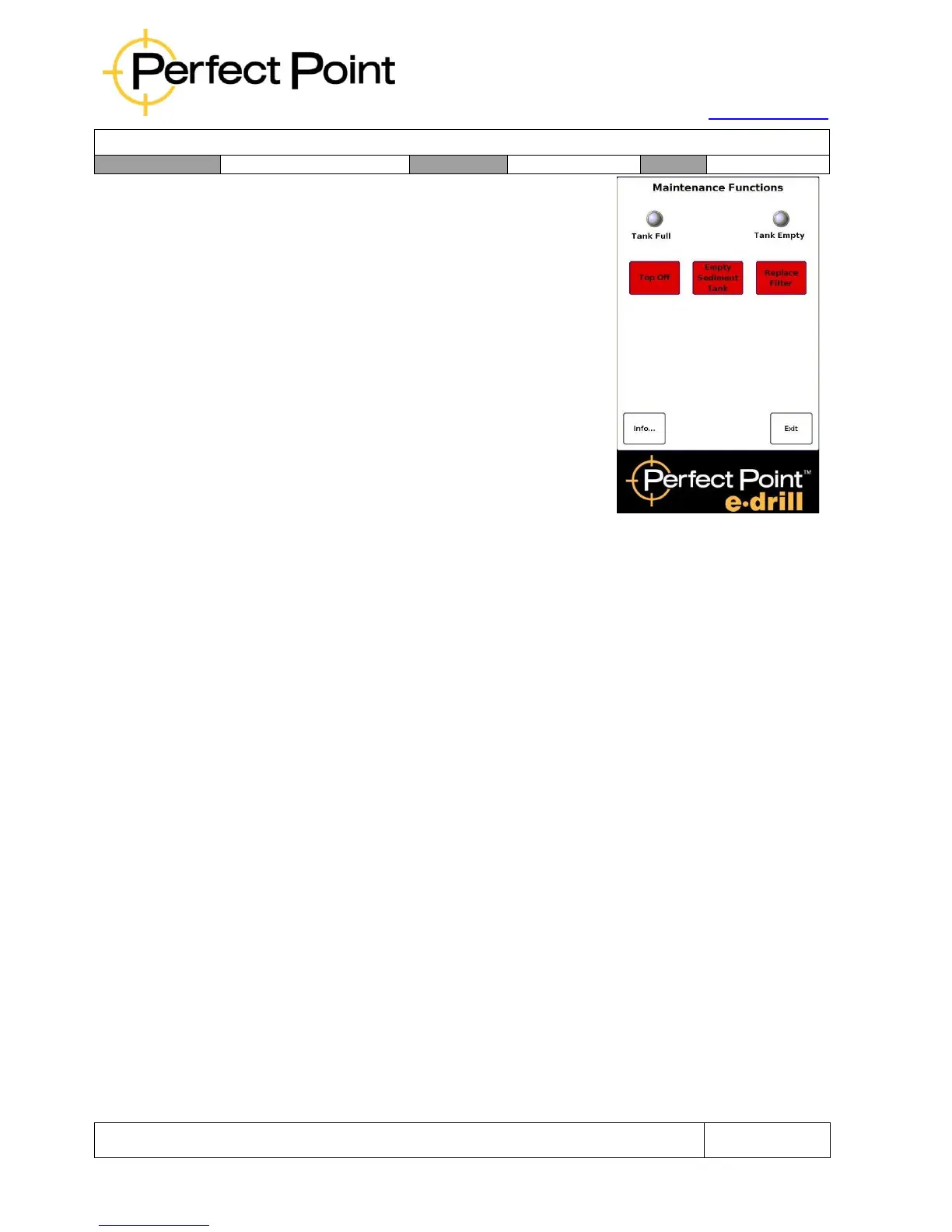
Empty the system by pressing the Empty
Sediment Tank button in the Maintenance
Screen of the Touch-Screen Display. The
button will change color to green and the
system will automatically pump out sufficient
water for the Sediment Bowl to be removed
and cleaned. The pump will terminate
automatically when sufficient water has
been removed.
Once the pump is started a “pop-up” screen
will appear prompting the user to reset the
sediment tank counter. This function allows
the operator to determine if the sediment
tank is truly to be emptied, or if other system
bleed/charge procedures are being
performed (see Section 3.7) and allows the
cut cycle counter to be reset or ignored as appropriate. Press the YES
button to proceed.
C)
Loosen the Dielectric Lock-Bolt on the frame to the right of the entire Filter
Assembly. Rotate the assembly until nearly horizontal (see photograph at the
end of this section) and retighten the Lock-Bolt.
D)
Using the Filter Bowl Wrench provided with the system, loosen the Sediment
Bowl (bowl on the right, marked Sediment). Use caution; there will be some
residual water in the bowl. Unthread by hand; carefully remove the bowl
without touching the pick-up tube or fragile level sensor assembly to its right.
Dump sediment and clean out the Sediment Bowl with a clean, lint free shop
towel. Do not attempt to clean the Level Sensor Sleeve.
E)
Prior to reassembly, inspect the bowl to ensure the large O-ring seal is clean
and undamaged, properly lubricated and seated before reinstalling. Hand-
thread the tank onto the Filter Cap Assembly, taking care not to unseat the
O-ring or touch the center pick-up tube or the level sensor assembly. Use the
Filter Bowl Wrench provided with the system to lightly tighten the bowl.
Return the Bowl Assembly to vertical position and tighten the Dielectric Filter
Assembly Lock Bolt.
F)
Ensure that the end of the drain/bleed tube is submerged in water, then
recharge system using Dielectric Top-Off button. Ensure that water is being
drawn into the system by watching for movement of air-bubbles when the
procedure is started. If water is not being drawn into the system, it is
likely that the O-ring is incorrectly installed. Re-tilt the assembly and



 To Next Page