4.17
Date Code 20170601 Instruction Manual SEL-387-0, -5, -6 Relay
Control Logic
Trip and Close Logic
Trip Logic
There are five specific sets of trip logic within the SEL-387. They are
designed to operate when SEL
OGIC control equation trip variable setting TRm
is asserted (m = 1, 2, 3, 4, 5) and to unlatch when SEL
OGIC control equation
setting ULTRm is asserted. The output of the logic is Relay Word bit TRIPm.
The logic operates much like the Latch Bit function in SEL
OGIC Control
Equation Sets 1 through 3, with additional characteristics. In the trip logic, the
set or latch function has priority over the reset or unlatch function.
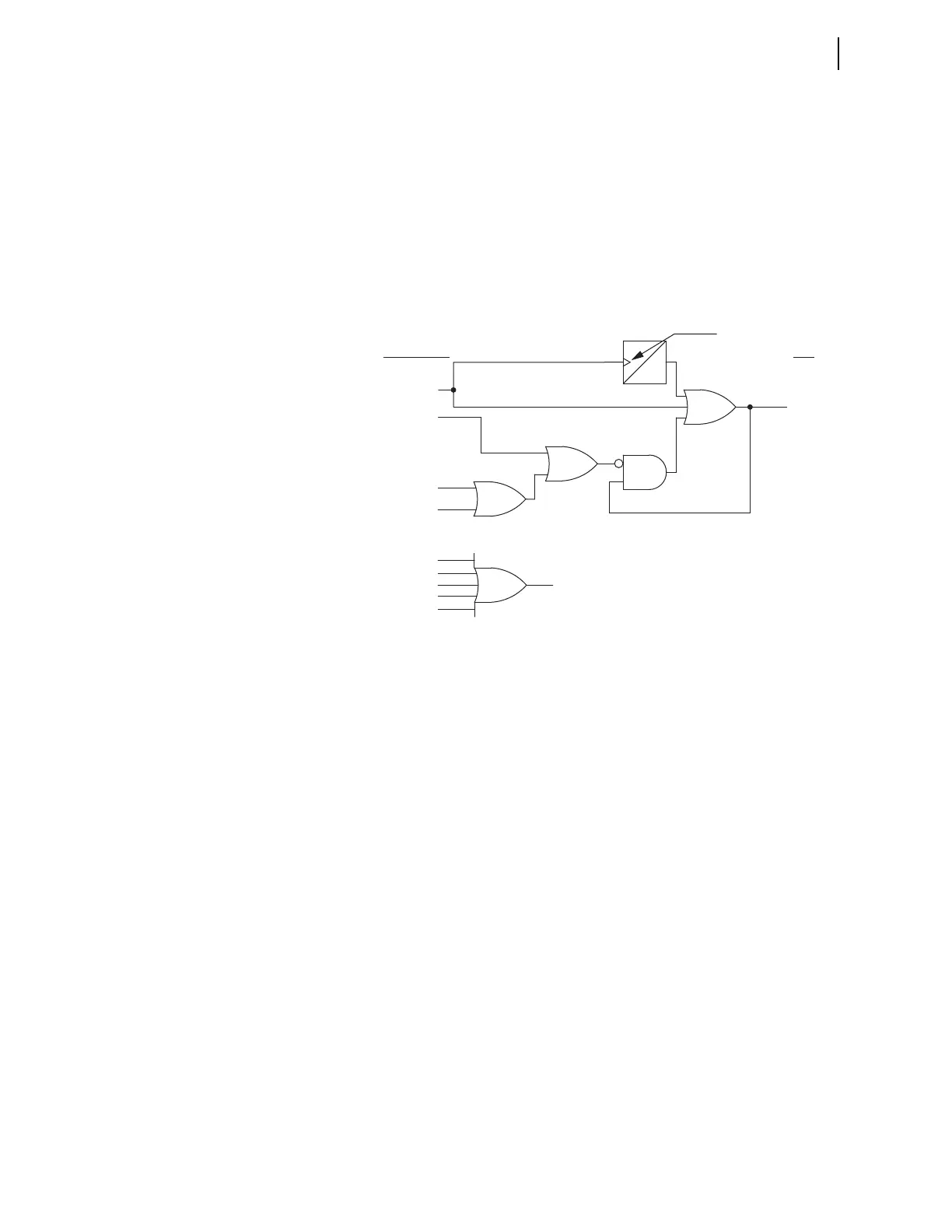
Figure 4.7 shows the logic diagram for the TRIP1 logic. The remaining logic
for TRIP2 through TRIP5 is identical, using variables TR2 through TR5 and
ULTR2 through ULTR5, respectively.
Figure 4.7 SEL-387 Trip Logic (TRIP1)
The logic begins with the assertion of SELOGIC control equation TR1, one of
the Group variables. In our example application, Relay Word bits representing
three Winding 1 overcurrent elements and the OPE 1 command are used to
assert TR1. TR1 directly asserts TRIP1 via the three-input OR gate at the
right.
However, TR1 may only assert briefly while a more lengthy assertion of
TRIP1 is needed. There are two means to ensure a longer TRIP1 assertion. At
the top of the diagram is an Edge Trigger Timer. It detects the rising edge of
TR1, and issues a second output to the OR gate. This second output will last
the duration of Group setting TDURD (minimum trip duration timer). Once
the rising edge has been detected and the timing started, the ongoing state of
the TR1 input to the timer is ignored. Thus, TRIP1 will be asserted for a
minimum of TDURD cycles, even if TR1 is asserted for as little as one
processing interval, or if the unlatch portion of the logic is asserted before
TDURD expires. The default setting of TDURD is nine cycles.
TRIP1 also seals itself in via the AND gate at the bottom. This AND gate
receives the negated inputs from the unlatching functions. As long as no
unlatch function is asserted, the seal of TRIP1 remains intact. TRIP1 is used to
drive an output contact to initiate tripping of the breaker or breakers. In our
example, OUT101 = TRIP1.
The unlatching of the trip logic is accomplished via three means. The first is
the assertion of the SEL
OGIC control equation setting ULTR1. In our example,
ULTR1 = !50P13 = NOT 50P13. This current element is set to pick up at
0.5 A. Thus, ULTR1 asserts when the currents in all three phases drop below
0.5 A, indicating successful three-pole opening of the breaker.
Relay
Word
Bit
TDURD
O
TR1
ULTR1
TRIP1
(in) (out)
rising
edge detect
Minimum Trip
Duration Timer
TRIPL
TRGTR
TAR R
Serial Port Command
{TARGET RESET}
Pushbutton
TRIP1
TRIP5
TRIP4
TRIP3
TRIP2
SELOGIC Control
Equation Settings


 To Next Page