39
5 Delivery, returns, storage
5.1 Delivery
After receipt of the shipment, it must be inspected for any
shipping damage and for completeness according to the
shipping documents. Immediately inform the transport
carrier of any shipping damage. The packaging material
must be preserved until any discrepancies are resolved.
5.2 Return shipment
Before return shipment, all contaminated parts must be
cleaned. If this is not possible or practical, e.g. if it would
impede fault detection in the case of complaints, the
medium used must always be specified. In the case of
products contaminated with hazardous substances as
defined by GHS or CLP regulations, the safety data sheet
(SDS) must be sent with the product and the packaging
must be labelled in accordance with GHS/CLP. There are
no restrictions for land, air, or sea transport. The choice of
packaging should be based on the specific product and
the stresses to be expected during transport (e.g.,
necessary anti-corrosion measures in the case of
shipment by sea). In the case of wooden packaging, the
applicable import regulations and the IPPC standards
must be observed. Required certificates must be included
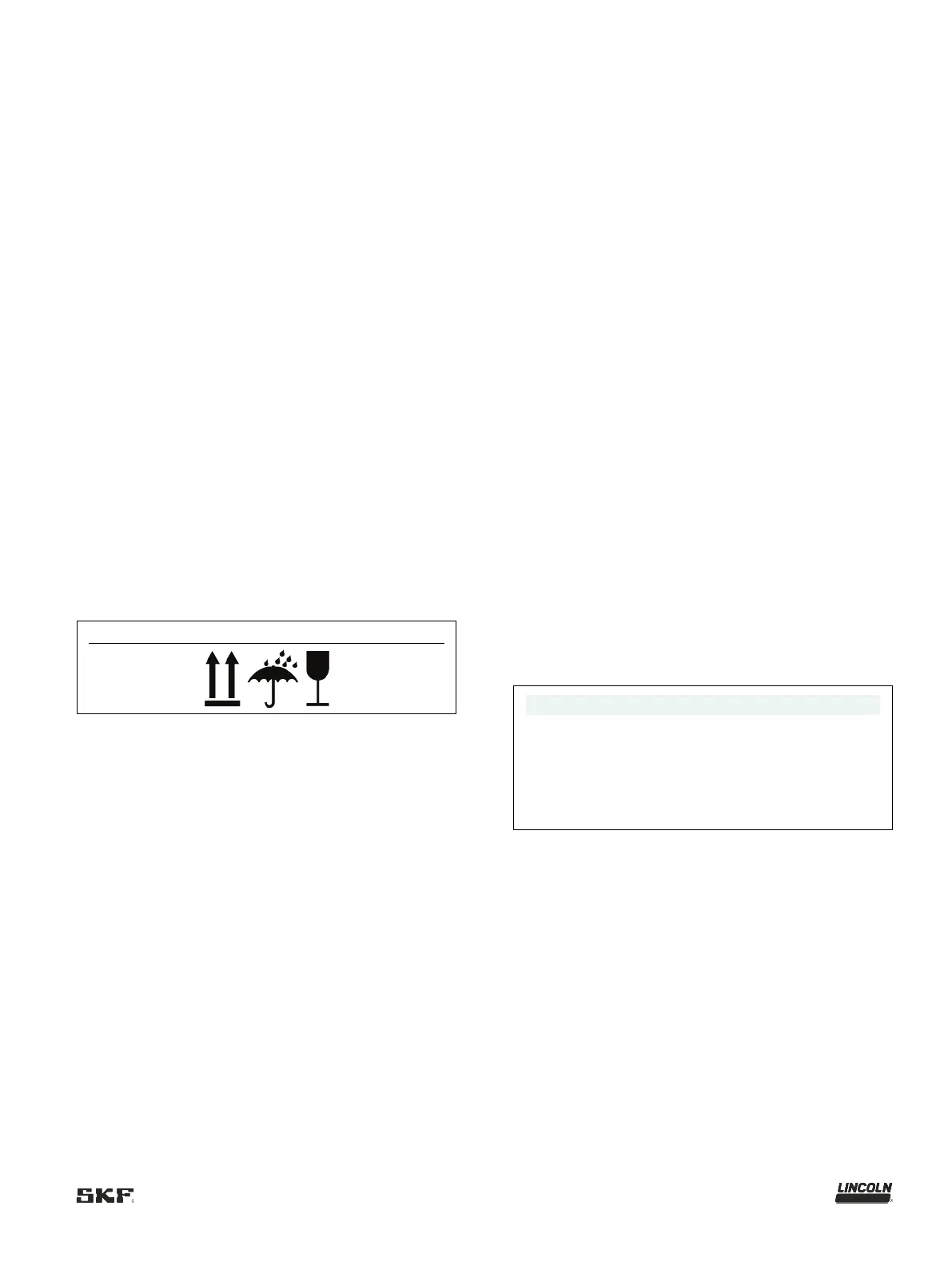
in the shipping documents. The following information, as
a minimum, must be marked on the packaging of return
shipments.
Fig.
Marking of return shipments
5.3 Storage
The following conditions apply to storage:
• Dry, low-dust, vibration-free, in closed rooms
• No corrosive, aggressive substances at the storage
location (e.g., UV rays, ozone)
• Protected against animals (insects, rodents)
• If possible, keep in the original product packaging
• Protected from nearby sources of heat or cold
• In the case of large temperature fluctuations or high
humidity, take appropriate measures (e.g., heating) to
prevent the condensation of water
• Before usage, check products for damage that may
have occurred during storage. This applies in particular
to parts made of plastic (due to embrittlement).
5.4 Storage temperature range
For parts not filled with lubricant, the permitted storage
temperature is the same as the permitted ambient
temperature range (see “Technical data”).
5.5 Storage conditions for products
filled with lubricant
For products filled with lubricant, the permitted storage
temperature range is:
If the storage temperature range is not maintained, the
following steps for replacing the lubricant may not lead to
the desired result under certain circumstances.
5.5.1 Storage period up to 6 months
Filled products can be used without implementing
additional measures.
5.5.2 Storage period between 6 and 18
months
Pump:
• Connect the pump to a power source
• Switch on the pump and run it until lubricant comes out
of every outlet without air bubbles
• Disconnect the pump from the power source
• Remove and dispose of the lubricant that came out
Lines:
• Remove pre-installed lines
• Ensure that both ends of the line are open
• Fill the lines completely with fresh lubricant
Metering devices:
Due to the large number of different metering devices,
no universally valid statement can be made regarding
the removal of the old lubricant and correct bleeding
after filling with new lubricant. The instructions can
be found in the technical documentation
of the
specific metering device used.
5.5.3 Storage period more than 18 months
To prevent faults, the manufacturer should be consulted
before start-up. The basic procedure for removal of the
old lubrication filling corresponds to that for storage
periods between 6 and 18 months.
5.6 Declaration of decontamination
If the product came in contact with harmful substances,
make sure to thoroughly clean the product before
returning it to us. Due to statutory provisions and for the
safety of our employees and operation facilities we
further need a fully completed and signed “Declaration of
decontamination”.




 To Next Page