EN-29
Containment and Transportation
• Reprocess the device as soon as reasonably practical following use
1
.
• Transport the device in a tray to avoid damage.
1
A 30 minute wait time was used during cleaning validation.
Preparation for Cleaning
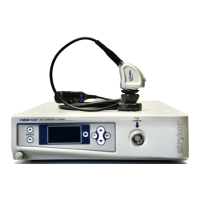
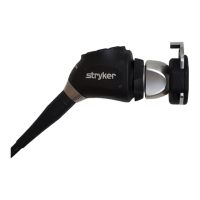
1. Disassemble the coupler from the scope and camera head.
2. Prepare an enzymatic detergent according to the manufacturer’s
recommendations (one ounce per gallon of tap water at 35–40 °C)
2
.
3. Wipe the entire device with the detergent, using a clean cloth.
4. Immerse the device in the detergent. Using a syringe, inject any inside
regions of the device with 50 mL of the detergent to ensure all parts of
the device are reached.
5. Soak the device in the detergent for a minimum of 15 minutes.
2
ENZOL® Enzymatic Detergent is validated for cleaning ecacy.
Cleaning: Manual
1. Brush
• Prepare a fresh solution of enzymatic detergent according to the
manufacturer’s recommendations (one ounce per gallon of tap
water at35–40 °C).
• Thoroughly brush the exterior of the device with a soft-bristled
brush, focusing on any mated or rough surfaces.
• Using a syringe, inject any lumen or mated surface a minimum
ofvetimes with 50 mL of the detergent.
• Brush any lumens a minimum of ve times from each end, using
anappropriate bottle brush.
• Brush any movable parts in all extreme positions.
2. Rinse
• Rinse the device with reverse osmosis/de-ionized (RO/DI) water at
ambient temperature until all detergent residue is removed. Flush
any lumens or mated surfaces a minimum of ve times. Once all
detergent residue is removed, continue to rinse for a minimum of
30seconds.
• Drain excess water from the device and dry it using a clean cloth
orpressurized air.
• Visually inspect the device for cleanliness, paying close attention
tohard-to-reach areas. If visible soil remains, repeat steps 1 and 2.


 To Next Page
 Loading...