7.2 Changing the Filter Resp onse 73
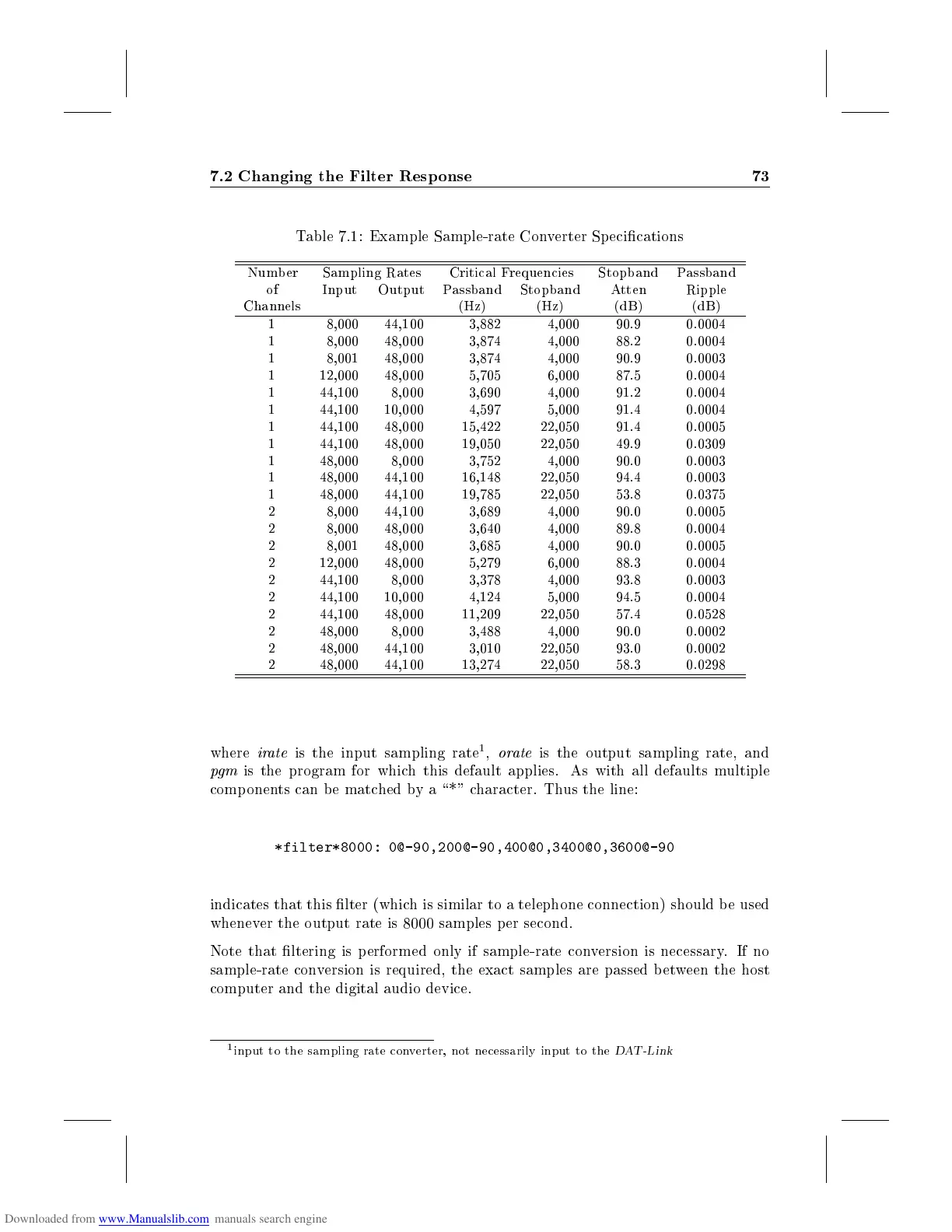
Table 7.1: Example Sample-rate Converter Specications
Number Sampling Rates Critical Frequencies Stopband Passband
of Input Output Passband Stopband Atten Ripple
Channels (Hz) (Hz) (dB) (dB)
1 8,000 44,100 3,882 4,000 90.9 0.0004
1 8,000 48,000 3,874 4,000 88.2 0.0004
1 8,001 48,000 3,874 4,000 90.9 0.0003
1 12,000 48,000 5,705 6,000 87.5 0.0004
1 44,100 8,000 3,690 4,000 91.2 0.0004
1 44,100 10,000 4,597 5,000 91.4 0.0004
1 44,100 48,000 15,422 22,050 91.4 0.0005
1 44,100 48,000 19,050 22,050 49.9 0.0309
1 48,000 8,000 3,752 4,000 90.0 0.0003
1 48,000 44,100 16,148 22,050 94.4 0.0003
1 48,000 44,100 19,785 22,050 53.8 0.0375
2 8,000 44,100 3,689 4,000 90.0 0.0005
2 8,000 48,000 3,640 4,000 89.8 0.0004
2 8,001 48,000 3,685 4,000 90.0 0.0005
2 12,000 48,000 5,279 6,000 88.3 0.0004
2 44,100 8,000 3,378 4,000 93.8 0.0003
2 44,100 10,000 4,124 5,000 94.5 0.0004
2 44,100 48,000 11,209 22,050 57.4 0.0528
2 48,000 8,000 3,488 4,000 90.0 0.0002
2 48,000 44,100 3,010 22,050 93.0 0.0002
2 48,000 44,100 13,274 22,050 58.3 0.0298
where
irate
is the input sampling rate
1
,
orate
is the output sampling rate, and
pgm
is the program for which this default applies. As with all defaults multiple
components can be matched by a \*" character. Thus the line:
*filter*8000: 0@-90,200@-90,400@0,3400@0,3600@-90
indicates that this lter (which is similar to a telephone connection) should be used
whenever the output rate is 8000 samples p er second.
Note that ltering is performed only if sample-rate conversion is necessary. If no
sample-rate conversion is required, the exact samples are passed between the host
computer and the digital audio device.
1
input to the sampling rate converter, not necessarily input to the
DAT-Link



 To Next Page