vii
Hazards associated with removing an instrument from service
When you remove the instrument from use to repair or dispose of it, you must
decontaminate all of its vacuum areas. These are the areas in which you can
expect to encounter the highest levels of contamination:
• Source interior
• Waste tubing
• Exhaust system
• Rotary pump oil (where applicable)
The need to decontaminate other vacuum areas of the instrument depends on
the kinds of samples the instrument analyzed and their levels of
concentration. Do not dispose of the instrument or return it to Waters for
repair until the authority responsible for approving its removal from the
premises specifies the extent of decontamination required and the level of
residual contamination permissible. Management must also prescribe the
method of decontamination to be used and the appropriate protection for
personnel undertaking the decontamination process.
You must handle items such as syringes, fused silica lines, and borosilicate
tips used to carry sample into the source area in accordance with laboratory
procedures for contaminated vessels and sharps. To avoid contamination by
carcinogenic, toxic, or biohazardous substances, you must wear
chemical-resistant gloves when handling or disposing of used oil.
Safety advisories
Consult Appendix A for a comprehensive list of warning and caution
advisories.
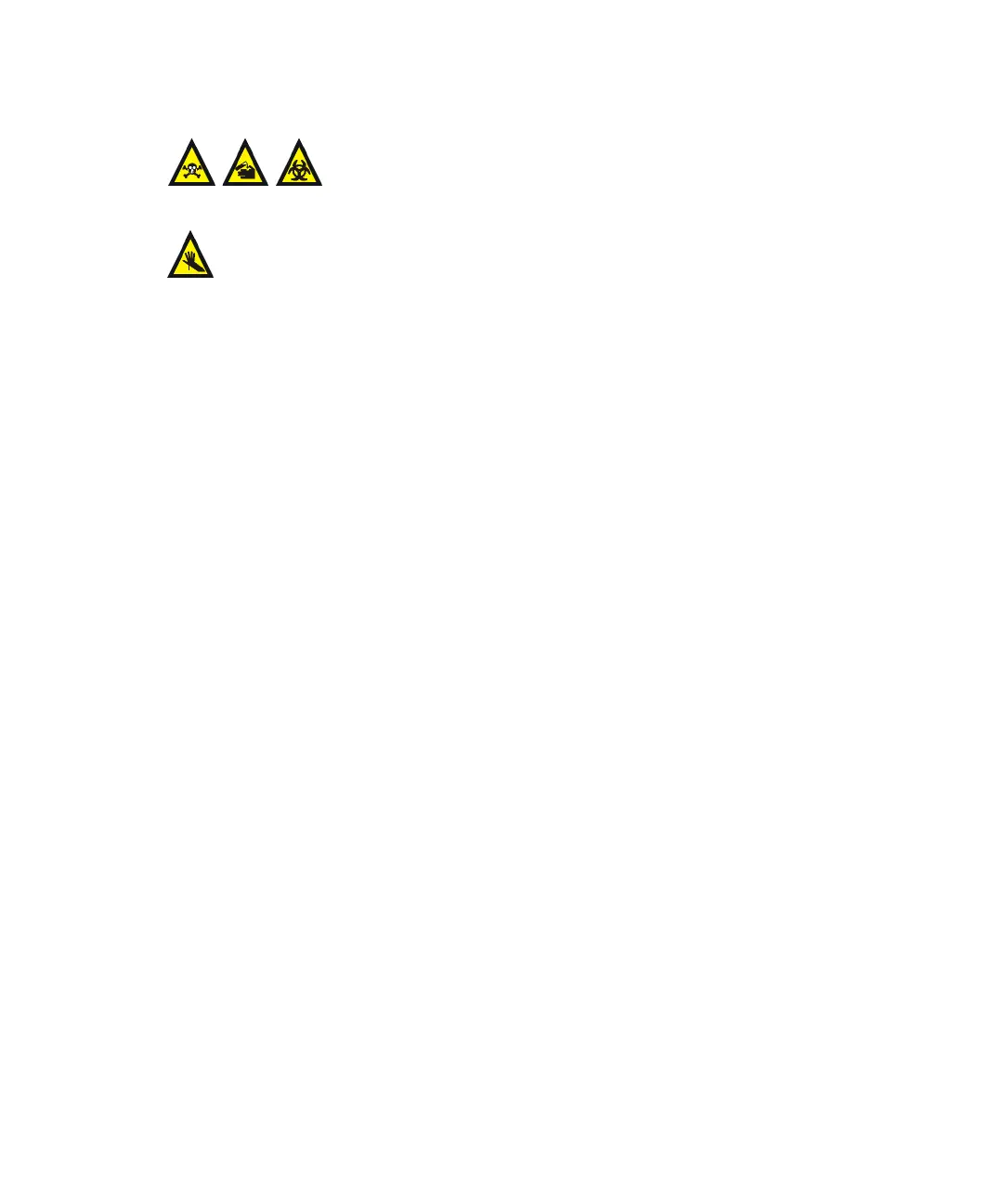
Warning: To avoid personal contamination with
biohazardous or toxic materials, wear chemical-resistant
gloves during all phases of instrument decontamination.
Warning: To avoid puncture injuries, handle syringes, fused silica lines,
and borosilicate tips with care.



 To Next Page