2.
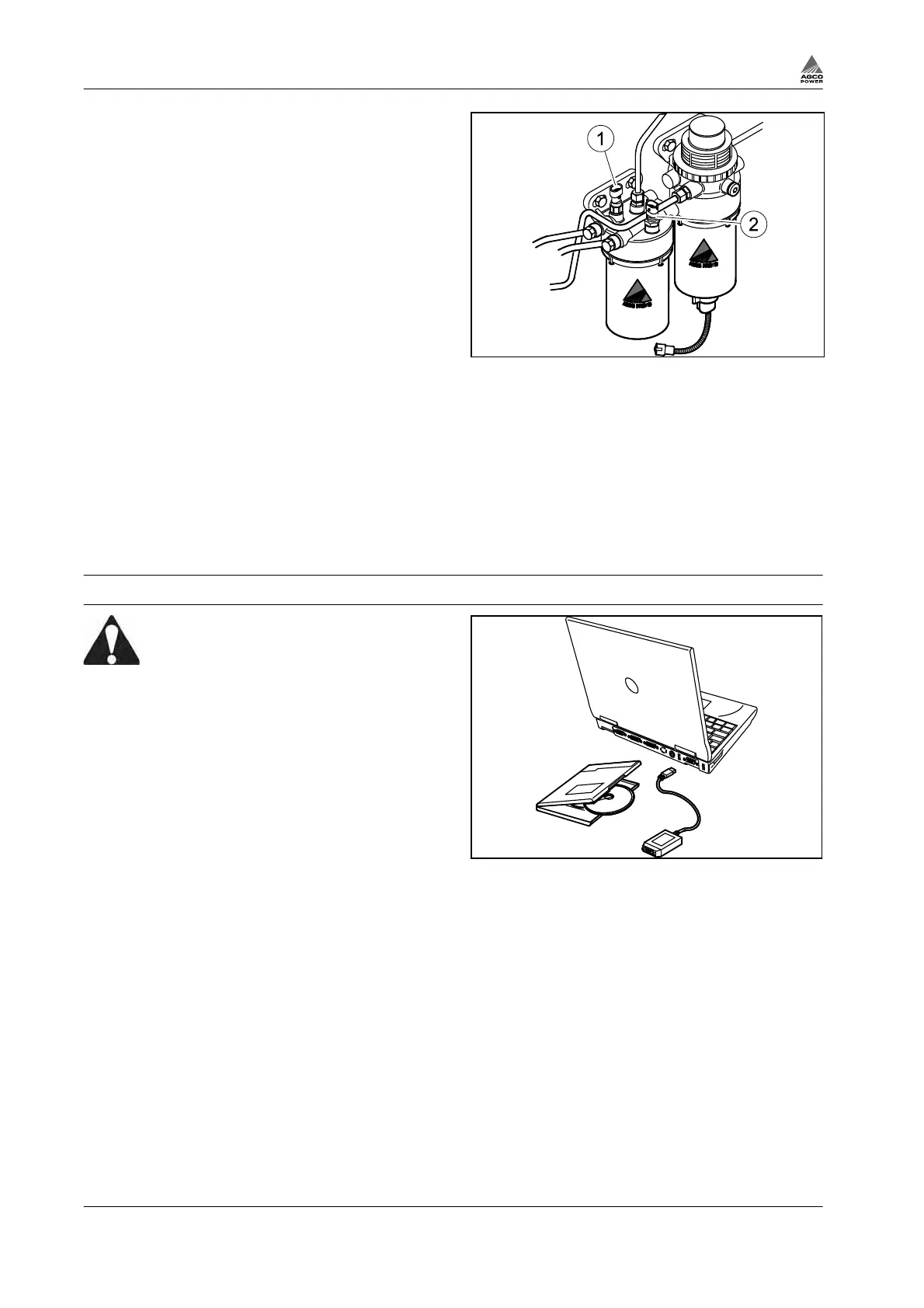
Disconnect the fuel pressure sensor (1) from
the fuel filter and connect the pressure
gauge instead (the thread is M10x1).
3.
Run the engine at low idling speed for a
while and compare the gauge reading with
the prescribed value (4,5 - 5,5 bar).
Fig. 103
(1) Fuel pressure sensor
(2) Fuel temperature sensor
Result of the procedure
If the pressure is below the prescribed value, this may be caused by:
• Clogged fuel filters.
• Suction piping clogged or leaking air.
• Empty fuel tank or unsuitable fuel (e.g. summer fuel in the winter).
3.13.3 Inspecting injectors
WARNING:
Do not make any work at the
common rail high pressure fuel
system when the engine is running.
Wait at least 30 seconds after
stopping the engine .The first high
pressure component has to be
loosened slowly, so that the pressure
inside the fuel system can adjust to
ambient pressure. If the jet of high
pressure fuel contacts your skin, fuel
penetrates the skin causing severe
injuries. Get medical help
immediately!
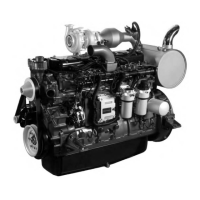
The function of the injectors can be tested using
service tool (so-called “Run-up test”). For more
detail, please see the service tool manual.
NOTE: The nozzle on the injector cannot be
changed. Instead a spare injector is available.
Fig. 104
3.13.3.1 Removing the injectors (CRIN3)
Procedure
1.
Clean high-pressure pipes and surroundings.
2.
Remove the valve cover.
3.
Detach the high-pressure pipe and injector wires.
NOTE: Prevent fuel circulation to the engine via the overflow pipe located in the cylinder head (if the
fuel tank is above the engine).
3. Maintenance
3-62 4th Generation Engines
8370 79492



 To Next Page