3. (Optional) Install the stacking module.
4. 4. Verify that the switch boots correctly. Plug the switch into a power source and observe that the LEDs
on the front panel indicate correct switch operation. When self-test is complete, unplug the switch.
5. 5. Disconnect power from the switch.
6. (Optional) Installing the uplink port module
7. Mount the switch. The switch can be mounted in the 19-inch telco rack, in an equipment cabinet, or on a
horizontal surface.
8. (Optional) Connect a Management Console. For example, you may want to configure an IP address for
one of these purposes:
• Configure an IP address so it can be managed with a web browser.
• Manage the switch from an SNMP network management station.
• Manage the switch through a Telnet session.
To connect a PC to the console port on the switch, use an Aruba X2C2 RJ45 to DB9 Console Cable
(JL448A, sold separately).
9. Connect the switch to a power source. Plug the switch into a nearby main power source.
10. (Optional) Install the stacking cables.
11. (Optional) Install or remove SFP transceivers (mini-GBICs). Depending on the switch model purchased
and optional uplink module configuration, the switch can support SFP/SFP+ or QSFP+ transceivers.
Depending on where the switch is mounted, it may be easier to install the transceivers first. All transceiver
types can be installed or removed while the switch is powered on.
12. Connect the network cables. Using the appropriate network cables, connect the network devices to the
switch ports.
At this point, the switch is fully installed. The rest of this chapter provides more detailed information on these
installation steps.
1. Prepare the installation site
Cabling Infrastructure: Ensure the cabling infrastructure meets the necessary network specifications. See
Cabling and technology information for more information.
Installation Location: Before installing the switch, plan its location and orientation relative to other devices and
equipment:
• In the front or the back of the switch, leave at least 7.6 cm (3 inches) of space for the twisted-pair and fiber-
optic cabling.
• In the back of the switch, leave at least 3.8 cm (1 1/2 inches) of space for the power cord. If you are stacking
the switches, you will need 20 to 23 cm (approximately 8 to 9 inches), depending on the lengths of the stacking
cables being used.
• On the sides of the switch, leave at least 7.6 cm (3 inches) for cooling, except if the switch is installed in an
open EIA/TIA rack.
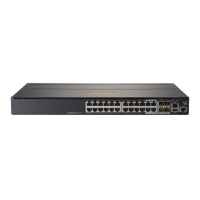
Figure 8: Air flow direction of the 2930M switches
36 Aruba 2930M Switches




 To Next Page