4. Hydraulic Theory
4.2.2 Water On/Off Valve
This valve is actuated through a coil using unregulated +24 VDC.
When the power is off, the valve is closed preventing water from
entering the Instrument. When power is on, the on/off valve
operation is controlled by the supply manifold level sensor signal.
During heat cleaning, the valve is closed. This valve can be
monitored using the DS1 “Flow Control” LED on the I/O
Hydraulics Power board (see Section 5, Electronic Theory).
4.2.3 Heat Exchanger
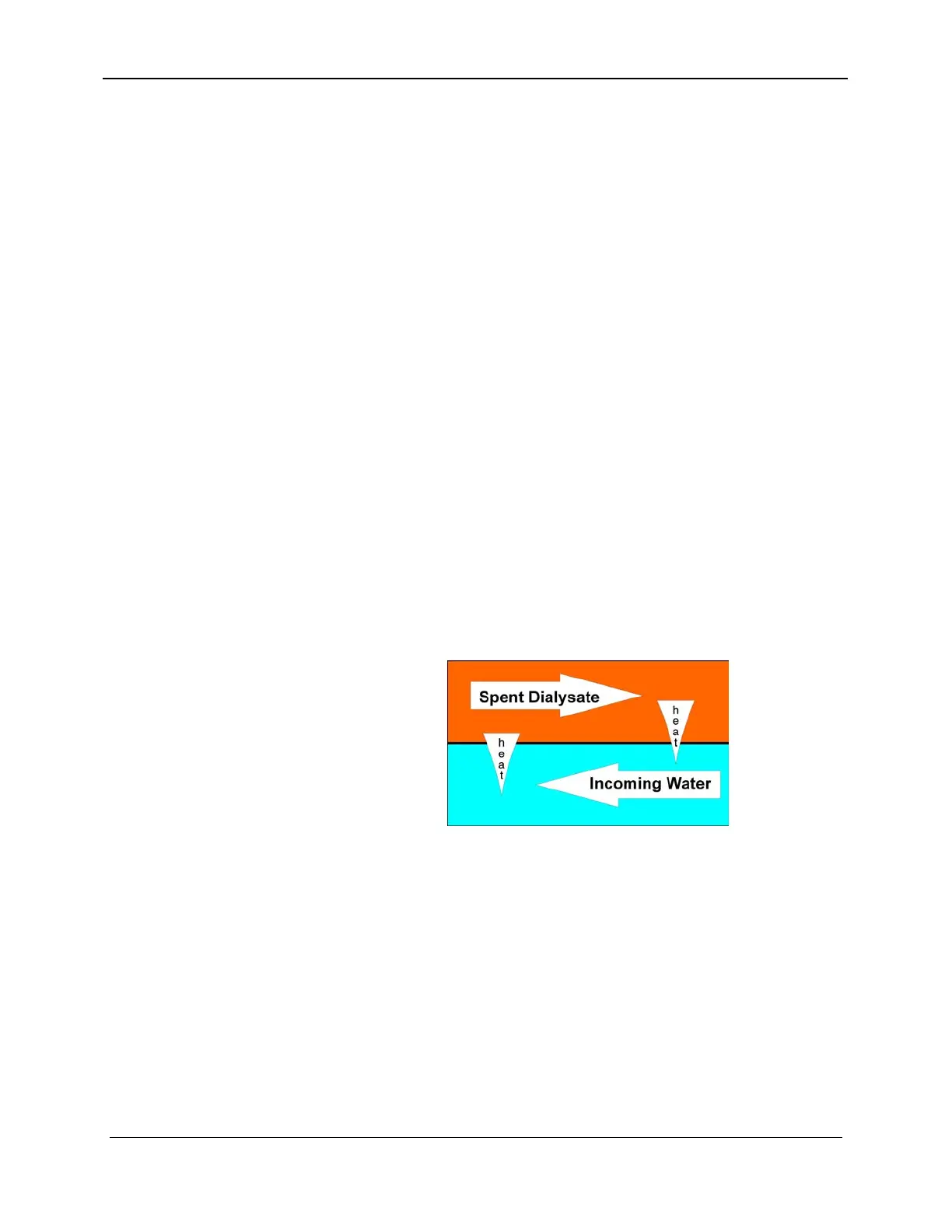
Incoming water flows through a hydraulic channel on one side of a
stainless steel plate. On the other side of the plate, the spent
dialysate flows in a countercurrent direction in an identical
hydraulic channel before draining out of the Instrument.
Heat is transferred from the spent dialysate to the incoming water
through the plate. This heat transfer preheats the incoming water,
shortening dialysate warm up time. By reducing the time the
heater is on, the heat exchanger saves energy.
The heat exchanger allows the Instrument to be used with a wider
range of incoming water temperatures since this preheating of the
incoming water reduces these variations.
Figure 4-4. Heat Exchanger
4.2.4 Heater, Thermistor, Safety Thermostat
The water is heated to the desired temperature by a heater. On the
output of the heater is a thermistor. The thermistor resistance
changes in inverse proportion to temperature changes. The
thermistor sends a signal to the UF-Proportioning Power board,
which then turns the heater on or off to maintain or increase the
temperature.
Next to the heater is a resettable thermostat, which prevents the
heater from exceeding a temperature of approximately 107°C
157-1278-893 4-5
January 2004






 To Next Page