171
20 08 CONTESSA
ELECTRICAL SYSTEMS - HOUSE — 8
Checking the Electrolyte
Solution (LLA Only)
The most efcient way
of testing the batteries is to
check the electrolyte solution.
The only way to test
a battery’s electrolyte
solution is with a
hydrometer. Many styles
are available, from types
with cylinder graduation
(shown here) to types with
oating balls.
Hydrometers can be
purchased from most
auto parts stores. The
hydrometer tests the
battery’s electrolyte
solution which is
measured in specic
gravity. Distilled water
has a specic assigned
gravity of 1,000. The
hydrometer is calibrated
to this mark. Pure
sulfuric acid has a
specic gravity reading
of 1,840. The acid is
1.84 times heavier than
water. The electrolyte
solution is about 64%
water to 36% acid
(fully charged battery).
Hydrometers with
cylinder graduation are
graphed and the exact
state of specic gravity
can be determined.
Temperature and recent battery activity
(charging or discharging) affect the hydrometer
readings. It is best to check the battery when it
has been at rest for at least three hours, although
readings taken at other times will give a ballpark
gure. When using the hydrometer, draw the
electrolyte solution up into the tube. Allow the
hydrometer to attain the same temperature as the
electrolyte solution. Note the reading for that
cell. Complete the same test for the rest of the
cells on that battery bank.
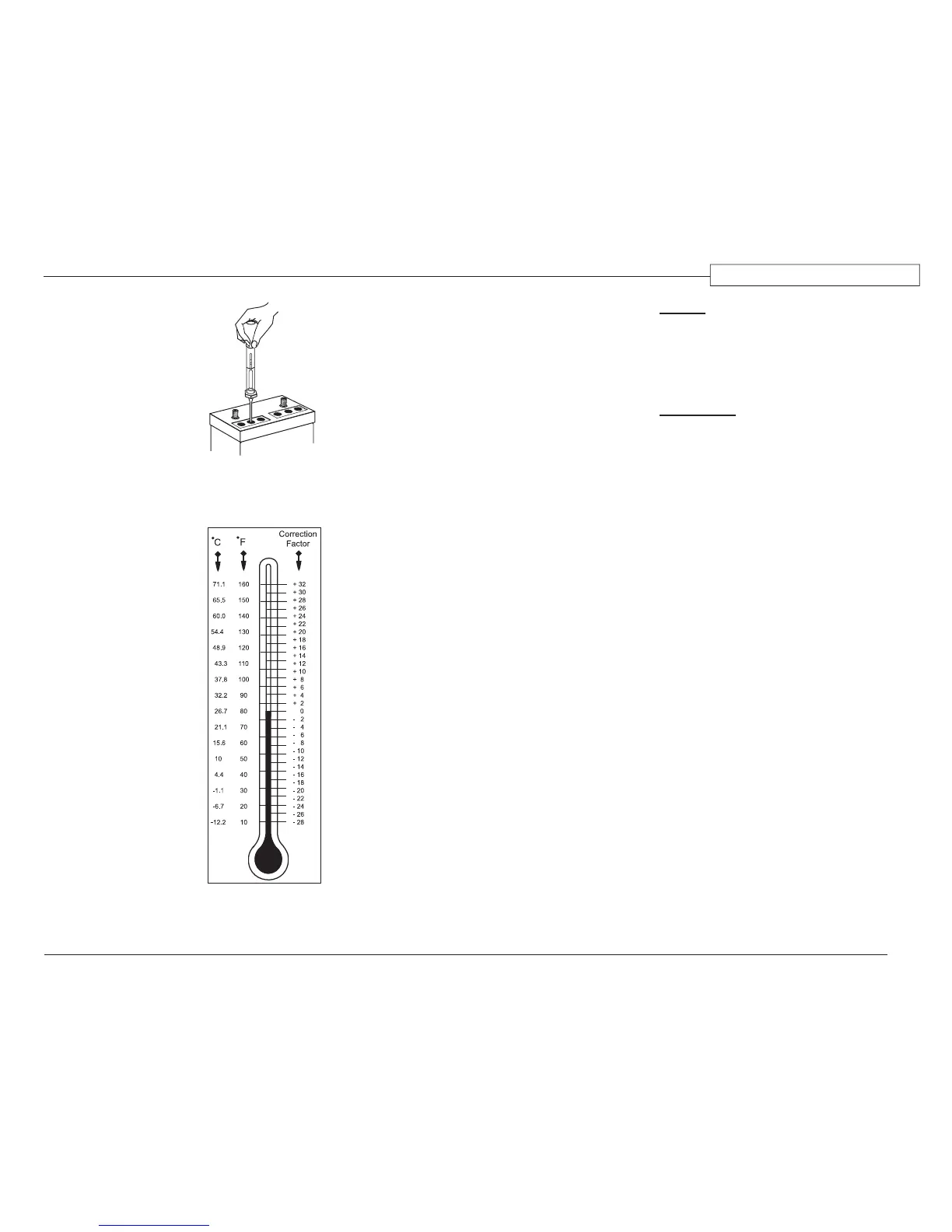
The hydrometer is calibrated at 80° F.
Temperature affects the hydrometer readings.
The higher the electrolyte temperature, the
higher the specic gravity reading. The lower
the temperature, the lower the specic gravity
reading. Add or subtract four points for each 10°
variance from the 80° F. chart. Readings between
cells should not vary more than 50 points.
If one cell in a particular battery bank being
tested is at a 50% state of charge while the
others are indicating a full charge, charge only
that battery to see if the low cell will come
up. At the same time, do not over charge the
healthy cells. If the low cell does not come up
after charging, this battery can damage the rest
of the battery bank and should be replaced. An
accurate digital Volt meter + - .5% will also give
an indicator of the battery’s state of charge.
Placing a load on the Battery:
Another test that can be performed is to place
a specic load on the battery for a predetermined
length of time equal to that particular battery’s
rating. This machine is usually an adjustable carbon
pile that can vary the load being applied to the
batteries while monitoring voltage to see if they will
perform to specic rated capacities.
NOTE:
See the chart for temperature
compensation. Liquid levels should be
even between the cells of the battery
being tested as it will affect the accuracy
of the test.
WARNING:
Sulfuric acid in the batteries can cause
severe injury or death. Sulfuric acid
can cause permanent damage to eyes,
burn skin and eat holes in clothing.
Always wear splash-proof safety goggles
when working around the battery. If
the battery electrolyte is splashed in
the eyes, or on skin, immediately flush
the affected area for 15 minutes with
large quantities of clean water. In case
of eye contact, seek immediate medical
aid. Never add acid to a battery once
the battery has been placed in service.
Doing so may result in hazardous
splattering of electrolyte.
Battery Charge Time & Consumption Rate
Calculating Run Times:
Calculating run time gures when operating
120 Volt AC electrical items with an
inverter can be exponential due to battery
characteristics. Flow characteristics of
electrons vary with different battery types
and chemical compositions. Deep cycle
batteries are generally designed to slowly
release a majority of their charge capacity.
Deep cycle batteries are rated in Amp hours
(Ahrs) with the discharge occurring over an
extended period of time before the battery is
charged. Engine starting batteries are designed
to quickly release large amounts of current
Temperature
Correction Chart
030815
030816b
Hydrometer (cylinder
type) shown testing
LLA type battery.



 To Next Page