233
20 08 CONTESSA
CHASSIS INFORMATION — 10
Proper Fluid Levels:
Transmission uid cools, lubricates and
transmits hydraulic power. Proper uid levels
must be maintained at all times. If uid level
is too low, the converter and clutches do not
receive an adequate supply of uid. If the
level is too high, uid can aerate. Aerated
uid can cause the transmission to shift
erratically or overheat.
An Oil Level Sensor (OLS) is built into the
transmission. The uid level can be checked
easily and cleanly using the shift selector. Check
the transmission uid level before each trip and
after removing the motorhome from storage.
Fluid Level Check from the Shift Selector:
To Enter Oil Level Sense Mode:
Park the motorhome on a level surface.
Place the transmission in “N” and set
parking brake.
The transmission temperature must be at
operating temperature or an error code
will appear.
The motorhome must be stationary and in
Neutral for approximately two minutes to
allow the uid to settle in the sump.
The engine must be idling lower than
800 RPM.
Simultaneously press the Up and Down
buttons once.
The transmission is now in Oil Level Sense
mode. The display will indicate one character at
a time. An “o” followed by “L” represents oil
level check mode.
One of the following will be indicated:
“o K” represents the level is okay.
“Lo” represents a low uid level
followed by a numeric indication of the
number of quarts needed ll the sump.
“HI” represents an overfull condition
followed by a numeric indication of the
number of quarts the sump is overfull.
A countdown of ashing numbers
indicates the uid is still settling. When
the uid has stabilized in the sump, the
true level is indicated.
If an “o” “L” “-” followed by a number
displays, the oil level sensor could not
read the level due to one of conditions
listed in the “Common Oil Level Fault
Codes” chart.
Exit by pressing “N.”
Cold Check - Manual Check Procedures:
The concept of a cold check is to determine
adequate uid level for safe operating, such as
after a uid and lter change.
A cold check should be performed after
transmission maintenance or service until a hot
uid level check or uid level check from the
shift selector can be performed.
To Check the Fluid When Cold:
Park the motorhome on a level surface.
Set the parking brake.
Chock the wheels to prevent the
motorhome from moving.
Start the engine.
Allow the engine to run at idle (500 to
800 RPM) for one minute.
Apply the service brakes and shift to D
(Drive), then to N (Neutral) and next to
R (Reverse) to ll the system. Shift the
transmission to N (Neutral) and release
the service brakes. Allow the engine to
idle at 500 to 800 RPM.
Remove the dipstick and wipe clean.
Reinsert the dipstick fully into the tube,
then remove to check uid level. Repeat
to verify reading, if needed.
Safe operating level is anywhere within
the Cold Check band on the dipstick.
This allows safe operation of the
transmission until a Hot Check or uid
level check from the shift selector can be
performed.
If the level is not within this band, add or
drain the uid as necessary to put the level
to the middle of the Cold Check band.
Perform a uid level check from the
shift selector or a Hot Check at the rst
opportunity when normal operating
temperatures are reached.
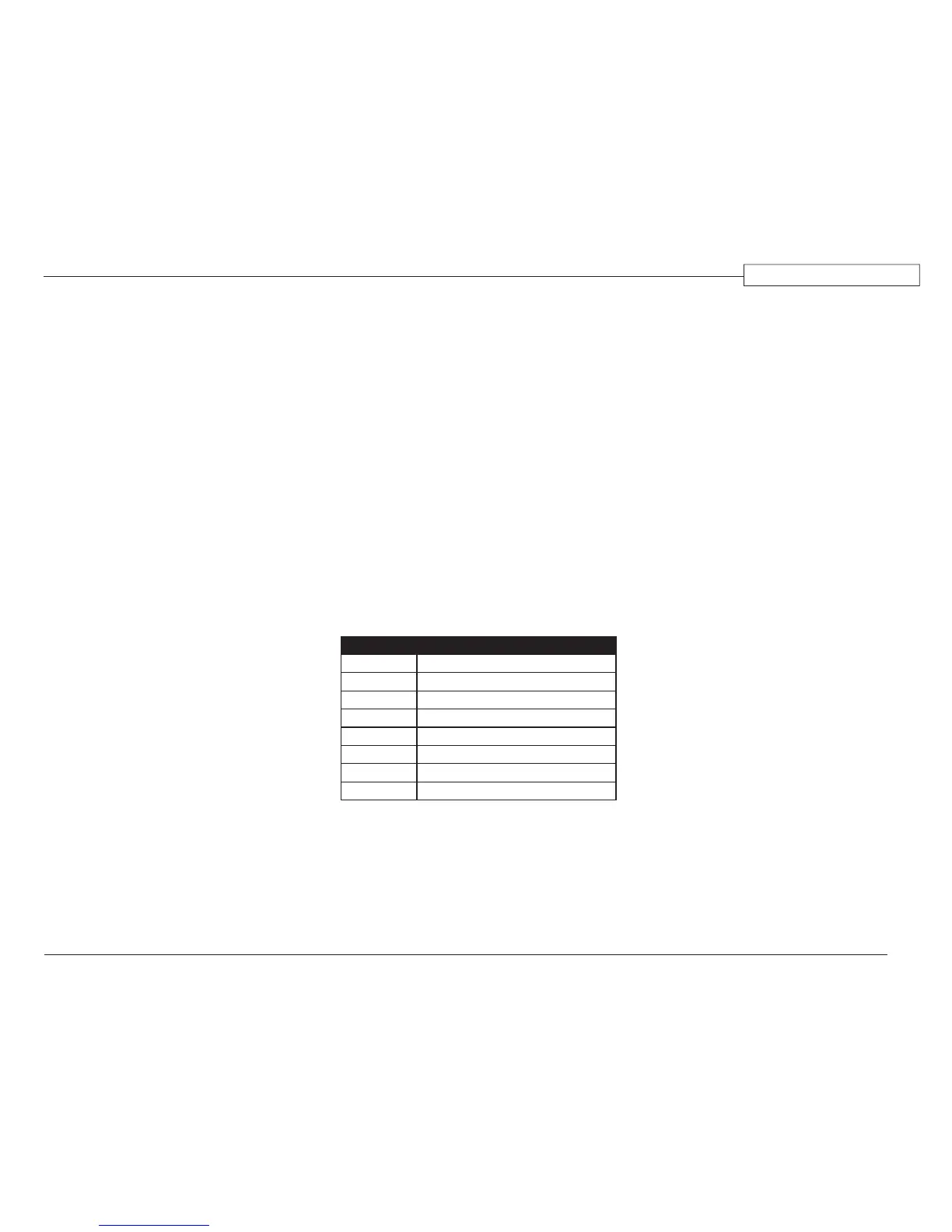
Common Oil Level Fault Codes
Display Cause of Code
o,L - O,X Setting time too short
o,L - 5,0 Engine speed (RPM) too low
o,L - 5,9 Engine speed (RPM) too high
o,L - 6,5 Neutral must be selected
o,L - 7,0
Sump uid temperature too low
o,L - 7,9
Sump uid temperature too high
o,L - 8,9 Output shaft rotation
o,L - 9,5 Sensor failure


 To Next Page