OPERATION & MAINTENANCE MANUAL STE35SR
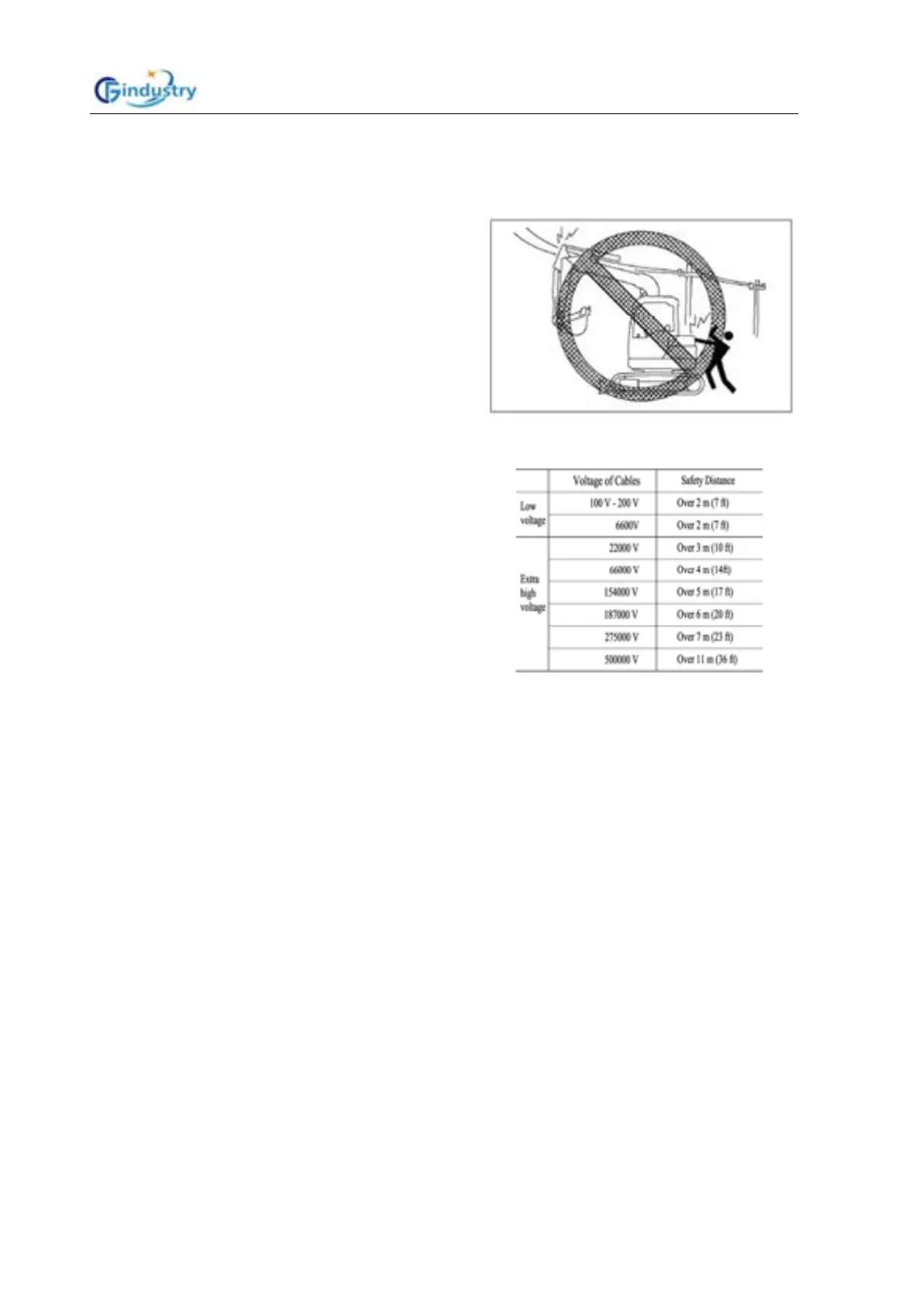
Distance to High Voltage Cables
Do not travel or operate the machine near electric cables. There is a hazard of electric shock,
which may cause serious injury or property damage. On jobsites where the machine may go close
to electric cables, always do as follows.
Before starting work near electric cables, inform
the local power company of the work to be
performed, and ask them to take the necessary
action.
Even going close to high-voltage cables can
cause electric shock. Always maintain a safe
distance (see the table) between the machine
and the electric cable. Check with the local
power company about safe operating procedure
before starting operations.
To prepare for any possible emergencies, wear
rubber shoes and gloves. Lay a rubber sheet on
top of the seat, and be careful not to touch the chassis with any exposed part of your body.
Use a signalman to give warning if the machine
approaches too close to the electric cables.
When carrying out operations near high voltage
cables, do not let anyone near the machine.
If the machine should come too close or touch
the electric cable, to prevent electric shock, the
operator should not leave the operator's
compartment until it has been confirmed that the
electricity has been shut off. Also, do not let
anyone near the machine.
Ensure Good Visibility
Check for any persons or obstacles in the area around the machine and check the conditions of
the job site to ensure that operations and travel can be carried out safely. Always do as follows.
When working in dark places, turn on the working lamp and front lamps installed to the
machine, and set up additional lighting in the work area if necessary.
Stop operations if the visibility is poor, such as in mist, snow, rain, or dust.
Ventilation for Enclosed Area
If it is necessary to start the engine within an enclosed area, or when handling fuel, flushing oil, or
paint, open the doors and windows to ensure that adequate ventilation is provided to prevent gas
poisoning.
Signalman's Signal and Signs
Set up signs to inform of road shoulders and soft ground. If the visibility is not good, position a
signalman if necessary. Operators should pay careful attention to the signs and follow the
instructions from the signalman.
Only one signalman should give signals.
Make sure that all workers understand the meaning of all signals and signs before starting
work.



 To Next Page