OPERATION & MAINTENANCE MANUAL STE35SR
The above recommendations assume that the conditions are for standard operations, but it
may be necessary to add additional guards according to the operating conditions on the
jobsite. Always contact your CFG distributor for advice.
Attachment Installation
When installing optional parts or attachments, there may be problems with safety or legal
restrictions. Therefore, contact your CFG distributor for advice.
Any injuries, accidents, or product failures resulting from the use of unauthorized attachments
or parts will not be the responsibility of CFG.
When installing and using optional attachments, read the instruction manual for the
attachment, and the general information related to attachments in this manual.
Attachment Combinations
Depending on the type or combination of work equipment, there is a hazard that the work
equipment may hit the driving shed or other parts of the machine.
Before using unfamiliar work equipment, check if there is any hazard of interference, and operate
with caution.
Unauthorized modifications
Any modification made without authorization from CFG can create hazards. Before making a
modification, consult your CFG distributor.
CFG will not be responsible for any injuries, accidents, product failures or other property
damages resulting from modifications made without authorization from CFG.
Safety on the Job site
Before starting operations, thoroughly check the area for any unusual conditions that could be
dangerous.
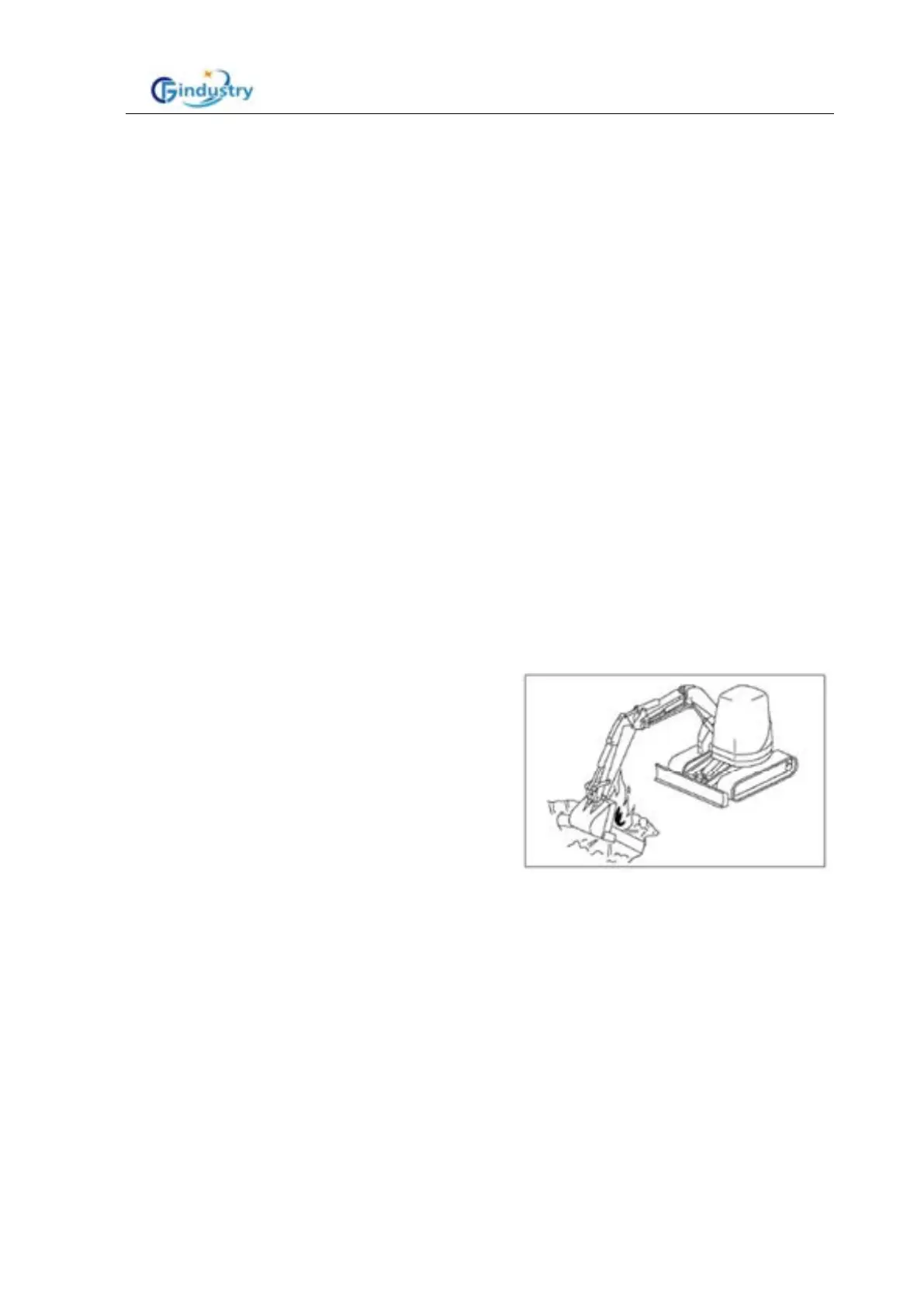
When carrying out operations near combustible
materials such as thatched roofs, dry leaves or
dry grass, there is a hazard of fire, so be careful
when operating.
Check the terrain and condition of the ground at
the jobsite, and determine the safest method of
operation. Do not operate where there is a
hazard of landslides or falling rocks.
If water lines, gas lines, or high-voltage
electrical lines may be buried under the job site,
contact each utility and identify their locations.
Be careful not to sever or damage any of these lines.
Take action to prevent unauthorized people from approaching the job site. When working on
public roads, position flagmen and erect barriers to ensure the safety of passing traffic and
pedestrians.
When traveling or operating in shallow water or on soft ground, check the shape and condition
of the bedrock, and the depth and speed of flow of the water before starting operations.
Prevent the machine tipping over
Avoid traveling or operating your machine too close to the edge of cliffs, overhangs, and deep
ditches. The ground may be weak in such areas. If the ground should collapse under the
weight or vibration of the machine, there is a hazard that the machine may fall or tip over.
Remember that the soil after heavy rain or blasting or after earthquakes is weak in these
areas.
When working on embankments or near excavated ditches, there is a hazard that the weight
and vibration of the machine will cause the soil to collapse. Before starting operations, take
steps to ensure that the ground is safe and to prevent the machine from rolling over or falling.



 To Next Page