9. Commissioning
MiR200 User Guide (en) 10/2020 - v.3.1 ©Copyright 2017-2020: Mobile Industrial Robots A/S. 84
9. Commissioning
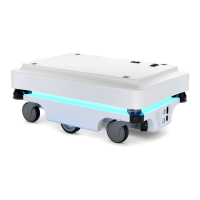
This section describes how to commission MiR200.
Commissioning should be done without payload, except when doing brake tests where the
robot should have a payload equaling the heaviest load it will be driving with.
Only persons assigned with the commissioning task should be present during commissioning.
It is the responsibility of the commissioner to:
• Analyze the work environment.
• Make a risk assessment of the full installation.
• Create and configure the site.
• Configure audio and light signals according to the environment.
• Create operating hazard zones.
• Make a brake test.
• Create user groups and users.
• Create dashboards.
• Update robot software.
• Change the relevant system settings.
9.1 Analysis of the work environment
The work environment of the robot must fulfill a number of requirements for the robot to
function properly and safely. This section describes the factors that must be considered when
the robot is being commissioned to function in a work environment.
Surfaces
The floor surface of the work environment must be dry. MiR200 functions on many different
types of surfaces, but some materials can affect the performance and safety of the robot,
such as very thick carpets or slippery floors.
It is the responsibility of the commissioner to test the performance and safety of the robot
on the surfaces in the work environment—see Making a brake test on page109.


 To Next Page