29
light at this point is given off as fluorescence and is not involved in photochemistry or heat
dissipation (Baker 2008). (Baker 2008).
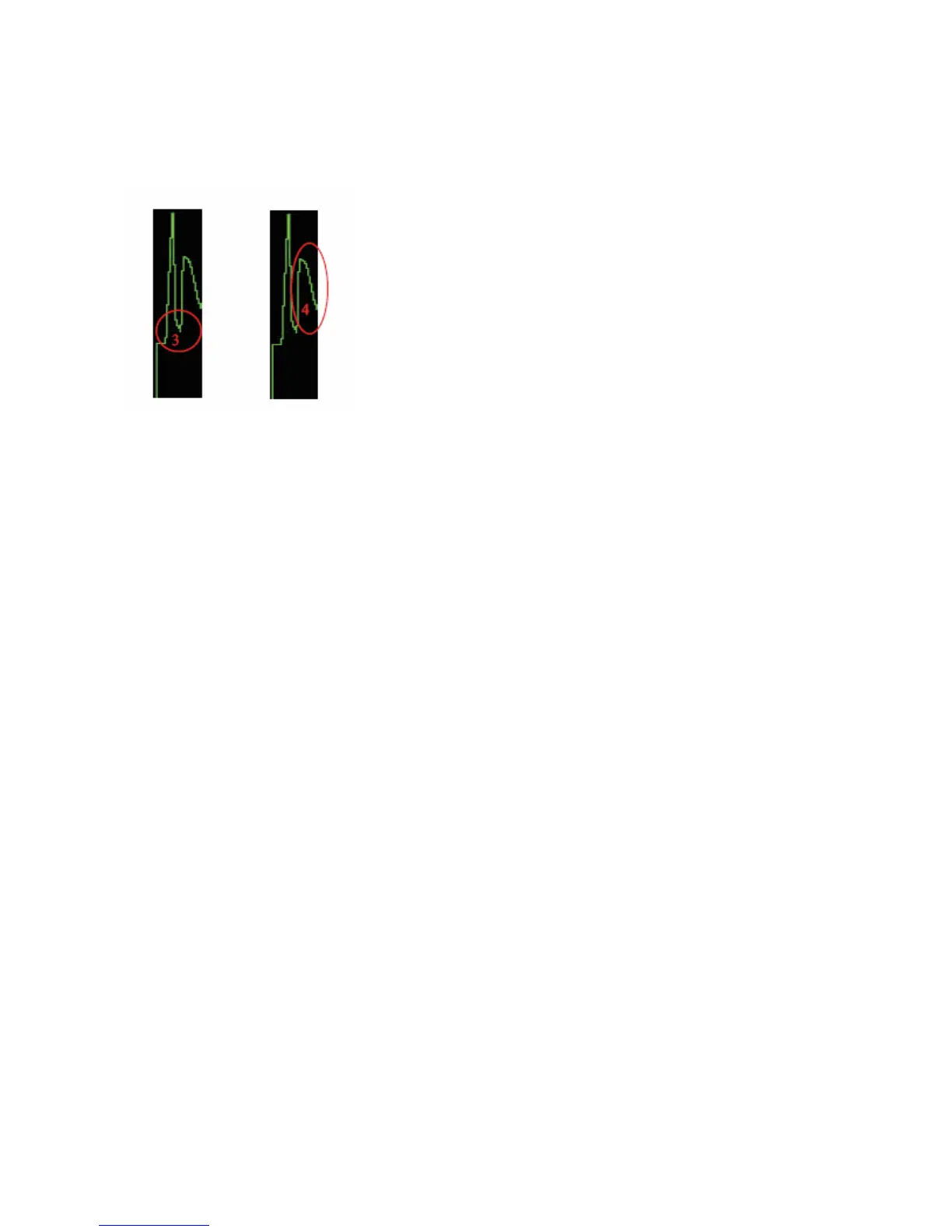
#3
All light sources except the modulated measuring light source are turned off after the
saturation flash. The fluorescence graph tails off until it reaches bottom exhibiting non-
photochemical quenching related to the saturation flash. During this period QA is re-oxidizing
but it is a partial condition because there is not enough time for full re-oxidation.
#4
The fluorescence signal rises again due to the turning on of an actinic light source to drive
photosynthesis. The fluorescence signal competes for energy with photochemistry and heat
dissipation. Since photochemistry and heat dissipation mechanisms have just been initiated,
most of the energy goes to fluorescence. The fluorescence signal starts to fall as electron
transport and carboxylation begins (Schreiber 2004). Heat dissipation mechanisms are also
beginning to affect the signal to drive down the intensity values of both the saturation flashes
and the fluorescence signal itself at higher light intensities.


 To Next Page