Electromagnetic Compatibility
10-10 Safety Standards & Specifications
Note — For cellphone frequencies 810-930 MHz at 28 V/m, increased ECG
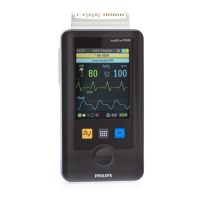
waveform noise is observed that impacts ST performance. The MX40 can
tolerate RF interference power to 7 V/m and maintain ECG noise in
compliance with IEC 60601-2-27 and AAMI EC13, and a typical cellphone RF
power is expected to be less than 5 V/m. A technical alarm for ST or Invalid
Parameter is presented with excessive ECG noise. Field strength is measured
at 3 meter distance per standard.
Reducing Electromagnetic Interference
The MX40 and associated accessories can be susceptible to interference from
other RF energy sources and continuous, repetitive, power line bursts.
Examples of other sources of RF interference are other medical electrical
devices, cellular products, information technology equipment, and
radio/television transmission. If interference is encountered, as demonstrated
by artifact on the ECG or dramatic variations in physiological parameter
measurement values, attempt to locate the source. Assess the following:
• Is the interference due to misplaced or poorly applied electrodes or
sensors? If so, re-apply electrodes and sensors correctly according to
directions in Chapter 6.
• Is the interference intermittent or constant?
• Does the interference occur only in certain locations?
• Does the interference occur only when in close proximity to certain
medical electrical equipment?
Once the source is located, attempt to attenuate the interference by distancing
the MX40 from the source as much as possible. If assistance is needed, contact
your local service representative.
Restrictions for Use
Artifact on ECG and other physiological waveforms caused by
electromagnetic interference should be evaluated by a physician or physician
authorized personnel to determine if it will negatively impact patient
diagnosis or treatment.


 To Next Page
 Loading...