Introduction Installation & Configuration Guide for MAXPage
the alert. The MAXPage is intended for use as a secondary alarm. It does not replace the primary alarm. It does not
replace the primary alarm function on the monitor.
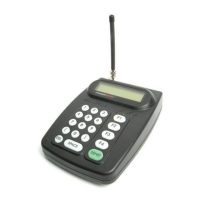
MAXPage is an advanced, alpha-numeric paging system that uses the POCSAG protocol. It features a high impact
ABS plastic molded enclosure to ensure long-term durability. MAXPage is a complete, ready to use package, which
is easy to install and operate. One of MAXPage’s primary advantages is that it incorporates a powerful 5 Watt
transmitter, meaning it can provide coverage for small to medium sized sites.
Features
Keypad and LCD Interface
The keypad and LCD provide an interface that allows you to type and send messages, maintain a pager database,
program MAXPage, and perform system tests such as a site survey. The LCD is large, making it easy to read. Both
the keypad and LCD are LED backlit to make it easy to see and use in dark areas. The MAXPage PS2 keyboard can
be connected into the rear of the unit so that alphanumeric characters can be typed in.
Easy Messaging
Messages are sent to on-site pagers by entering the Local ID number of the pager, typing in the message and
pressing the key to send the message. For tone only pagers, simply type in the Pager ID, and press the
key. A number of function keys are available, which enable the user to send canned messages to commonly used
recipients with just the push of a button.
On-Site Paging
MAXPage uses an internal 5 watt transmitter to send instant messages free of charge. Which makes it the ideal
system for any company wanting to contact mobile staff, without amassing a huge, ongoing communications bill.
There are no monthly access fees or per-call charges. The transmitter within the MAXPage provides coverage for
small to medium premises, such as a hotel or hospital. Businesses that benefit from MAXPage include hotels,
motels, schools, churches, retail outlets, health care facilities, manufacturing plants, and mine sites.
User Programmable
MAXPage can store in its EEPROM up to 1000 user programmable pager entries using a local ID of 0 – 9999. Each
entry holds the Local ID number of the pager, the format of the paging message (Coaster Pager
/Alpha/Numeric/Tone only/Voice Pager) and the cap code of the pager.
Alarm Monitoring
MAXPage has four dry contact alarm inputs on board. These alarm inputs can be triggered by opening or closing a
circuit (such as by opening or closing a door). Each alarm input may be configured to send a specific message to a
selected pager or group. Alarm messages are broadcast the instant an alarm becomes active or after a programmable
delay time. An alarm may also escalate to another recipient if alarm conditions are not cleared within an acceptable
amount of time.
Version 2011.1.551/SCOPE/ESPA/Visiplex/TEKK Interface
MAXPage has a built in RS232 serial port that is used for programming of the unit or as an optional Version
2011.1.551/SCOPE/ESPA interface that can process paging messages from other systems. Paging messages received
by MAXPage are automatically forwarded to the appropriate on-site pager. TAP, the most commonly used protocol
for communicating paging messages, is sometimes known as PET or IXO. ESPA 4.4.4 is common with European
manufacturers.
Telephony Interface
An optional Telephone interface is built into MAXPage allows you to send messages from any phone on your
Telephone network, or any phone on a PSTN that can access your system. You dial the extension on your PBX or
phone number allotted to the MAXPage. Then, follow the voice prompts to send numeric and even alphanumeric
text messages to any device registered on the MAXPage database. Calls made from PBX phones are free, so it is
convenient and economical to use the Telephone interface.


 To Next Page