Telephone Line Emulator User’s Manual
40-400-00020, Rev. M
43
Metering Tones
The BS6305 document (UK) states that “Meter pulses are normally provided only by
special arrangement between the PTT and the user, but may be present whether or not
the supply of them has been requested.”
The other documents (ITU, Swedish TVT 8211-A 112E, Singapore TAS TS PSTN 1, etc.)
make no mention about the circumstances under which meter pulses are provided.
Therefore meter pulses will be off, by default, for all countries.
Metering Tones are primarily used in international applications. These tones are provided
to customers when they place a phone call indicating what rate they will be billed for the
call. Each line can be programmed to enable or disable Metering Tones.
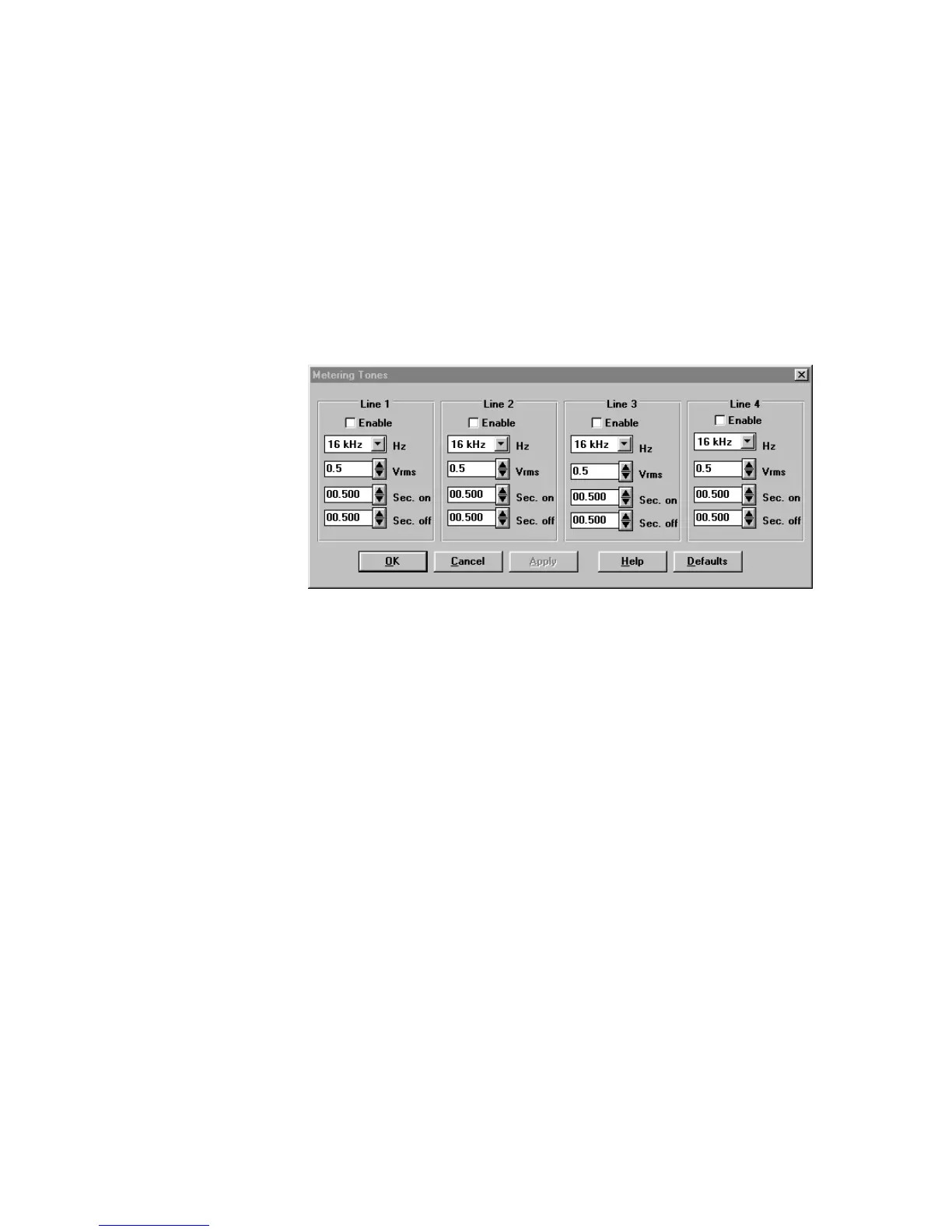
Figure 29. Metering Tones Screen (TLE-INTL)
The frequency of the tone can be set at 16 kHz or 12 kHz.
The voltage of the tone can be set from 0 to 5 Vrms in 100 mV increments (default is 3
Vrms).
The tone cadence can be set from 0 to 10 seconds on, and 0 to 10 seconds off in 5 mS
increments (default is 0.5 seconds on, 0.5 seconds off).
If both lines have them enabled, Metering Tones are sent to both parties in the
connection.
Special Information Tones/Number Unobtainable Tone
When a subscriber dials an invalid number, the method used to alert the subscriber varies
from country to country. Some countries return a Number Unobtainable Tone, some
return Special Information Tones, some return a recorded announcement, and some
return SIT tones followed by a recorded announcement. The use of SIT tones seems to
be evolving as an international standard, with some countries currently using Number
Unobtainable Tone, but planning to use SIT in the future. In the TLE, under the Special
Information Tone/Number Unobtainable Screen, the user must select either Special
Information Tone or Number Unobtainable for all lines. Then in the Miscellaneous
screen under Invalid Number Response they may select a particular response, on a per
line basis.



 To Next Page