Telephone Line Emulator User’s Manual
40-400-00020, Rev. M 86
The Row and Column signal levels are programmable from -6 to -60 dBm. The defaults of
-12 dBm for the Row and -10 dBm for the Column tones are based on CEPT
Recommendation, T/CS 46-02.
Timings
The DTMF tone timing is programmable from 0 to 1.0 Seconds ON and OFF in 5 mS
increments.
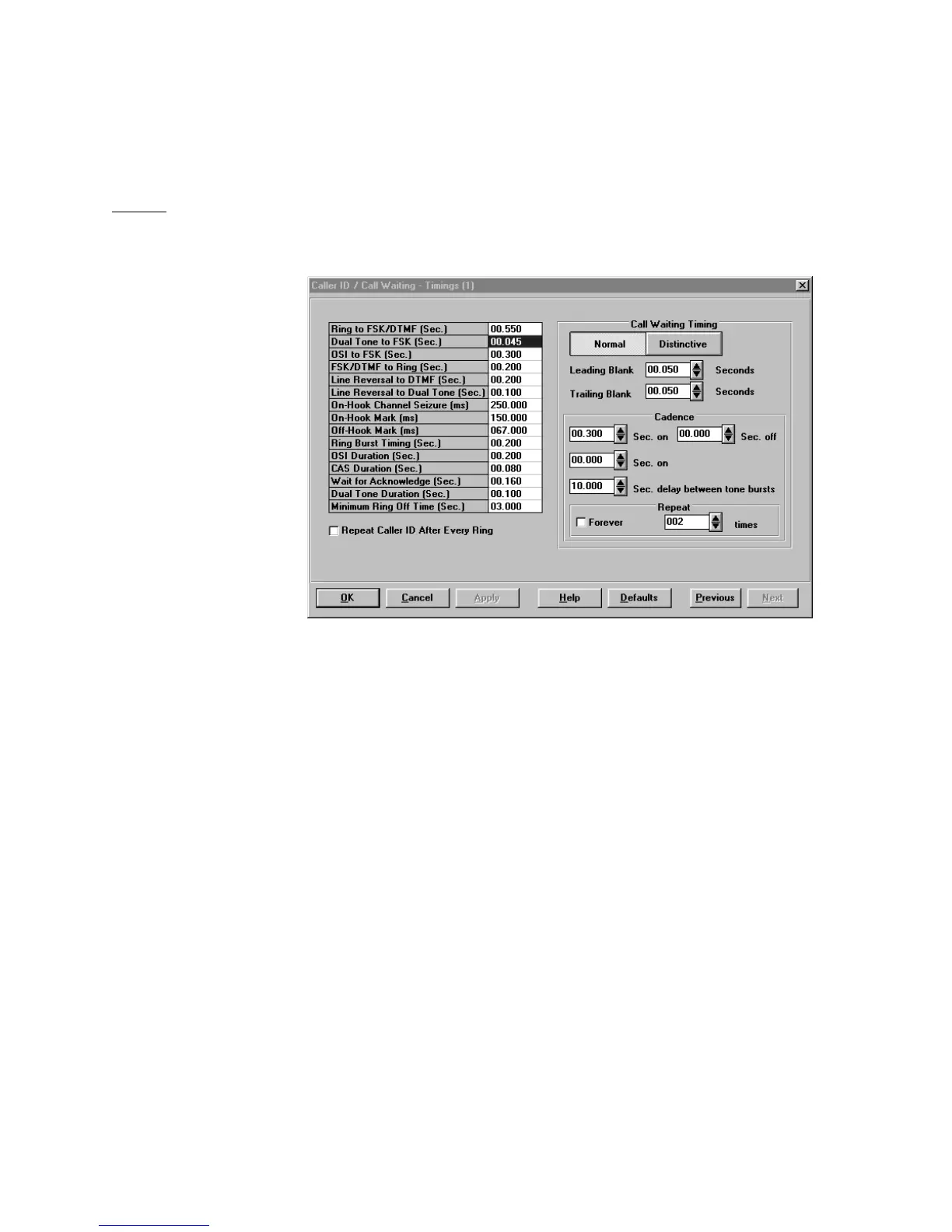
Figure 42. Caller ID/Call Waiting - Timings
The TLE-ICID module allows the user to configure many of the timing parameters that are
associated with Caller ID, Caller ID with Call Waiting, Call Waiting, and Visual Message
Waiting / Not Associated with Ringing Caller ID. Also programmable is the ability to
Repeat Caller ID After Every Ring, a nice feature when troubleshooting applications
using the “Pause in Ring Cycle” as the Alerting Sequence. This feature is not available for
any other Alerting Sequence.
Note: The TLE supports individual ring generators for each line. The internal oscillators for
these ring generators are asynchronous compared to the main TLE system clock. When
a command is issued to turn Ringing “ON” or “OFF”, each ring generator will wait for a
zero crossing point in their internal oscillators before turning “ON” or “OFF” the Ringing
circuitry. The delay before a ring generator is turned “ON” or “OFF” is potentially one
complete cycle of the ring frequency. For example, a 20 Hz ring frequency can result in
up to a 50 mS (1 cycle / 20 Hz) delay before ringing starts. This detail must be considered
when any timing parameter that is associated with ringing is changed.
Ring to DTMF/FSK
The time from the end of a Ring burst alerting signal or normal ring to the start of FSK or
DTMF is programmable from 400 mS to 5 seconds in 5 mS increments.



 To Next Page