1.2. INTENDED USE
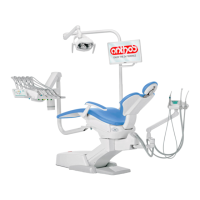
The device is a dental unit consisting of components and/or devices that are functionally connected, such as the patient chair, dental unit, dental
handpieces, multifunction pedal and operating light.
The dental unit is intended for professional dental treatment, for example to treat oral and dental pathologies of varying degrees of clinical form, stage,
gravity; and to manage and provide support for dental and oral diagnosis, treatments, post-operative controls for oral health, prevention and prophylaxis.
The prevailing medical conditions to be treated with the dental unit belong to the following branches of dentistry and oral health:
• Oral Hygiene;
• Orthodontics;
• Conservative dentistry and Prosthesis;
• Periodontology;
• Endodontics;
• Implants;
• Oral Surgery.
In order to achieve its intended use, the dental unit may support and control the following parts or devices, if supplied:
• Air/water syringe;
• Turbine;
• Micromotor;
• Scaler;
• Ultrasonic surgical equipment;
• Curing Light;
• Intraoral camera;
• Intraoral X-ray sensor;
• Operating Light;
• Suction system;
• Multimedia systems.
The dental chair is designed to support and position the patient during dental treatment.
Device performance features.
Dental units consist of a dental chair that must support the patient in a comfortable position to facilitate the dentist’s work, and the water unit that must
provide the supply (electricity, compressed air, water) necessary for the operation of the instruments used in the dental practice.
Intended user.
The device must only be used by appropriately trained authorised personnel (professional dentists and dental hygienists, possibly assisted by a properly
trained assistant and under the supervision of the dentist). Routine maintenance of the device may be carried out by the assistant.
Patient population.
The use of the device is intended on the whole patient population for which analyses are usually carried out, according to intended use, instructions for
use, medical practice and local regulations.
Use the device only with vigilant and cooperative patients, since the patient must be able to understand and follow the operator's instructions for a
correct dental treatment.
It is possible to treat patients with disabilities, provided that their disability does not affect their ability to cooperate with the operator.
The device must be used on a population of patients fulfilling the following characteristics:


 To Next Page