General Information 1
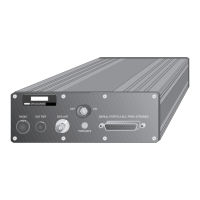
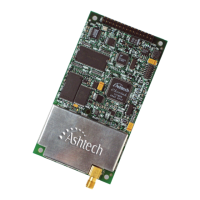
The DG16 GPS receiver processes signals from the Global Positioning System
(GPS) satellite constellation, the geostationary satellites from the Satellite-based
Augmentation System (SBAS) network including: Wide Area Augmentation
System network (WAAS), the European Geostationary Navigation Overlay
System network (EGNOS), the Japanese Multi-function Transport System
System network (MSAS), and from 300kHz Beacon transmissions to provide real-
time position, velocity, and time measurements.
In this manual, the term SBAS (Space Based Augmentation System) includes WAAS, EGNOS, and
MSAS.
The DG16 has several options:
• GPS only— 14 GPS channels (you can limit to 12 channels of GPS)
• GPS + SBAS— 12 channels of GPS + 2 channels of SBAS. The [Y] option
must be loaded for SBAS channels.
• GPS + Beacon—14 GPS channels + 2 Beacon channels (you can limit to
12 channels of GPS). The [N] option must be loaded for Beacon channels.
• GPS + SBAS + Beacon— 12 channels of GPS + 2 channels of SBAS + 2
channels of Beacon. The [Y] option must be loaded for SBAS channels,
and the [N] option loaded for Beacon channels.
The DG16 uses fourteen discrete parallel channels for Coarse/Acquisition (C/A)
code-phase (pseudo-range) measurements and carrier phase measurements on
the L1 (1575.42 Mhz) band for the GPS, with the [Y] option installed.The DG16
can use two of the parallel channels for WAAS, EGNOS, or MSAS
measurements. With the [N] option installed, the DG16 has two additional
channels for Beacon signals.
The DG16 receives satellite signals through an L-band antenna and an external
low-noise amplifier (LNA).


 To Next Page