134 BD LSR II User’s Guide
Electronics
As cells or other particles pass through a focused laser beam, they scatter the
laser light and can emit fluorescence. Because the laser beam is focused on a small
spot and particles move rapidly through the flow cell, the scatter or fluorescence
emission has a very brief duration—only a few microseconds. This brief flash of
light is converted into an electrical signal by the detectors. The electrical signal is
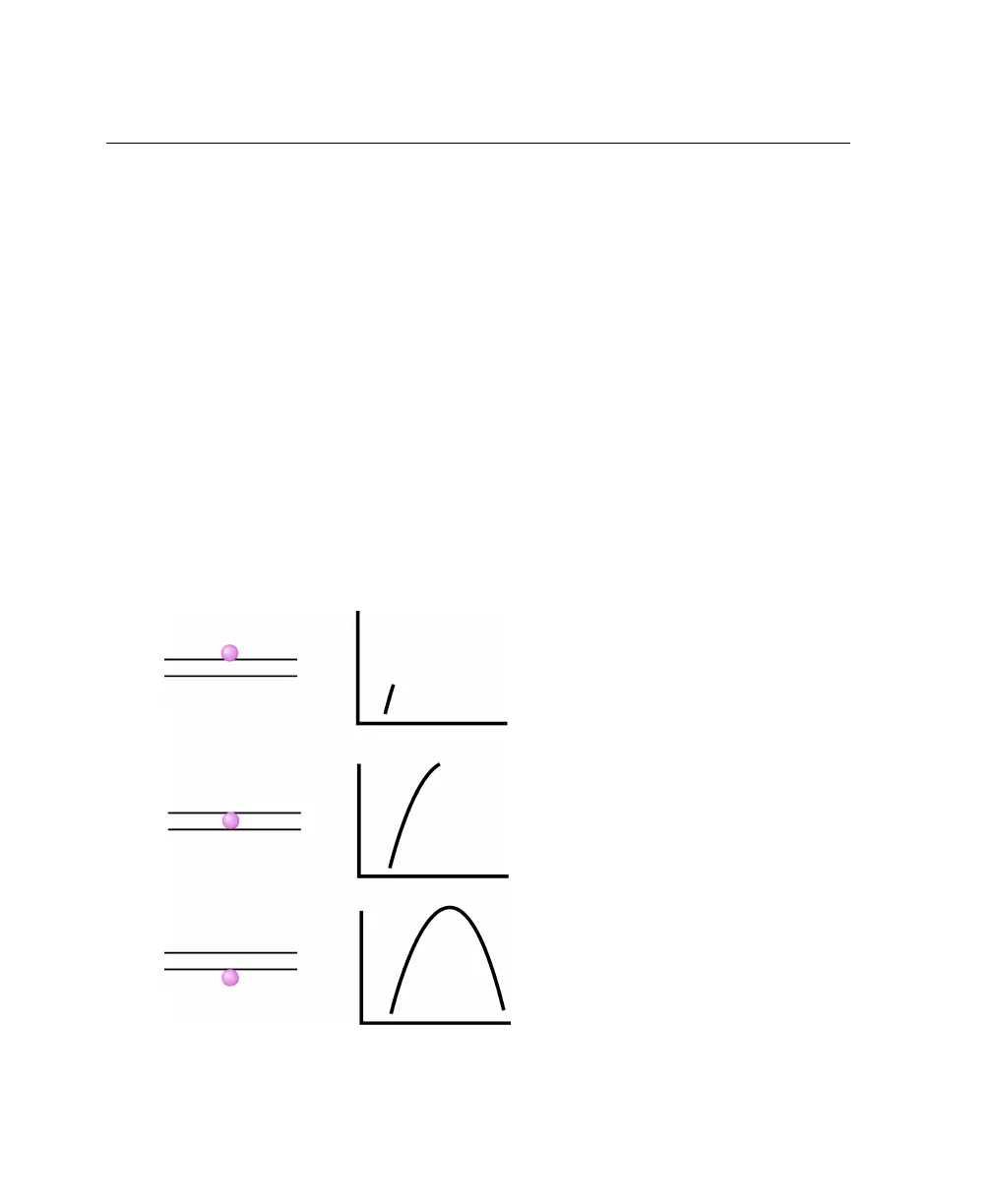
called a pulse (Figure A-10).
1 A pulse begins when a particle enters the laser beam. At this point, both the
beam intensity and signal intensity are low.
2 The pulse reaches a maximum intensity or height when the particle reaches
the middle of the beam, where the beam and signal intensity are the
brightest. The peak intensity, or height of the pulse, is measured at this
point.
3 As the particle leaves the beam, the pulse trails off below the threshold.
Figure A-10 Anatomy of a pulse
time
signal intensity
signal intensity
signal intensity
time
time
LSR2.book Page 134 Tuesday, April 25, 2006 3:34 PM


 To Next Page