87
3.9 Range Optimisation
Which factors affect the range of the
eBike?
X Rider
– Cadence (crank rotations per minute)
– Total weight (rider, eBike, luggage)
X eBike
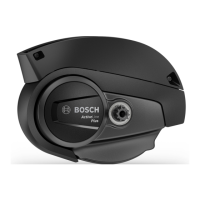
– The installed eBike drive unit
– The battery being used
– Gear system (derailleur or hub gear)
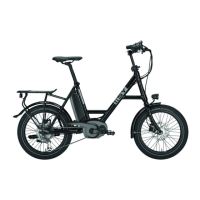
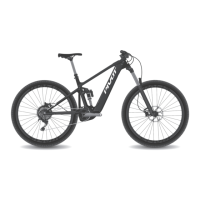
– Type of bike and posture (aerodynamic, e.g.
touring bikes)
– Tire tread (e.g. trekking bike tires)
– Lights (powered by the eBike battery)
X Environment
– Terrain type (hilly or flat)
– Surface (e.g. gravel)
– Wind conditions
– Starting up frequency (stop & go)
– Range Assistant online: bosch-ebike.com
→ Service → Range Assistant
– To integrate on your own website:
bosch-ebike.net → Sales support
→ Online Tools
Tips for the user
1. Motor in the optimal efficiency range:
– Whenever possible, keep a consistent cadence
over 50 RPM
– Use the gears/shift recommendation
– Choose a low gear ratio on uphill grades and
when starting
– Adapt the gear-shifting according to terrain/
speed
2. Acceleration requires significantly more energy.
– Ride with foresight and, whenever possible,
avoid frequent starts and stops
3. Low tire pressure increases rolling resistance.
– Always ride with the maximum permissible tire
pressure
4. As the temperature sinks, the performance of
batteries also sinks:
– Therefore, you can expect reduced range in
winter.
The remaining range is calculated on the last 4
km of the route. Range is recalculated every 50
m based on the current energy consumption
and the remaining capacity of the battery. Reset
the range if the influencing factors change
significantly.
3.9 Range Optimisation



 To Next Page