EasyManua.ls Logo

Brookfield TT100 - User Manual

Brookfield TT100
134 pages
Print Icon
To Next Page IconTo Next Page
Loading...
BROOKFIELD MODEL TT100
IN-LINE VISCOMETER
Installation, Operation, and Maintenance Instructions
Manual No. M/97-520-A899
сайт: brookfield.pro-solution.ru | эл. почта: bfk@pro-solution.ru
телефон: 8 800 511 88 70
По вопросам продаж и поддержки обращайтесь:
Архангельск +7 (8182) 45-71-35
Астрахань +7 (8512) 99-46-80
Барнаул +7 (3852) 37-96-76
Белгород +7 (4722) 20-58-80
Брянск +7 (4832) 32-17-25
Владивосток +7 (4232) 49-26-85
Волгоград +7 (8442) 45-94-42
Екатеринбург +7 (343) 302-14-75
Ижевск +7 (3412) 20-90-75
Казань +7 (843) 207-19-05
Калуга +7 (4842) 33-35-03
Кемерово +7 (3842) 21-56-70
Киров +7 (8332) 20-58-70
Краснодар +7 (861) 238-86-59
Красноярск +7 (391) 989-82-67
Курск +7 (4712) 23-80-45 Липецк
+7 (4742) 20-01-75 Магнитогорск
+7 (3519) 51-02-81 Москва +7
(499) 404-24-72 Мурманск +7
(8152) 65-52-70 Наб.Челны +7
(8552) 91-01-32 Ниж.Новгород
+7 (831) 200-34-65
Новосибирск +7 (383) 235-95-48
Омск +7 (381) 299-16-70
Орел +7 (4862) 22-23-86 Оренбург
+7 (3532) 48-64-35 Пенза +7 (8412)
23-52-98
Пермь +7 (342) 233-81-65
Ростов-на-Дону +7 (863) 309-14-65
Рязань +7 (4912) 77-61-95 Самара
+7 (846) 219-28-25
Санкт-Петербург +7 (812) 660-57-09
Саратов +7 (845) 239-86-35
Сочи +7 (862) 279-22-65
Ставрополь +7 (8652) 57-76-63
Сургут +7 (3462) 77-96-35
Тверь +7 (4822) 39-50-56 Томск
+7 (3822) 48-95-05 Тула +7
(4872) 44-05-30 Тюмень +7
(3452) 56-94-75 Ульяновск +7
(8422) 42-51-95 Уфа +7 (347)
258-82-65 Хабаровск +7 (421)
292-95-69 Челябинск +7 (351)
277-89-65 Ярославль +7 (4852)
67-02-35

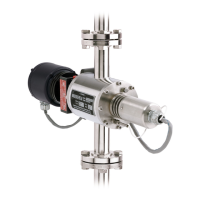
Table of Contents

Questions and Answers

  • M
    Melody BoydAug 19, 2025
    What to do if Brookfield Measuring Instruments viscometer ranging is too high?
    • J
      Joshua Ortiz MDAug 20, 2025
      If the viscometer ranging of your Brookfield Measuring Instruments is too high, and the reading is consistently less than 10% of the scale, it could be due to the viscometer being empty, partially empty, containing trapped air, no turnover of fluid in the measurement zone, improper calibration, the wrong operating range selected, or fouling of the torsion element and inner cylinder by solids. Make sure the viscometer is installed properly and clean the viscometer.
  • A
    antoniopriceAug 21, 2025
    What to do if Brookfield TT100 viscometer ranging is too low?
    • C
      connie41Aug 21, 2025
      If the viscometer ranging of your Brookfield Measuring Instruments is too low, with readings consistently greater than 90% of the scale, the possible causes are torsion element damage, improper calibration, or the wrong operating range selected.
  • T
    thomashernandezAug 23, 2025
    Why Brookfield TT100 viscometer reading is over 100%?
    • J
      Joe NicholsAug 23, 2025
      If your Brookfield Measuring Instruments viscometer reading is continuously over 100% of scale or different from a bench top viscometer, this may be due to: 1. Damaged torsion element. 2. Solids in measuring chamber. 3. Incorrect wiring on the sensing end cap. 4. Rheology of process fluid. 5. Temperature difference between process fluid on-line and fluid at bench top. You can ensure that both readings are taken at the same temperature.
  • R
    Rodney ParkerAug 26, 2025
    What to do if Brookfield TT100 motor will not operate?
    • Z
      Zachary SheppardAug 26, 2025
      If the motor of your Brookfield Measuring Instruments won't operate or needs assistance to operate, the possible causes are a damaged motor or gearbox, damaged drive shaft bearings or seal support seizure, the process system pressure or temperature setpoint has been reached, a damaged pressure or temperature interlock, or the motor being wired incorrectly. You can check the bearings, repair the process system, and verify the motor wiring.
  • C
    Christopher CaseAug 27, 2025
    What to do if Brookfield Measuring Instruments has no output?
    • C
      Craig OlsonAug 27, 2025
      If your Brookfield Measuring Instruments has no output, no change in output when torqued, or no response to calibration attempts, it could be due to no power to the torque sensor electronics and motor control enclosures, a damaged torque sensor electronics board, a damaged Microsyn field coil, or the sensing endcap being improperly wired. Make sure power is applied to the torque sensor and motor enclosures.
  • S
    staceymillerAug 29, 2025
    What to do if Brookfield TT100 motor runs in either direction?
    • M
      Michele FloresAug 30, 2025
      If the motor of your Brookfield Measuring Instruments runs in either direction depending upon assistance, the cause may be a damaged phase-shifting capacitor in the motor. You can replace the capacitor.
  • C
    Cathy LopezAug 31, 2025
    Why Brookfield Measuring Instruments motor rotation does not match torque response?
    • N
      Nathan MitchellSep 1, 2025
      If the motor rotation of your Brookfield Measuring Instruments does not match the torque response, this could be due to the torque sensor response not being properly calibrated or incorrect motor wiring.
  • J
    Julie BruceSep 2, 2025
    Why Brookfield TT100 has no change in output?
    • P
      pjohnsonSep 2, 2025
      If your Brookfield Measuring Instruments shows no change in output when the motor is energized or when fluid changes, and there is no torque response, the possible causes are: 1. The viscometer is not completely flooded with process fluid. 2. The motor is not operating. 3. Solids build-up within the viscometer. 4. Open or shorted wiring to the Microsyn field coil assembly. 5. Damaged Microsyn field coil assembly. 6. Damaged torsion element. Make sure the viscometer is installed properly and clean the viscometer.
  • S
    samuellittleSep 4, 2025
    Why is Brookfield Measuring Instruments giving reverse torque response?
    • H
      Heather HernandezSep 4, 2025
      If your Brookfield Measuring Instruments is giving a reverse torque response, it could be due to: 1. Incorrect coarse zero calibration. 2. Reverse motor rotation. 3. Incorrect transducer wiring.
  • D
    Danielle WilliamsSep 6, 2025
    Why is Brookfield TT100 Measuring Instruments giving partial torque response?
    • R
      Richard AcostaSep 6, 2025
      If your Brookfield Measuring Instruments is giving a partial torque response, the causes may be: 1. Incorrect coarse zero calibration. 2. Excessive load on output. 3. Solids build-up within the viscometer. 4. Incorrect/shorted Microsyn field coil wiring. 5. Excessive friction on readout wire at jewel. 6. Damaged torsion element. 7. Incorrect span calibration. 8. Loose or misaligned armature assembly. 9. Optional elliptical baffle installed incorrectly. You can reduce the load and clean the viscometer.

Summary

In-Line Viscometer Description

Introduction

Overview of the TT100 In-Line Viscometer and its capabilities.

Features and Benefits

Key features and advantages of the TT100 In-Line Viscometer for process control.

Theory of Operation

Explanation of how the TT100 In-Line Viscometer measures viscosity using fluid dynamics.

Correlation with Other Measurements

Guidance on correlating on-line viscometer readings with laboratory measurements.

Specifications

Technical details and operating parameters for the TT100 In-Line Viscometer configurations.

Required Utilities

Information on power, line frequency, and other utility connections needed for operation.

Current Draw - Starting & Running

Details on the electrical power consumption of the TT100 viscometer.

Cleaning

Procedures and recommendations for cleaning the viscometer to ensure optimal performance.

Component Identification

Description and location of the major components within the TT100 In-Line Viscometer.

Options

Description of optional equipment available to enhance viscometer performance.

Accessories

List of accessories for displaying, controlling, and recording data from the viscometer.

Installation

Unpacking and Inspection

Instructions for unpacking the viscometer and checking for shipping damage.

Installation Requirements

Essential criteria and conditions for properly installing the TT100 In-Line Viscometer.

Calculating Minimum Straight Pipe Length

Guidance on determining the necessary straight pipe length for optimal installation.

Installation

Step-by-step procedures for installing the TT100 In-Line Viscometer.

Flushing Connections

Details on making flushing connections for cleaning and maintenance purposes.

Calibration

Introduction

Overview of calibration procedures for the TT100 In-Line Viscometer.

Tools Required

List of tools and materials necessary for performing viscometer calibration.

Fine Zero Milliampere Calibration Test

Procedure to ensure zero position alignment of Microsyn field coil and torque sensor electronics.

Preliminary Torque Sensor Test

Checks to verify the torque sensor is undamaged before calibration.

Single Range Viscometer Span Calibration

Procedure to adjust span for single range measurements using a calibration bar.

Dual Range Viscometer Span Calibration

Procedure to adjust span for dual range measurements using calibration bars.

Coarse Zero Calibration

Procedure for coarse zero calibration, critical before fine zero voltage calibration.

Fine Zero Voltage Calibration

Procedure to ensure the zero voltage level of the viscometer is properly calibrated.

Operation

Introduction

Guidance on operating the TT100 In-Line Viscometer after installation and calibration.

Mechanical Seal Requirements

Information on the proper functioning and lubrication of mechanical seals.

Normal Operation Observations

Conditions considered normal during the operation of the TT100 In-Line Viscometer.

Interlocks

Description of safety interlocks that protect the viscometer from damage.

Start-up

Steps for safely starting up and energizing the TT100 In-Line Viscometer.

Shutdown

Procedure for safely shutting down the TT100 In-Line Viscometer.

Maintenance

Clean-In-Place

Procedure for cleaning the viscometer internally with minimal downtime.

Flushing

Method for introducing cleaning fluid to internal components for enhanced cleaning.

Disassembly and Cleaning

Detailed steps for disassembling, cleaning, and reassembling viscometer components.

Elliptical Baffle Precautions

Specific handling and installation guidelines for the optional elliptical baffle.

Service

Introduction

Overview of component replacement and maintenance for the TT100 Viscometer.

Tools Required

List of specialized tools needed for viscometer service and component replacement.

Sensing Endcap Service

Instructions for disassembling, identifying, and replacing sensing endcap components.

Microsyn Field Coil Replacement

Procedure for replacing the Microsyn field coil assembly.

Torque Sensor Printed Circuit Board Replacement

Steps for replacing the torque sensor electronics circuit board.

Torsion Element Replacement

Procedure for replacing the torsion element, the primary viscosity sensing device.

Drive Endcap Service

Maintenance and troubleshooting for the drive endcap, motor, and gearbox.

Capacitor Replacement

Procedure for replacing the motor capacitor.

Oriental Motor Replacement

Procedure for replacing the Oriental motor.

Oriental Motor Gearbox Replacement

Procedure for replacing the gearbox associated with the Oriental motor.

Groschopp Motor Replacement

Procedure for replacing the Groschopp motor.

Bearing Replacement

Instructions for installing new bearings into the bearing support.

Drive Endcap Assembly

Steps for reassembling the drive endcap after service or replacement.

Double Mechanical Seal Assembly Replacement

Procedure for replacing the double mechanical seal assembly.

Troubleshooting

Introduction

Guide to identifying and resolving common problems with the TT100 Viscometer.

Technical Inquiries

Contact information for technical assistance from Brookfield Engineering Laboratories.

Customer Support

Introduction

Information on how to contact Brookfield Engineering Laboratories for support.

Drawings

Viscosity Range Change

Introduction

Overview of how to change viscosity range and shear rate for the TT100 Viscometer.

Changing Range or Shear Rate

Reasons and methods for adjusting the viscometer's viscosity range or shear rate.

Speed of Rotation Change

How altering rotation speed affects measured viscosity range and shear rate.

Stator Change

How changing the stator affects viscosity range and shear rate.

Torsion Element Change

Procedure for changing the torsion element to alter viscosity range.

Electronic Change

Adjusting resistors on the electronics board to change calibration or ranges.

Summary

Methods for achieving viscosity range changes in order of practicality.

Agency Approvals

Introduction

List of agencies that have approved the TT100 Viscometer for specific operating areas.

Warranty Information

Guarantee

Details of the warranty provided for the Brookfield Viscometer.

Glossary

Index

Brookfield TT100 Specifications

General IconGeneral
ModelTT100
Repeatability±0.2%
Power Supply24 VDC
ManufacturerBrookfield
Accuracy±1% of range
Spindle SetVarious spindle geometries available

Related product manuals