1-6 • Introduction 8018653 1.1
Antennas Each BTS site has a single transmit antenna and two receive antennas.
There are several antenna types and configurations that are chosen based
on environmental, regulatory, and site-specific requirements. Generally,
the omnidirectional antennas used are dipole collinear array types; the
sectorized antennas are available as panel or collinear arrays.
Sub
si
d
iar
yof
Hu
g
hes Air
c
raft C
o
mp
an
y
HUGHES
NETW
O
RK SYSTEMS
Subsidiary of
Hugh
es A
i
r
craf
t Compa
n
y
HUGHES
NETW
O
R
K
SYSTEMS
S
u
bsidiary
o
f
Hug
he
s
Aircra
f
t
C
o
mp
a
n
y
HUGHES
NE
T
W
O
R
K S
Y
ST
E
MS
S
u
b
si
d
i
ary
of
H
ug
hes Air
c
r
af
t Com
p
an
y
HUGHES
NE
T
WORK SYS T
EM
S
Sub
sid
iar
y
of
H
ug
h
es
A
i
r
c
raft
Company
HUGHES
N
ET
WOR
K SYS
TE
M
S
Su
b
s
idiary o
f
H
ug
h
es Air
c
r
a
f
t
Co
m
p
an
y
HUGHES
NETWORK SYSTEMS
S
ub
sidi
a
ry
o
f
Hu
gh
e
s
Ai
r
c
raft Compa
n
y
HUGHES
NE
T
WOR
K
S
Y
S
TE
M
S
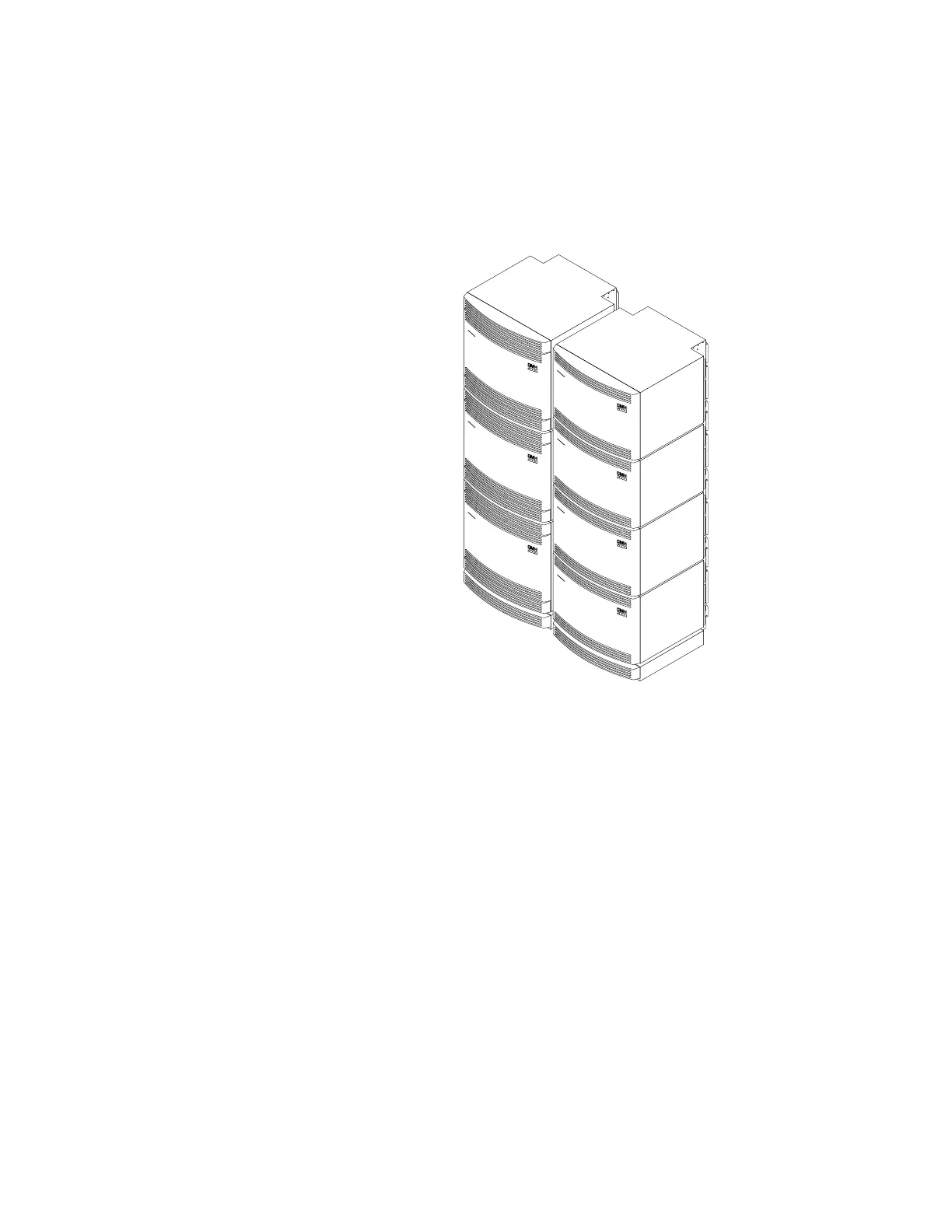
CUMC
STACK
RFMC
STACK
Figure 1-5. BTS stacks (typical)
RFMC RFMC equipment (shown in figure 1-5) perform the following functions:
•Amplify the RF carrier from one (or more) CUMCs.
• Combines high power RF carriers from the amplifiers and inter-
faces to the transmit antenna.
CUMC CUMC equipment transmit functions include the following:
•Perform baseband processing and transmit filtering of the digitized
transmit voice signal based on the operational mode (AMPS,
TDMA, or E-TDMA).
•Modulate, upconvert, and amplify the transmit carrier before send-
ing the signal to the RFMC.


 To Next Page
 Loading...