1 Introduction
12 2011-07-01/00561073 [SCR Power Controller TYA202]
1.4 Brief description
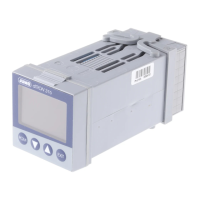
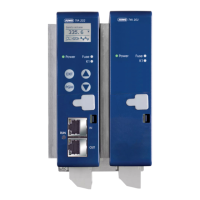
Device The JUMO TYA 202 represents a consistent further development of the JUMO
power controller technology and switches resistive-inductive loads via a three-
phase current economy circuit in the star/delta three-phase mode. The micro-
processor controlled power controller displays all parameters in a back-lighted
LCD display and is operated using the 4 keys on the front.
Application SCR power controllers are employed where larger resistive and resistive-in-
ductive loads have to be switched, e.g. in industrial kiln construction and in
plastics processing. The SCR power controller comprises SCRs connected in
anti-parallel, the insulated cooling body and the control electronics.
Installation SCR power controllers units up to a load current of 32A can be either clipped
onto a 35 mm mounting rail or fitted to the wall on a mounting plate. Devices
with a load current exceeding 32A have to be fitted to the wall.
Operating
modes
The TYA 202 operates in burst-firing mode. In burst-firing mode, the first half-
cycle can be optimally cut back by means of an adjustable phase angle for
driving transformer loads.
It is possible to preset a base load, and depending on the device type, to set a
current limit or a resistance limitation for the load.
A soft start can be set to avoid high starting or inrush currents.
Cascade
control
Available cascade controls are U, U
2
, I, I
2
or P control. Therefore the control
loop is not affected by fluctuations in the supply voltage during the control
process.
Standards The SCR power controllers comply with VDE 0160 5.5.1.3 (5/88) and VDE
0106 Part 100 (3/83). Grounding is required in conformity with the regulations
of the responsible electric utility company.
Advantages - Teach-in function for the detection of partial load failure
- Network load optimization through dual energy management
- Transmission of the setup data is also possible without voltage supply to
the device (supply via USB port)


 To Next Page