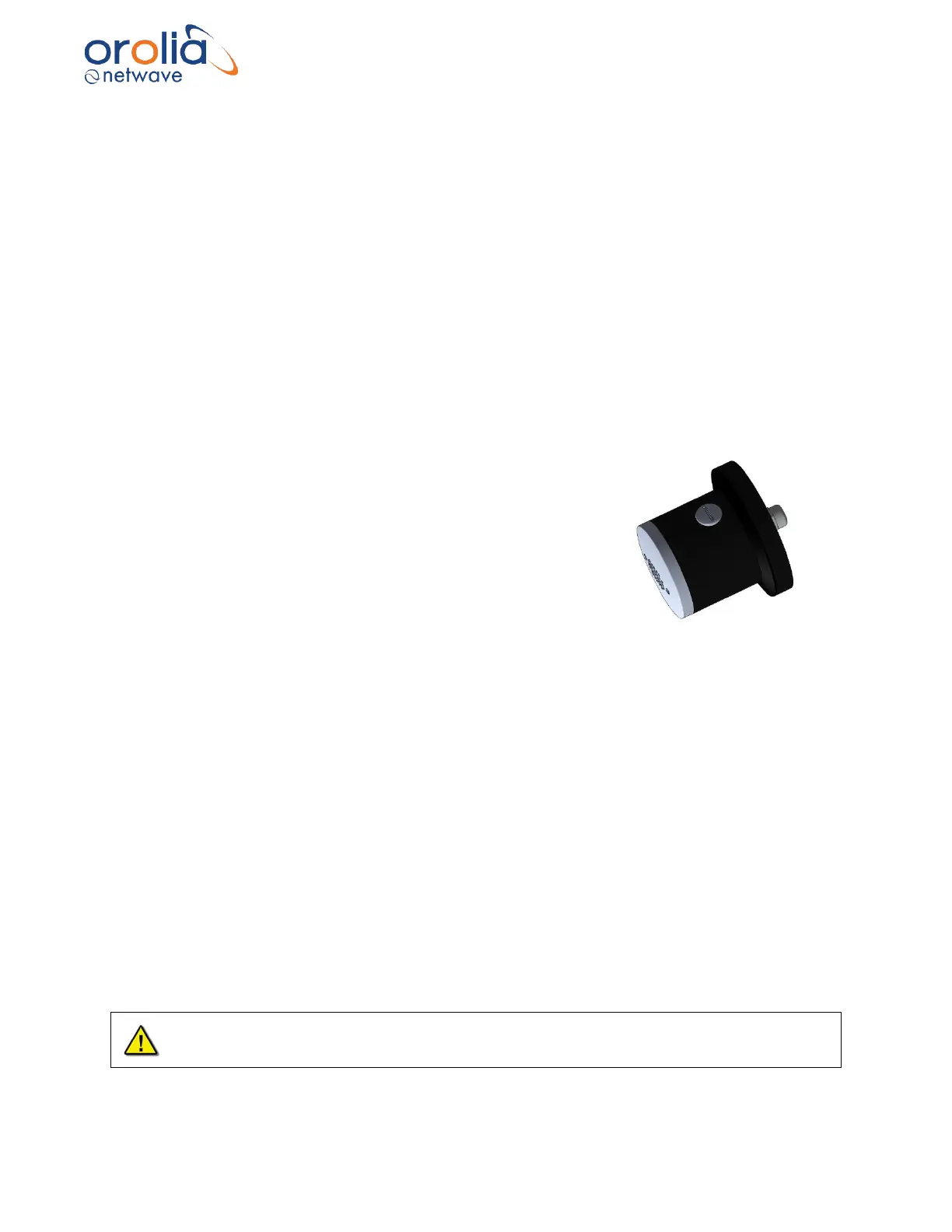
8. NW6030 Analogue Microphones
8.1 General
The analogue microphones are constructed from sea-water resistant materials with the main
housing being durable anodized aluminum. There is one type which may be used in both a
protected (internal) and unprotected (external) environment.
As the name suggests the interface to the microphone is analogue and uses a differential
analogue driver to send the audio signal to the Audio Hub (NW6031) for further processing
before sending this to the VDR over a PoE connection.
These microphones connect, via the NW6031 Audio Hub interface which provides power,
directly into the VDR Ethernet network.
Characteristics.
• IEC 61996 compliant in conjunction with the NW6031
Audio Hub
• IEC60945 compliant
• Single model for interior and exterior (IP66)
• Can be flush or surface mounted
• Powered from the NW6031 Audio Hub
• Differential analogue output
• On-board microphone and sound test capability
• Green LED indicator for location and audio test indication
8.2 Location and mounting
One or more microphones positioned on the bridge (wings) must be placed such that conversation
at or near the conning stations, radar displays, chart tables, etc. may be adequately recorded.
As far as is practicable, the positioning of microphones shall also capture the input and output of
intercom, public address systems and the audible CAUTIONs on the bridge (bridge mounted
equipment).
For recording purposes, the bridge is divided into recording areas. The number of recording areas
determines the number of microphones required. The number of microphones plus the number of
VHF inputs equals the number of audio channels recorded.
Microphones are omni-directional with a radius of 4m.


 To Next Page