
 Need help?
Do you have a question about the Planmeca ProMax 2D and is the answer not in the manual?
Covers associated documentation, product label symbols, and essential safety precautions for operation.
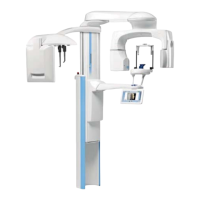
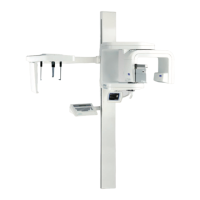
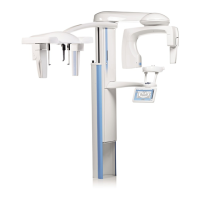
Details key physical components of the X-ray unit, including sensor, supports, and columns.
Explains the touch screen, patient positioning controls, and ProTouch desktop application.
Guides on selecting panoramic, TMJ, and sinus programs and their features.
Covers sensor handling, patient preparation, and step-by-step exposure procedures.
Guides on user and program settings, licences, and system configuration options.
Covers help/error messages, cleaning, maintenance, disposal, and technical specifications.
 General
| Imaging Type | 2D |
|---|---|
| Voltage Range | 60 - 90 kV |
| Focal Spot Size | 0.5 mm |
| Exposure Time | Adjustable |
| Software | Planmeca Romexis |
| Cephalometric Arm | Optional |
| Imaging Modalities | Panoramic, Cephalometric |
| X-ray Generator | High frequency |
| Current Range | 1-16 mA |
| Exposure Time Range | 0.1-20 s |
| Image Sensor | CCD |
| Detector Type | Digital |
| Field of View | Variable |
| Software Compatibility | Windows |
| Dimensions | Varies by configuration |
| Power Requirements | 230 V, 50/60 Hz |






 To Next Page