23
8014084/ZWT7/V3-1/2020-06 | SICK OPERATING INSTRUCTIONS | TRANSIC111LP
Subject to change without notice
INSTALLATION 3
Drying the gases
In humid ambient conditions, condensation in the sample gas cell must be prevented. To
do this, dry the gas sample through cooling and reheating. Use a cooling coil and a water
trap. Switch a reheating system after the cooling process.
The humidity contained in the sample gas condenses on the walls of the stainless steel
pipe; the water is collected. The relative humidity of the sample gas is reduced by reheating.
If the temperature in the sample gas cell is significantly above the ambient temperature,
the cooling coil and the water trap can be simply positioned outside the sample gas cell. For
reheating, the heat generated by a pump system can sometimes be sufficient so that no
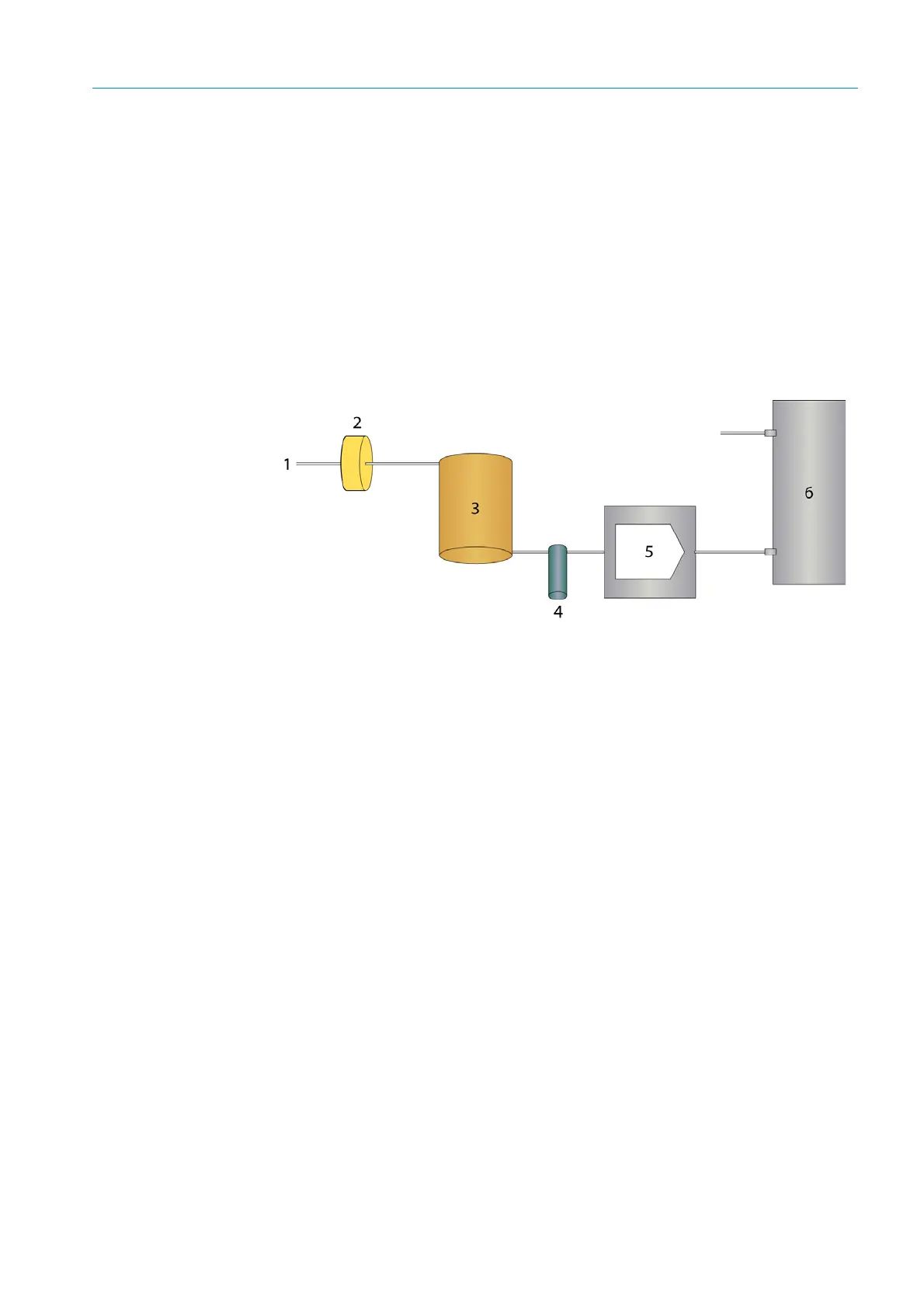
additional heating is required. A simplified scheme of a sample gas treatment system for
the removal of dirt and humidity is shown on Page 23.
Fig. 8: System for sample gas treatment
Installing the sample gas line
1 Provide adequate support for the tubing, for example by attaching it to the wall. The tube
must not put any traction on the connection.
2 The sample gas cell has two gas connections. Use the gas connection closest to the
measuring device as gas inlet. This provides a better gas exchange and shorter reaction
times.
1 = Gas inlet
2 = Hydrophobic filter
3 = Stainless steel spiral tube
4 = Water trap
5 = Sample gas pump
6= Oxygen sensor


 To Next Page