Precauons for users of implanted cardiac pacemakers
Cardiac pacemakers (applies only to digital cordless telephones):
Wireless Technology Research, LLC (WTR), an independent research enty, led
a muldisciplinary evaluaon of the interference between portable wireless
telephones and implanted cardiac pacemakers. Supported by the U.S. Food and Drug
Administraon, WTR recommends to physicians that:
Pacemaker paents
• Should keep the wireless telephone at least six inches from the pacemaker.
• Should NOT place wireless telephones directly over the pacemaker, such as in a
breast pocket, when it is turned ON.
• Should use the wireless telephone at the ear opposite the pacemaker.
WTR’s evaluaon did not idenfy any risk to bystanders with pacemakers from other
persons using wireless telephones.
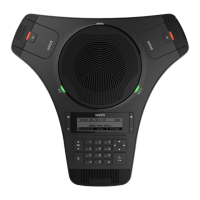
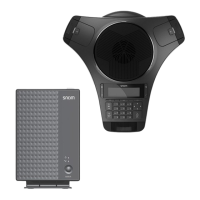
About wireless microphones
• Privacy: The same features that make a wireless microphone convenient create
some limitaons. Calls on conference phones are transmied between the base
unit and the wireless microphone by radio waves, so there is a possibility that
the wireless microphone conversaons could be intercepted by radio receiving
equipment within range of the wireless microphone. For this reason, you should
not think of conference phone conversaons as being as private as those on corded
telephones.
• Electrical power: The base unit of this conference phone must be connected to
a working electrical outlet. The electrical outlet should not be controlled by a
wall switch. Calls cannot be made from the conference phone if the base unit is
unplugged, switched o or if the electrical power
is interrupted.
• Potenal TV interference: Wireless microphone operates at frequencies
that may cause interference to televisions and VCRs. To minimize or prevent
such interference, do not place the base unit near or on top of a TV or VCR. If
interference is experienced, moving the wireless microphone farther away from the
TV or VCR oen reduces or eliminates the interference.
• Rechargeable baeries: Exercise care in handling baeries in order not to create a
short circuit with conducng material such as rings, bracelets and keys. The baery
or conductor may overheat and cause harm.
• Nickel-metal hydride rechargeable baeries: Dispose of these baeries in a safe
manner. Do not burn or puncture. Like other baeries of this type, if burned or
punctured, they could release causc material which could cause injury.
iii



 To Next Page