
 Need help?
Do you have a question about the Sun Microsystems Sun Fire X4450 and is the answer not in the manual?
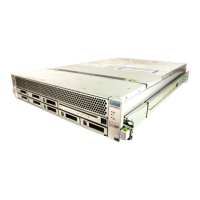
Provides a description of the Sun Fire X4450 server, an enterprise-class four-socket rackmount x64 system.
Details the Sun Fire X4450 server's all-new chassis family, covering infrastructure boards and system cables.
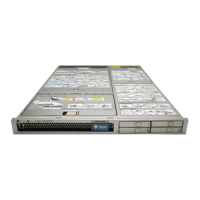
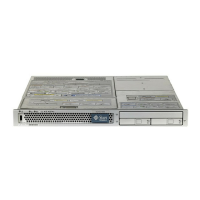
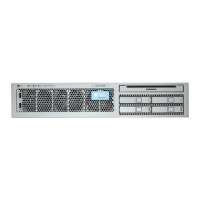
Illustrates and describes the features of the Sun Fire X4450 server's front panel, including LEDs and buttons.
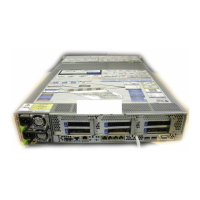
Shows and explains the rear panel features of the Sun Fire X4450 server, including ports and power supplies.
Provides exploded views of system components to help identify parts within the Sun Fire X4450 server.
Covers essential safety precautions and warnings necessary before removing or installing parts in the Sun Fire X4450 server.
Lists the specific tools required for servicing the Sun Fire X4450 server, ensuring proper maintenance procedures.
Explains how to find the chassis serial number, crucial for obtaining support for the Sun Fire X4450 server.
Details methods for safely powering off the Sun Fire X4450 server, including graceful and emergency shutdown procedures.
Guides on how to extend the server from the rack to a maintenance position for easier component access.
Provides steps for safely removing the Sun Fire X4450 server from its rack installation for servicing.
Outlines critical procedures for preventing electrostatic discharge (ESD) damage to sensitive components.
Details the steps required to remove the integrated top cover and fan door of the Sun Fire X4450 server.
Differentiates between hot-pluggable and hot-swappable devices and lists applicable components in the server.
Covers guidelines, LED references, and procedures for removing and installing hard drives and SSDs in the server.
Details how to detect, remove, and install fan modules, which are hot-swappable CRUs for system cooling.
Explains how to detect, remove, and install hot-swappable power supplies, ensuring redundant power availability.
Provides instructions for removing and installing the DVD/USB module, accessible from the server's front panel.
Covers diagnosing and replacing faulty FB-DIMMs (fully buffered DIMMs), including guidelines and procedures.
Details the process for removing and installing the memory tray, necessary for accessing motherboard components.
Guides on how to replace the memory riser, which holds DIMM slots, requiring access after removing the memory tray.
Explains how to remove and install the air duct, essential for maintaining proper airflow when servicing other components.
Covers the removal and installation of PCIe risers, which host PCIe cards, and are necessary for motherboard access.
Details guidelines and procedures for servicing PCIe cards, including their installation and removal from risers.
Provides instructions for replacing the system battery, which maintains system time when the server is powered off.
Outlines the FRU procedure for replacing the entire motherboard assembly, requiring careful handling.
Covers procedures for removing, installing, and upgrading CPUs, including heatsink management and thermal grease application.
Explains methods for resetting SP/BIOS passwords and clearing CMOS NVRAM using BIOS screens or jumpers.
Details the steps for reinstalling the default SP software image from a CD/USB to recover from corruption.
Covers removing and installing fan power boards, which supply power to fan modules and transfer data.
Details procedures for removing and installing the drives cage to access the drives backplane and light pipe assemblies.
Explains how to remove and install the drives backplane, connecting drives to the system's I/O board.
Guides on removing and installing the front panel light pipe assembly, which routes indicator lights.
Covers removing and installing the PDB, which distributes main power from PSUs to the system components.
Details procedures for removing and installing the power supply backplane, which carries power to the PDB.
Explains how to remove and install the paddle card assembly, which includes the top cover interlock switch.
Provides instructions for removing and installing various cables, including drive cables and PDB cables.
Guides on how to properly install the top cover after servicing the server's internal components.
Details the steps for safely reinstalling the server chassis back into the rack after maintenance.
Guides on how to retract the server from the maintenance position back to its normal rack position.
Provides instructions for connecting power and powering on the server after completing service procedures.
Details the pinout and signal descriptions for the RJ-45 serial management port connector on the back panel.
Describes the pinout and signals for the RJ-45 network management port connector, used for configuring network access.
Provides the pinout and signal descriptions for the HD-15 VGA video connector on the back panel.
Details the pinout and signal descriptions for the USB ports located on the motherboard, accessible from the back panel.
Describes the pinouts and signal assignments for the four RJ-45 Gigabit Ethernet connectors on the server.
Introduces the system BIOS power-on self-test (POST) and the use of POST codes to interpret server status.
Explains the procedure for BIOS POST memory testing, including DRAM testing and error logging.
Describes an alternate method to view POST codes remotely by redirecting console output to a serial port.
Provides optional instructions to change server operations during POST testing, such as Quick Boot or error handling.
Lists and describes various POST codes generated during the BIOS self-test, along with their corresponding error messages and responses.
Explains how to view and modify BIOS Setup Utility screens for system information and configuration.
Provides a summary of the top-level BIOS setup screens and their respective descriptions and sections.
Details the BIOS Main screens, which display general product information like BIOS type, processor, and memory.
Covers BIOS Advanced screens for detailed configuration of CPU, memory, IDE, USB, PCI, and other system information.
Explains how to configure boot device priority (drives and DVD-ROM) within the BIOS Boot menu screens.
Details the BIOS Server screens, used for configuring server devices and related settings.
Describes the BIOS Security screens, used to set or change user and supervisor passwords for system access.
Covers the BIOS Exit screens, which allow saving/discarding changes, loading defaults, and exiting the setup utility.
 General
| Manufacturer | Sun Microsystems |
|---|---|
| Model | Sun Fire X4450 |
| Max Processors | 4 |
| Operating System | Solaris, Linux, Windows |
| Processor | Intel Xeon 7300 series |
| Chipset | Intel 7300 |
| Memory | Up to 128GB DDR2 |
| Storage | Up to 8 HDDs |
| RAID | RAID 0, 1 |
| Network | 2x 10/100/1000Base-T Ethernet |
| Expansion Slots | 6x PCI Express |
| Power Supply | Dual redundant power supplies |







 To Next Page

