TELOS TWOX12 USER’S MANUAL
INSTALLATION
CHAPTER 2 13
2.3 ISDN Technology 101
This section offers an introduction to ISDN service. This introduction should be useful to
help you understand how to order ISDN, and use it with the TWOx12. If you are familiar
with ISDN you can skip to section 2.5.
ISDN lines come in two varieties: Basic Rate Interface (called BRI, SØ, or ISDN 2 in
various parts of the world)) and Primary Rate Interface (PRI, S2 or ISDN 30). BRI lines are
the kind we normally see in broadcast stations, as these are what are used with MPEG
codecs such as the Telos Zephyr and ZephyrExpress. BRIs have a capability of one or two
active 64 kbps channels. Since the Telos TWOx12 is used with BRI lines, we will only
consider that type here.
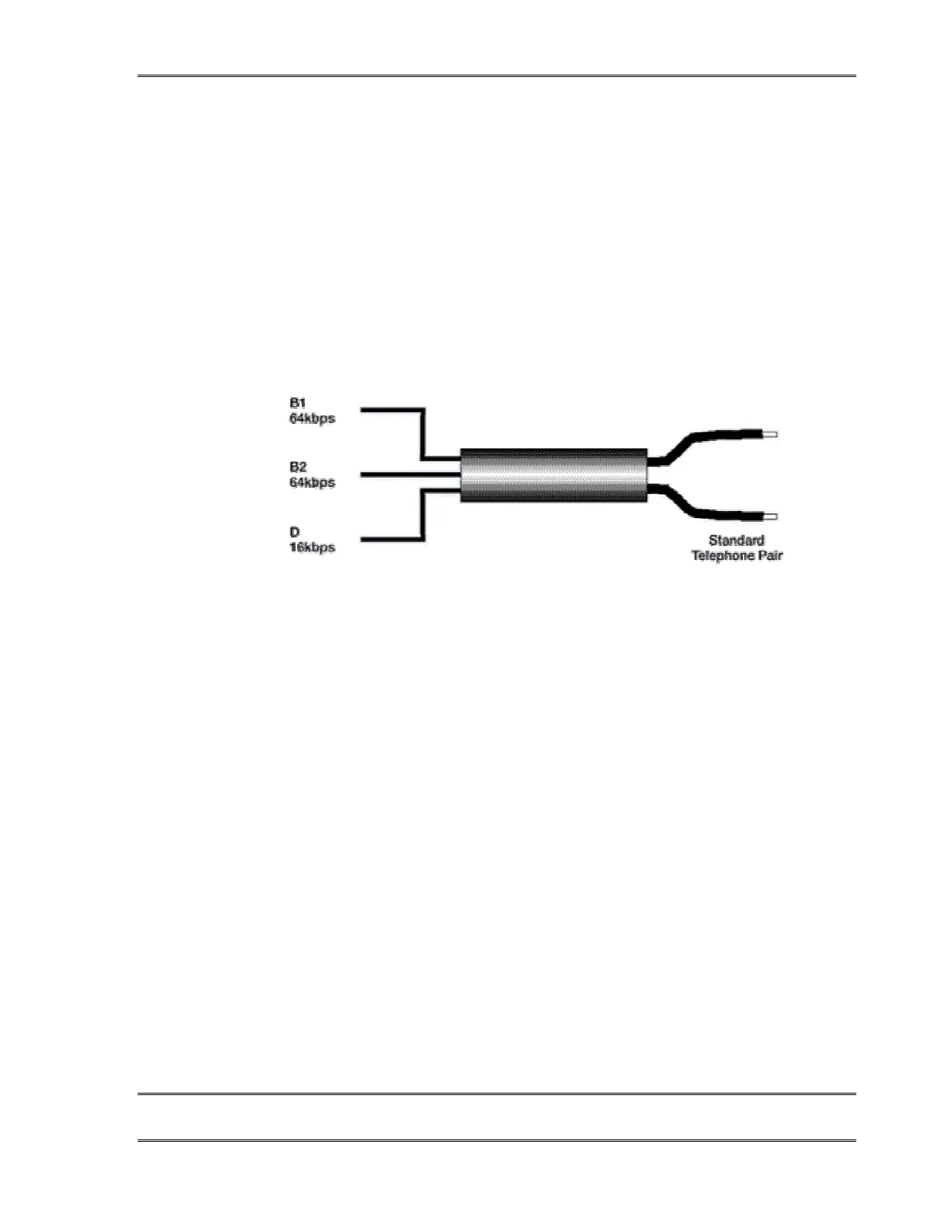
ISDN BRI Multiplexes three bi-directional channels on a single pair of copper
wires
Alphabet Soup: U, S, and NT1
An ISDN line from the central office is a single copper pair identical to a normal
(unloaded) analog line. When it arrives at the subscriber, it is called the “U” interface. It is
a two-wire connection, usually via a 4-pin RJ-11 style modular jack.
The ‘S’ interface is at the user side of the Network Termination Type 1 (NT1) device. The
NT1 is sometimes generically called a NCTE (Network Channel Terminating Equipment)
or, in some countries an NTBA. It is a four-wire connection, via an 8-pin RJ-45 style
modular jack. (Sometimes the S interface is called S/T. There is a subtle distinction
between the two, but it is not relevant for our purposes here, and the two may be considered
to be the same.)
In the USA & Canada, NT1 functionality is usually included in the terminal equipment. In
other parts of the world, the Telecom Company provides the NT1.


 To Next Page