34 Rev. 2
Operation
Using the Model 1700 Menus
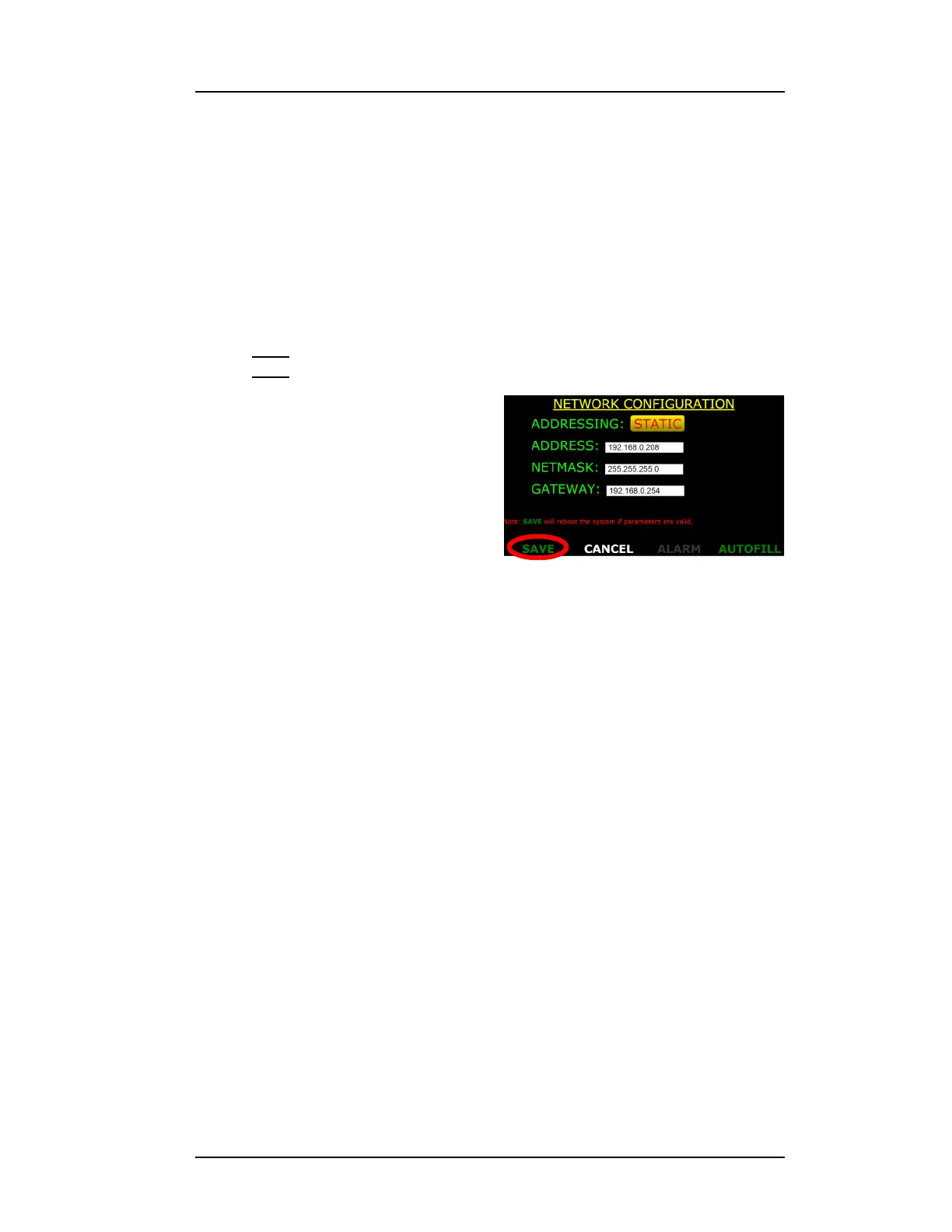
network. Once an address field is touched, the pop-up keyboard will
be presented for data entry. Press SAVE when done.
5. If the DYNAMIC addressing scheme is chosen, the IP ADDRESS,
NETMASK, and GATEWAY addresses will automatically be
assigned from a network DHCP server. Press SAVE when done.
6. If changes are made, select the SAVE button and then the
instrument will reboot and reconfigure itself with the chosen
settings.
Note
Until the instrument is rebooted, the
IP Addressing changes will not be
applied.
3.10 Abnormal Operation
3.10.1 Capacitance Sensor Contamination
To ensure proper instrument calibration and operation, care must be
taken to ensure the sensor is kept free of contaminants and not subjected
to any force which would physically distort the sensor. Water or other elec-
trically conducting substances in the sensor will disturb the measured
capacitance and the instrument’s response. Physically distorting the sen-
sor in any way will also cause abnormal instrument operation by introduc-
ing variations in the sensor capacitance not due to liquid level. The
absolute calibration of the instrument can be inaccurate if care is not
taken to ensure the sensor is in the proper environment.
Cold sensors exposed to humidified air can show erroneous high level read-
ings because the air contains moisture that can condense between the cold
sensing tubes. A minute film of water can cause a shorted or partially
shorted condition, which results in false level readings. As the sensor
warms, the moisture may evaporate and the sensor will again read cor-
rectly. This is a physical phenomenon and does not indicate any problem
with your AMI level equipment. Limit or eliminate exposure of cold sen-
sors to humidified air to avoid this condition.
If a sensor should require cleaning and the sensor is for use with liquids
other than liquid oxygen, flushing with pure alcohol is recommended. The
Figure 3-27. Saving Network Settings


 To Next Page