POH EditorPOH Editor
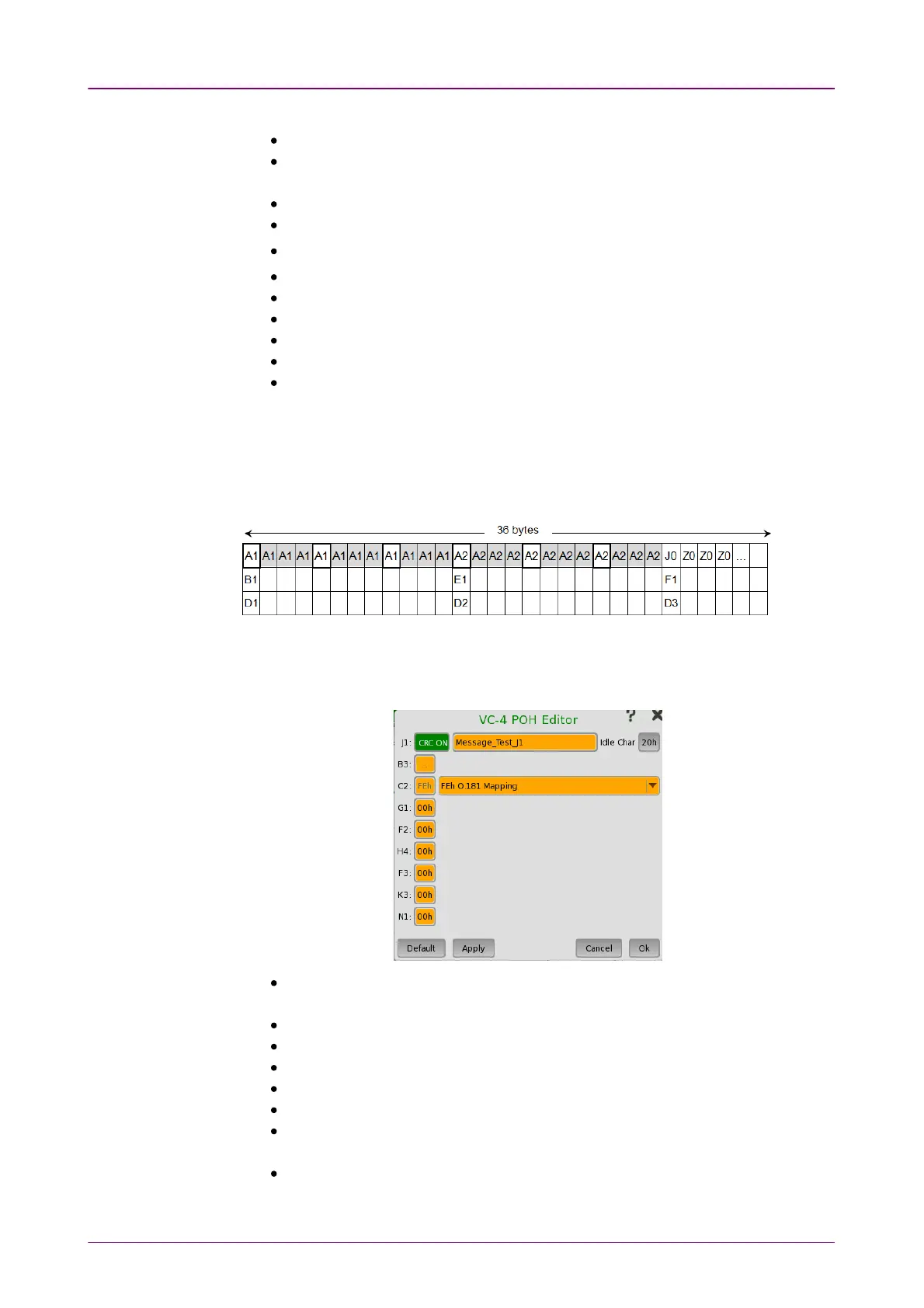
Defined A1 as F6h (1111011b), A2 as 28h (00101000b).
B1B1: BIP-8 (Bit Interleaved Parity) This byte cannot be set.
E1E1, E2E2: Orderwire
E1 is part of the RSOH, E2 is part of the MSOH.
F1F1: User channel
D1-D3D1-D3: RS (Regenerator Section) data communication channel (DCC
R
)
D4-D12D4-D12: MS (Multiplex Section) data communication channel (DCC
M
)
B2B2: BIP-N×24 These bytes cannot be set.
K1K1, K2K2(bit 1 to bit 5): Automatic protection switching (APS) channel
K2K2(bit 6 to bit 8): MS-RDI (Multiplex Section Remote Defect Indication)
M0M0, M1M1: MS-REI (Multiplex Section Remote Error Indication)
Z2Z2: Spare byte
H1H1, H2H2, H3H3: AU-n pointer These bytes cannot be set.
This editor format is the same as SOH of STM-1. For STM-4/16/64, SOH bytes
in other column are filled with value set by the editor. In case of STM-4 SOH in
following figure, you can edit A1A2 bytes in thicker lines cell. The bytes in gray
cell are filled with the value in left side cell in thicker lines.
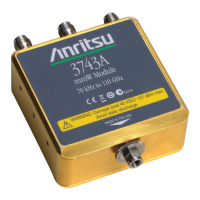
Touching a POHPOH button launches the VC-x POH EditorVC-x POH Editor dialog box. The
contents of the dialog box depends on which path overhead you are
configuring.
J1J1: Path Trace
Idle Char is an ASCII code used for the padding.
B3B3: Path BIP-8 This byte cannot be set.
C2C2: Signal label
G1G1: (bit 1 to 4) REI (bit 5) RDI (bit 6 and 7) Reserved (bit 8) Spare
F2,F3F2,F3: Path user channels
H4H4: Multiframe indicator
K3K3: (bit 1 to 4) Automatic protection switching (APS) channels (bit 5 and 6)
Spare (bit 7 and 8) Data link
N1N1: Network operator byte


 To Next Page