Need help?
Do you have a question about the Beissbarth MT 788 and is the answer not in the manual?
Information about symbols and warnings within the manual.
Explains the structure and meaning of warning notices.
Lists and explains symbols used within the manual.
Instructions and warnings related to symbols on the product itself.
Key information on copyright, liability, warranty, and user obligations.
Essential safety guidelines for operation and maintenance.
Details on the product's compliance with EMC directives.
Specifies the machine's purpose for balancing vehicle wheels.
Requirements for installation and placement of the machine.
Lists all components included with the MT 788.
Lists optional accessories available for the MT 788.
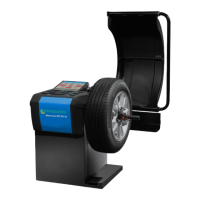
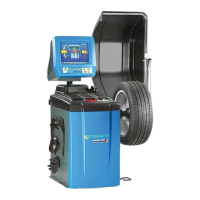
Details the various parts of the MT 788 and their functions.
Instructions for safely removing the MT 788 from its packaging.
Steps for attaching and adjusting the protective wheel guard.
Guidelines for positioning and securing the machine.
Important safety and procedural information for connecting the MT 788 to power.
Procedure to verify the correct rotation of the machine's shaft.
Steps for connecting the machine to a compressed air supply.
Overview of the calibration process required after initial setup.
Detailed steps for detaching the flange from the shaft.
Instructions for mounting the flange for passenger car wheels.
Steps for attaching the flange for truck and bus wheels.
Procedure for securely mounting a passenger car wheel.
Steps for safely detaching a passenger car wheel.
Procedure for securely mounting a commercial vehicle wheel.
Steps for safely detaching a commercial vehicle wheel.
Overview of the machine's control panel.
Explains the function of each LED indicator on the control panel.
Details the functions of all buttons on the control panel.
Describes the different balancing programs available and their usage.
Guides on choosing the appropriate balancing program for different wheel types.
Instructions for inputting wheel dimensions and other relevant data.
Procedure for measuring the wheel's unbalance.
Steps for attaching balance weights to the wheel.
Explains how to use the split program for attaching weights behind spokes.
Details methods for attaching clip-on and adhesive weights.
Steps for accurately measuring the rim width using the vernier caliper.
Instructions for positioning and attaching adhesive weights using the caliper.
Process for minimizing unbalance on commercial vehicle wheels using the Match program.
Describes how users can configure various machine settings.
Outlines basic settings that require customer service assistance.
Lists common malfunctions, their causes, and remedies.
Specifies lubricants for the compressed air system and oil mist lubricator.
General guidance on cleaning and servicing the machine.
Details recommended service intervals for cleaning and lubrication.
Instructions for draining condensate from the water separator.
Steps for refilling the oil in the mist lubricator.
Procedure for draining and refilling the oil mist lubricator.
Lists common replacement parts and their order numbers.
Overview of the calibration process required after initial setup.
How to access the machine's calibration menu.
Steps to correct for residual shaft unbalance.
Detailed procedure for calibrating the MT 788 machine.
Process for performing a reference measurement for calibration.
How to run self-diagnosis tests on the machine.
Instructions for short-term storage and shutdown.
Guidelines for moving the machine to a new location.
Procedures for disposing of the machine and associated materials.
Information on handling environmentally hazardous substances.
Procedures for proper disposal of the machine and its components.
Specification details for the MT 788 machine.
Physical dimensions and weight of the MT 788.
Lists the operational limits and capabilities of the machine.
 General
| Manufacturer | Beissbarth |
|---|---|
| Type | Wheel Balancer |
| Model | MT 788 |
| Power Supply | 230V / 50-60Hz |
| Power Consumption | 0.2 kW |
| Weight | 120 kg |
| Wheel Width Range | 1 - 20 inches |
| Balancing Accuracy | 1 gram |

 To Next Page