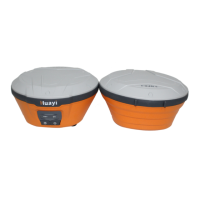
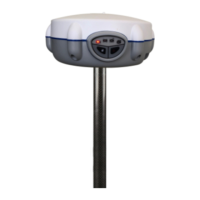
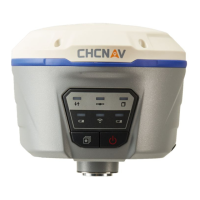
CHC i83 User Manual 50
#3 OPUS-RS is Very dependent on the Number, Availability, Proximity, Distribution
and Quality of nearby CORS Stations
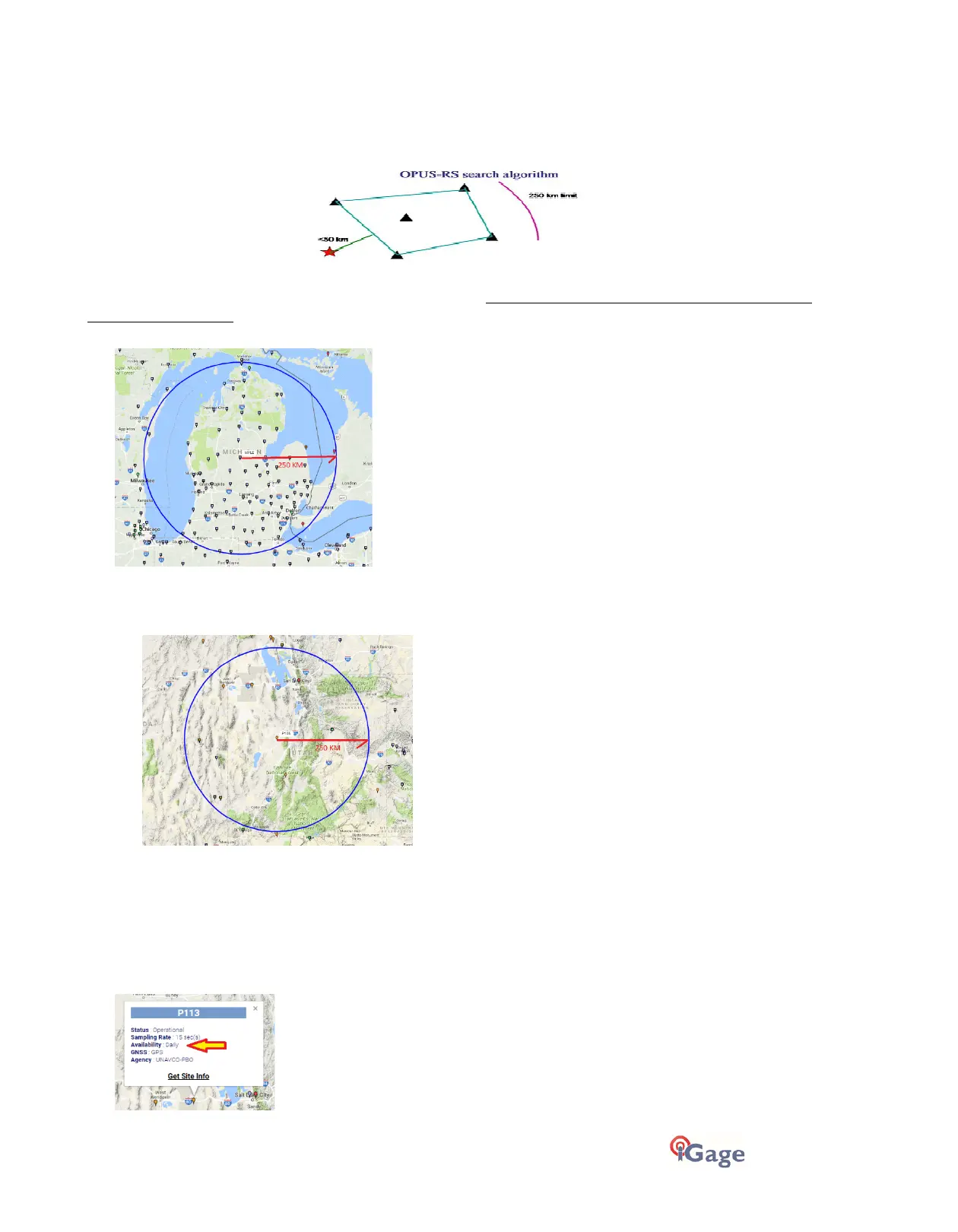
The initial stage of OPUS-RS processing determines if a network of three to nine CORS stations within 250 KM of the
user location can be built.
The user location is allowed to be up to 50 KM from the polygon surrounding the selected sites which allows OPUS-RS to
succeed in coastal areas where there are no CORS sites offshore. However, every CORS site that is used must be within
250 KM of the user site.
If you are in Michigan:
There are a lot of CORS stations within 250 KM of everywhere. OPUS-RS is likely to always succeed, even if a few of the
stations are offline, are missing data or are very noisy and must be discarded.
If you are in the middle of Utah there are very few CORS sites available on a good day:
On a bad day, if a few stations are offline or have not yet archived data then your OPUS-RS solution will fail because
there are not enough stations close to your occupation.
In many areas a single offline CORS station without data will make OPUS-RS impossible.
#4 Daily vs. Hourly CORS Availability
If you click a CORS station pin on the NGS CORS map, you will get a station summary which includes an ‘Availability’
note. There are two availably types:
Daily


 To Next Page